Table of Contents
- What Aircraft Maintenance Liability Insurance Covers
- Why A&P Mechanics and Repair Stations Need Coverage
- Hangar Keepers Liability Insurance for South Florida Operations
- FAA Part 145 Repair Station Insurance Requirements
- Aircraft Maintenance Record Compliance and Your Policy
- Coverage Limits, Deductibles, and What Drives Premiums
- Fort Lauderdale Regulatory Nuances and Claims Process
- Conclusion
- Frequently Asked Questions
Last Updated: September 19, 2026
What Aircraft Maintenance Liability Insurance Covers
Aircraft maintenance liability and insurance protects mechanics, repair stations, and maintenance shops from claims arising out of work performed on an aircraft, bodily injury, property damage, and professional errors tied to maintenance, inspection, and repair.
For an A&P certificate holder or repair station, that protection is the difference between a career-ending event and one handled by an insurer. This guide breaks down how the coverage works and where South Florida operators get it wrong.
Liability exposure starts the moment you touch the aircraft. A dropped tool, a mis-torqued fastener, or a missed corrosion inspection can become a claim months later, long after the aircraft has left your hangar.
Professional Liability vs. General Liability
Aviation general liability responds to third-party bodily injury and property damage on your premises or during operations, a slip and fall in the hangar, a taxiway incident involving your ground equipment, or damage to a customer's aircraft in your bay.
Professional liability, sometimes written as errors and omissions, responds to claims that your work itself was negligent.
| Coverage Type | Responds To | Typical Claim Example |
|---|---|---|
| Aviation general liability | Bodily injury, premises, third-party property | Slip and fall in the hangar |
| Professional liability | Negligent maintenance or inspection | Missed corrosion leads to in-flight damage |
| Hangar keepers liability | Damage to aircraft in your care | Hail damage while aircraft is stored |
| Products/completed operations | Defective parts or finished work | Failed component installed by your shop |
Why A&P Mechanics and Repair Stations Need Coverage
The biggest mistake independent mechanics make is assuming their employer's policy covers them. It usually doesn't.
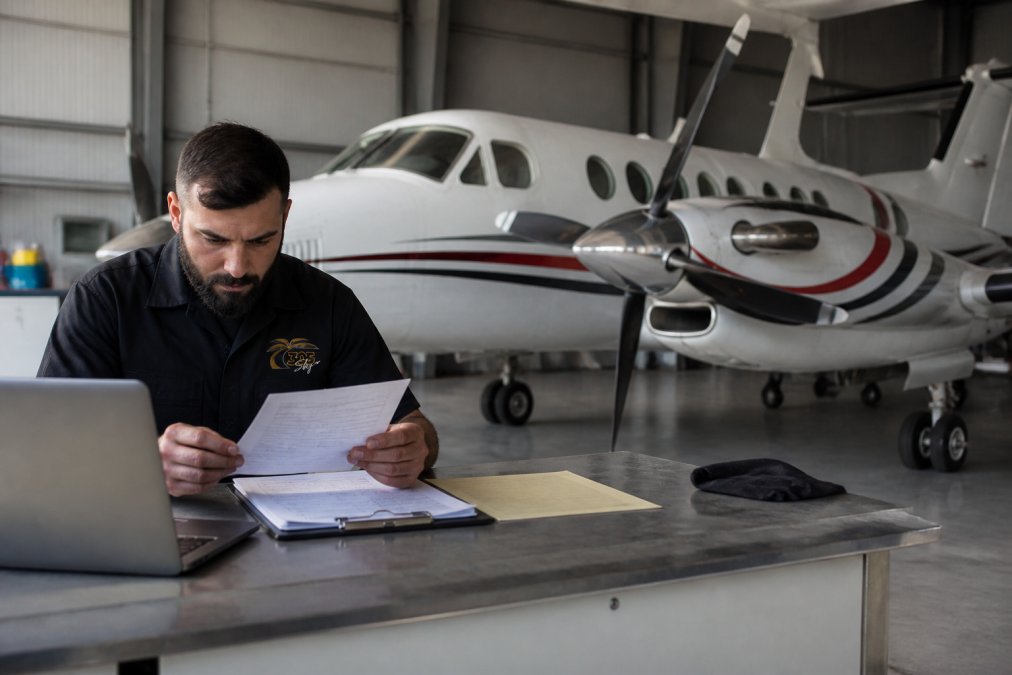
Hangar Keepers Liability Insurance for South Florida Operations
Hangar keepers liability insurance covers damage to aircraft and equipment in your care, custody, and control when you're not working on them. It's the policy that responds when a stored aircraft is damaged by something other than your maintenance work.
A hangar keepers liability policy typically responds to:
- Storm and wind damage to stored aircraft
- Fire or water damage inside the facility
- Theft of avionics or components
- Damage from other aircraft or ground equipment in the hangar
FAA Part 145 Repair Station Insurance Requirements
The honest answer: the FAA does not mandate a specific dollar amount of insurance for a Part 145 repair station. The requirement is operational, not a fixed coverage figure.
Where the Real Requirements Come From
Three forces drive what a repair station actually carries:
- Customer contracts. A Part 135 charter operator or management company typically requires a certificate of insurance naming them as additional insured before releasing an aircraft for work. The limits are set in that contract, not by the FAA.
- Underwriter appetite. Your broker's markets impose their own minimums based on the work you're rated for. Engine and avionics shops get scrutinized harder than a shop doing oil changes and tire swaps.
- Lease and lender requirements. Many aircraft are financed or leased, and the lender or lessor often has its own insurance requirements that flow down to anyone touching the asset.
The Independent Contractor Gap
An A&P mechanic working as a W-2 employee is generally shielded by the shop's insurance: the certificate holder is the repair station, and the shop's policy responds to claims arising from work performed under its certificate.
What Part 145 Facilities Typically Carry
In practice, most Part 145 facilities carry:
- Aviation general liability with limits set by their largest customer contract
- Professional liability matched to the scope of work they're rated for
- Hangar keepers coverage for any aircraft stored on site
- Workers' compensation for employed technicians
- A separate professional liability policy for any 1099 contractors working under their roof, or a written requirement that those contractors carry their own
If you're a private jet owner or broker placing an aircraft with a shop, ask for the certificate of insurance and read the additional-insured language. If you're a mechanic, ask the same of the shop you're contracting with, and get the answer in writing.
Aircraft Maintenance Record Compliance and Your Policy
Accurate records are not just an FAA obligation. They are your first line of defense in a liability claim.
Coverage Limits, Deductibles, and What Drives Premiums
Coverage limits and deductibles shape both your protection and your premium. Get them wrong and you're either overpaying or underinsured.
Several factors move the needle on what you pay:
- Scope of work. Avionics, engine work, and structural repair carry more exposure than routine inspections.
- Aircraft types serviced. Turbine aircraft like Challenger, Gulfstream, and Falcon models involve higher-value claims than light pistons.
- Revenue and payroll. Premiums scale with the size of your operation.
- Claims history. A clean record earns better terms; prior claims follow you.
- Certifications and training. Documented technician qualifications can improve underwriting.
- Geographic risk. Coastal exposure, storm frequency, and local litigation climate all factor in.
Fort Lauderdale Regulatory Nuances and Claims Process
Fort Lauderdale sits at the center of one of the busiest private aviation corridors in the country, and that density changes your liability picture: more aircraft, more transient traffic, more contract work, more chances for a claim. A shop at KFXE or KFLL handles a different risk profile than one in a low-traffic market.
Florida-Specific Liability Rules
Florida adds its own layer that most national insurance guides ignore.
The Claims Process, Step by Step
Here's what happens when a claim is filed against a maintenance operation.
- Incident reporting. Notify your insurer promptly, most policies require notice within a defined window, and late reporting is a common reason a claim gets complicated or denied. Report even a minor incident.
- Documentation submission. The insurer requests your work orders, logbook entries, parts traceability records, and correspondence with the aircraft owner. This is where a clean paper trail saves you or sinks you.
- Adjuster investigation. The insurer reviews the facts and determines whether the claim falls under your policy and which one responds, general liability, professional liability, or hangar keepers. Coverage disputes are common when the facts are ambiguous.
- Legal defense. If a negligence claim proceeds, your policy covers legal defense costs and, if applicable, indemnity. Defense coverage matters even when the claim is meritless, because defending one is still expensive.
- Settlement or resolution. Most claims resolve before trial. The insurer may settle within your limits, or the claim may go to mediation or litigation.
- Subrogation. If the insurer pays a claim, it may pursue recovery from other responsible parties, other shops, parts suppliers, or the aircraft owner. That's one reason your records must be complete: they become evidence in someone else's subrogation action.
What This Means for South Florida Operators
If you're searching for aircraft maintenance near me in Fort Lauderdale, ask any shop for proof of coverage before you hand over your aircraft. A facility that carries proper aviation professional services coverage, and can show you the additional-insured endorsement, takes its exposure seriously.
Conclusion
Aircraft maintenance liability is unforgiving in one specific way: the exposure is invisible until it isn't. A single missed step can surface as a claim years later, and by then your documentation, your coverage, and your insurer's willingness to defend you are all that matter.
Frequently Asked Questions
What is aircraft mechanic liability insurance and what does it cover?
Aircraft mechanic liability insurance protects A&P mechanics and repair stations from claims of negligence, bodily injury, and property damage arising from maintenance work. It typically covers legal defense costs, settlements, and indemnity for third-party claims. For example, if a mechanic's work leads to an engine failure and a subsequent crash, the policy can cover the resulting lawsuits. It does not cover the aircraft itself (that's hull insurance) or intentional acts. Policies often include premises liability for slip and fall incidents at the maintenance facility.
How much does aircraft liability insurance typically cost?
Pricing for aircraft maintenance liability insurance depends on factors like coverage limits, deductibles, annual revenue, number of mechanics, and claims history. For a precise quote, you need to speak with an aviation insurance broker. Reviewing your specific operation with a specialist can help ensure adequate protection without overpaying.
What are the common exclusions in aircraft maintenance liability policies?
Common exclusions include intentional acts, contractual penalties, damage to the aircraft being worked on (unless specifically endorsed), and claims arising from unapproved parts or procedures. Policies may also exclude work performed outside the scope of your FAA certification. For example, if you perform avionics upgrades without the proper rating, a claim could be denied. Always read the exclusions and discuss with your broker to secure endorsements for your actual services.
How does FAA compliance impact aircraft maintenance liability coverage?
FAA compliance is critical because insurers often require adherence to regulations like Part 145 for repair stations and Part 43 for maintenance. Non-compliance, such as missing records or unapproved repairs, can void coverage or lead to higher premiums. For instance, if an incident occurs and the FAA finds you violated maintenance record compliance rules, your insurer may deny the claim. Maintaining meticulous records and staying current with FAA regulations helps ensure your policy responds when needed.
Why is hangar keepers liability insurance essential for South Florida aviation businesses?
Hangar keepers liability insurance covers damage to aircraft in your care, custody, or control. In South Florida, high humidity, salt air, and hurricane risks increase exposure. If a customer's jet is damaged by a falling object or during a storm, hangar keepers coverage responds. It also protects against theft and vandalism. Without it, your business could be personally liable for costly repairs. Many maintenance facilities in Fort Lauderdale require this coverage to satisfy lease agreements and client contracts.