Table of Contents
- Understanding Avionics Upgrade Benefits for Jets
- Enhanced Flight Safety and Situational Awareness
- Reducing Pilot Workload Through Glass Cockpit Technology
- Avionics Upgrade Cost: Financial Planning and ROI Analysis
- Avionics Installation Timeline: What to Expect
- Impact of Avionics on Aircraft Resale Value
- Compliance, Connectivity, and Modern Cockpit Standards
- Key Avionics Upgrade Benefits: A Practical Checklist
Avionics Upgrade Benefits for Jets: A Complete Guide
Last Updated: July 15, 2026
Understanding Avionics Upgrade Benefits for Jets
Modern business jets operate in increasingly complex airspace. The difference between legacy analog instruments and today's integrated digital systems isn't just convenience, it's about safety, efficiency, and operational capability. At 305 Sky, we've spent decades helping aircraft owners navigate this transition, and the data is unambiguous: avionics upgrades reshape how safely you fly, how efficiently you operate, and what your aircraft is worth.
The question isn't whether to upgrade anymore. It's how to do it strategically, with clear ROI and minimal disruption to your operation. Below, we'll show you exactly how avionics upgrades work, what benefits you can realistically expect, and the practical roadmap for getting from legacy systems to next-gen glass cockpit technology.
Enhanced Flight Safety and Situational Awareness
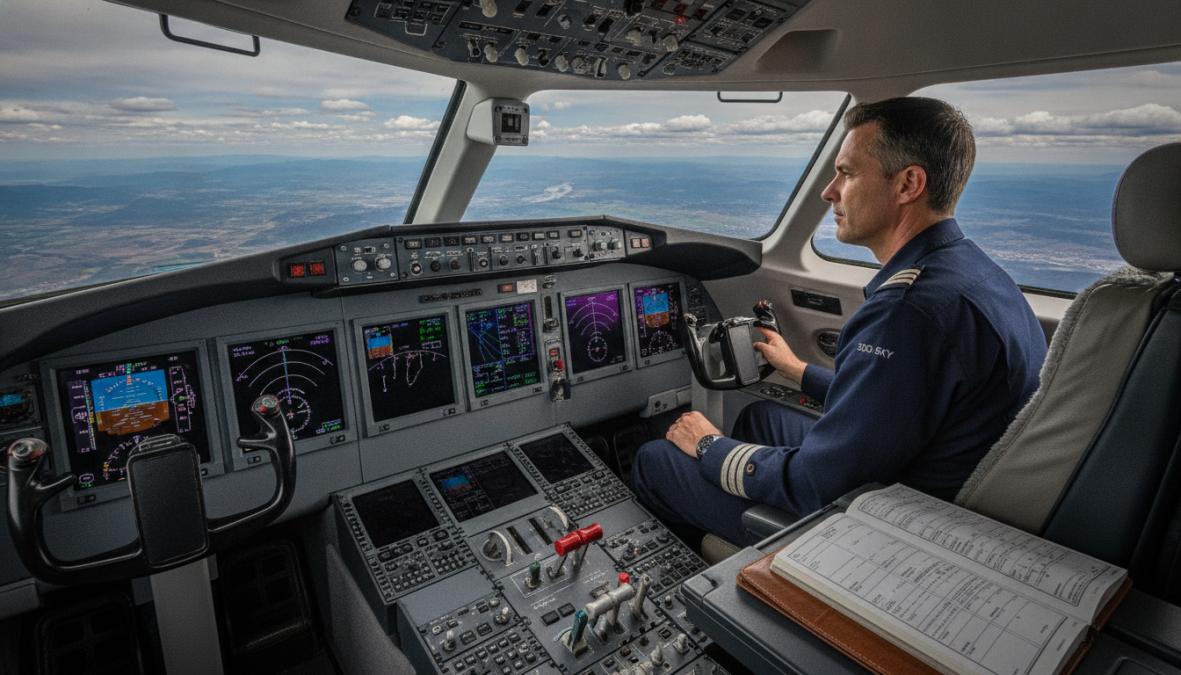
Safety improvements represent the most tangible benefit of modern avionics systems. Glass cockpits eliminate the scanning workload that pilots endured for decades, instead of cross-checking six analog gauges, you're monitoring one integrated display. That shift alone reduces pilot error, the leading cause of accidents in general aviation.
Real-time weather integration transforms decision-making. Rather than requesting weather updates from ATC, your avionics suite pulls live data continuously. You see convective activity, wind shear, and icing conditions as they develop, not as historical reports.
TAWS and TCAS Integration
Terrain Awareness and Warning Systems (TAWS) and Traffic Collision Avoidance Systems (TCAS) are now essential for serious operators. TAWS displays your aircraft's position relative to terrain on a color-coded moving map, alerting you before you descend dangerously close to mountains. TCAS tracks other aircraft and provides resolution advisories, specific climb or descent instructions, not just warnings.
Retrofitting these systems requires Supplemental Type Certificate (STC) approval from the FAA. While this adds time to an upgrade project, it's non-negotiable; the FAA won't allow these systems to operate without proper validation.
Real-Time Weather and Navigation Data
GPS-based navigation with ground-based augmentation systems (WAAS in North America) delivers navigation accuracy within 3 meters, compared to the half-mile accuracy of older systems. Weather radar integration gives you visual confirmation of precipitation and convective activity ahead. Combined with real-time lightning data, modern avionics give pilots unprecedented visibility into atmospheric hazards.
Data link capability means your aircraft receives weather updates, notices to airmen (NOTAMs), and traffic information continuously. You're not flying blind between radio calls anymore.
Reducing Pilot Workload Through Glass Cockpit Technology
Pilot fatigue is a documented threat to safety. Glass cockpit technology consolidates workload dramatically by presenting flight information on large, integrated displays. Instead of scanning six separate instruments, pilots monitor one primary flight display (PFD) and one multi-function display (MFD). The reduction in eye movement decreases fatigue on long flights, and the system handles many routine calculations automatically.
Autopilot Integration and System Redundancy
Modern autopilots can fly approaches down to very low visibility minimums, hold altitude and heading with precision, and automatically transition between waypoints. They're integrated with your flight guidance system, so the autopilot knows where you want to go and actively flies you there.
System redundancy is built into contemporary avionics architectures. If one display fails, information automatically transfers to a backup screen. If one navigation source becomes unavailable, the system switches seamlessly to another. This redundancy means you retain full capability even if a component fails mid-flight.
Avionics Upgrade Cost: Financial Planning and ROI Analysis
Cost is a legitimate concern, but the financial picture is more favorable than many assume. A comprehensive avionics retrofit involves equipment costs, labor, aircraft downtime, and certification. However, operational cost reductions begin immediately.
Understanding Total Cost of Ownership
Modern avionics require less maintenance than aging analog systems. Fewer instruments mean fewer moving parts prone to failure. Many glass cockpit components are solid-state electronics with minimal maintenance intervals. Over five years, maintenance costs typically decrease despite the higher initial investment.
Fuel efficiency improvements compound the financial benefit. Modern navigation systems fly more direct routes. Autopilot integration allows optimal altitude management, reducing fuel burn. For operators flying 500+ hours annually, these efficiency gains offset a meaningful portion of the upgrade cost within the first few years.
Return on Investment Metrics
A business jet with modern avionics commands a premium over an equivalent aircraft with legacy systems. That premium typically recovers 40-60% of the upgrade cost over the aircraft's remaining service life. For a $5 million business jet, upgrading from legacy analog systems to modern glass cockpit avionics typically adds 8-15% to resale value, $400,000 to $750,000.
Training costs are real but finite. Pilots require initial type training on the new avionics, typically 8-16 hours of instruction. These are one-time expenses, not ongoing operational costs.
Avionics Installation Timeline: What to Expect
The installation timeline varies based on scope. A glass cockpit retrofit isn't like replacing a radio, it involves wiring harness changes, instrument panel modifications, and systems integration testing.
Pre-Installation Planning and STC Certification
Before installation begins, the avionics shop conducts a detailed systems review, examining your current electrical system, backup power sources, and structural considerations. They develop a detailed installation plan and establish the certification roadmap.
STC certification is non-negotiable for retrofit avionics. The FAA requires proof that new equipment integrates safely with existing systems. This pre-installation phase typically takes 4-8 weeks and is the most critical period, a thorough plan prevents costly delays during actual installation.
Minimizing Aircraft Downtime
Installation duration depends on scope. A basic glass cockpit retrofit typically requires 3-5 weeks of continuous work. More comprehensive upgrades extend the timeline to 6-10 weeks. After installation, testing and certification activities add 2-3 weeks. Plan for total downtime of 8-14 weeks for a comprehensive retrofit.
Impact of Avionics on Aircraft Resale Value
Avionics condition directly influences what buyers will pay for your aircraft. A business jet with modern glass cockpit avionics commands a significant premium over an equivalent airframe with legacy systems. This premium reflects both reduced operating costs and expanded capability.
Modern avionics reduce buyer risk. Purchasers know they're acquiring an aircraft with lower maintenance requirements and greater capability. A retrofit completed within the last 5 years signals to potential buyers that the aircraft has been well-maintained and positioned for continued reliable operation.
Compliance, Connectivity, and Modern Cockpit Standards
Regulatory requirements are driving avionics upgrades across the industry. Understanding these requirements prevents being forced into reactive upgrades and allows you to plan strategically.
Mandatory Regulatory Requirements
ADS-B (Automatic Dependent Surveillance-Broadcast) is now mandatory for most aircraft operating in U.S. airspace. The FAA deadline has passed for most operators, but aircraft without compliant equipment face operational restrictions. You can't operate in Class B airspace without ADS-B.
Upcoming mandates will require additional capabilities. The FAA is evaluating requirements for terrain awareness systems on aircraft operating below 5,000 feet. Staying ahead of these mandates through proactive avionics upgrades prevents being forced into emergency retrofits on compressed timelines.
Data Link Capabilities and Electronic Flight Bag Integration
Modern avionics integrate with electronic flight bags (EFBs), tablet-based systems that display charts, weather, and flight planning information. Data link connectivity receives real-time weather, NOTAM, and traffic information, transforming situational awareness.
Connectivity also enables remote diagnostics and software updates. Modern avionics systems can transmit health data to the manufacturer, allowing predictive maintenance. Rather than discovering a component is failing during an inspection, the system alerts you before failure occurs.
Key Avionics Upgrade Benefits: A Practical Checklist
Modern avionics deliver benefits across multiple dimensions. Use this checklist to evaluate whether an upgrade makes sense for your operation.
| Benefit Category | What to Evaluate | Expected Outcome |
|---|---|---|
| Safety | TAWS/TCAS integration, weather radar capability | Reduced accident risk, expanded operating envelope |
| Workload | Glass cockpit integration, autopilot capability | Reduced pilot fatigue, improved decision-making |
| Compliance | ADS-B, terrain awareness, data link capability | Regulatory compliance, unrestricted airport access |
| Efficiency | Navigation precision, fuel optimization, route planning | Reduced fuel burn, shorter flight times |
| Reliability | System redundancy, maintenance intervals, diagnostics | Reduced unexpected maintenance, improved availability |
| Resale Value | Equipment age, capability, maintenance history | 8-15% increase in aircraft value |
Safety enhancements form the foundation of any upgrade decision. Modern terrain awareness and traffic avoidance systems prevent accidents that older aircraft can't avoid. Operational efficiency becomes increasingly important for high-use aircraft, navigation precision and autopilot integration reduce fuel burn and flight times. Regulatory compliance is non-negotiable; plan upgrades around regulatory timelines to avoid emergency retrofits. Pilot workload reduction improves safety and crew morale on long flights. Resale value appreciation provides financial incentive beyond operational benefits.
Avionics upgrades represent one of the most impactful investments you can make in your aircraft. The benefits span safety, efficiency, and regulatory compliance. At 305 Sky, we've guided dozens of operators through successful avionics retrofits, coordinating with manufacturers, managing installations, and ensuring FAA compliance. Our 55+ years of combined aviation experience means we understand the complexities and can guide you toward the right solution. Get a quote today and discover how modern avionics can transform your operation.
Frequently Asked Questions
Is an avionics upgrade worth the investment for my jet?
Yes, avionics upgrades deliver measurable returns through enhanced safety, reduced pilot workload, improved resale value, and regulatory compliance. While upfront costs vary based on your aircraft type and desired avionics suite, the long-term benefits, including lower insurance premiums, increased operational efficiency, and stronger market positioning, justify the investment. Many operators recover costs through improved aircraft utility and faster resale.
How long does an avionics installation timeline typically take?
Installation duration depends on your aircraft model, avionics complexity, and required STC certifications. Simple upgrades may take 2-4 weeks, while comprehensive glass cockpit modernizations can require 8-12 weeks or longer. Planning ahead with your maintenance provider minimizes downtime. 305 Sky coordinates scheduling to optimize your aircraft availability while ensuring thorough system integration and testing.
Do avionics upgrades really increase aircraft resale value?
Absolutely. Modern avionics systems, especially glass cockpits, ADS-B compliance, and integrated navigation, are highly attractive to buyers and command premium pricing. Aircraft with updated avionics suites demonstrate better operational capability, lower maintenance risk, and regulatory compliance. This translates to faster sales and higher valuations compared to legacy-equipped aircraft in the same market segment.
What are the most common avionics systems replaced during an upgrade?
Typical upgrades include glass cockpit displays, GPS/navigation systems, autopilot integration, weather radar, TAWS (Terrain Awareness and Warning Systems), TCAS (Traffic Collision Avoidance Systems), and data link capabilities. Many operators also add electronic flight bag compatibility and ADS-B Out equipment for regulatory compliance. Your upgrade scope depends on current systems, operational needs, and budget considerations.
This article was written using GrandRanker