Table of Contents
- Understanding Challenger Maintenance Near Me
- Dodge Challenger Service Intervals Explained
- Independent vs Dealership Auto Repair for Your Challenger
- Cost of Dodge Challenger Maintenance: Budget Planning
- Common Engine Repair Issues and Diagnostic Testing
- Performance Vehicle Tuning and Upgrades for Your Challenger
- Finding a Reliable Service Center for Challenger Maintenance
- Conclusion
Last Updated: August 16, 2026
Understanding Challenger Maintenance Near Me
Finding reliable challenger maintenance near me starts with knowing what your Dodge Challenger actually needs. Too many owners either skip routine service or overspend on repairs that could have been prevented. The truth sits somewhere in between: a structured maintenance plan keeps your performance vehicle running strong while protecting your investment.
Your Challenger isn't just transportation. It's a high-performance machine with specific requirements that differ from standard vehicles. Engine complexity, brake system demands, and transmission specifications all matter. When you search for challenger maintenance near me, you're looking for someone who understands these demands, not just a generic auto repair shop.
This guide covers what you actually need to know about maintaining a Dodge Challenger, from factory-scheduled intervals to common failure points. We'll walk through costs, explain the independent versus dealership decision, and show you exactly what to look for in a service center. By the end, you'll know whether your current maintenance approach is protecting your vehicle or leaving it vulnerable.
Dodge Challenger Service Intervals Explained
Your Challenger comes with a factory maintenance schedule for a reason. Following it prevents cascading failures that cost thousands later. The schedule isn't arbitrary, it's engineered based on how the engine, transmission, cooling system, and other critical systems actually wear.
Factory-Scheduled Maintenance Timeline
Factory-scheduled maintenance divides into two categories: routine service and major service intervals. Routine service typically occurs every 3,000 to 5,000 miles for oil changes, while fluid exchanges and filter replacements follow longer intervals. Your owner's manual specifies exact timing based on your model year and engine type.
Most Challengers follow this general pattern:
- Oil and filter changes: every 3,000-5,000 miles (depending on oil type)
- Tire rotation: every 5,000-7,500 miles
- Air filter replacement: every 12,000-15,000 miles
- Cabin air filter: every 12,000-15,000 miles
- Transmission fluid service: every 30,000-60,000 miles (varies by transmission type)
- Spark plugs: every 30,000-100,000 miles (depends on plug type)
- Cooling system flush: every 30,000-50,000 miles
- Brake fluid exchange: every 24,000-36,000 miles
The intervals matter because they're calibrated to your engine's operating conditions. Skip them and you're gambling with expensive repairs. A timing belt replacement or transmission overhaul costs far more than preventative maintenance.
High-Mileage Vehicle Maintenance Checklist
Once your Challenger passes 100,000 miles, maintenance becomes even more critical. High-mileage vehicles experience accelerated wear on seals, gaskets, and internal components. What worked at 50,000 miles may not cut it anymore.
For high-mileage Challengers, add these checks to your routine:
- Battery testing: batteries degrade over time; test annually after 80,000 miles
- Suspension alignment: worn suspension affects handling and tire wear; check every 20,000 miles on high-mileage vehicles
- Brake pad inspection: inspect every 5,000 miles on vehicles over 100,000 miles
- Hose and belt inspection: rubber deteriorates; check for cracks, splits, or soft spots
- Coolant condition: old coolant loses effectiveness; consider flushing more frequently
- Transmission pan inspection: look for metal particles indicating internal wear
- Differential service: if towing or driving aggressively, service more frequently
- Exhaust system inspection: corrosion accelerates on older vehicles
The key with high-mileage vehicles is catching problems early. A small leak detected at 110,000 miles becomes a major failure at 115,000 miles if ignored. Regular inspections catch these issues before they strand you.
Independent vs Dealership Auto Repair for Your Challenger
This decision affects cost, warranty coverage, and the expertise you actually get. Both have legitimate advantages and real limitations. The choice depends on your specific situation and what matters most to you.
What Each Option Offers
Dealerships employ technicians trained specifically on Dodge vehicles. They have factory diagnostic equipment, access to OEM parts, and knowledge of model-specific issues. If your Challenger is under warranty, dealership service protects that coverage. They also maintain digital service records tied to your vehicle's history.
The trade-off is cost. Dealership labor rates typically run 30-50% higher than independent shops. Parts pricing also reflects the dealership markup. You're paying for brand-name service and warranty protection, not necessarily better work.
Independent auto repair shops offer flexibility, often lower pricing, and sometimes deeper mechanical expertise. A skilled independent technician can diagnose and repair your Challenger just as effectively as a dealership tech. Many independents specialize in specific vehicle types or performance work. They typically charge less for labor and can source aftermarket or used parts at lower costs.
The risk: independent shops vary wildly in quality. A poorly executed repair at an independent shop leaves you without recourse. You also lose factory warranty coverage on the work performed (though many independents carry their own liability insurance).
ASE-Certified Technician Expertise and Warranty Coverage
ASE certification matters more than shop location. An ASE-certified technician has passed rigorous exams and maintains ongoing education. They understand diagnostic testing, electrical systems, engine repair, and brake service at a professional standard.
When evaluating any shop, dealership or independent, ask about ASE certification. Request to see certifications before authorizing work. A shop that hesitates to show credentials is a red flag.
Warranty coverage on repairs varies significantly. Dealerships typically warranty their work for 12 months or 12,000 miles. Many independent shops offer similar coverage. Always get this in writing before service begins. Ask specifically about parts warranty versus labor warranty, they're often different.
For major work like transmission repair or engine rebuild, warranty terms become critical. A failed transmission two months after repair is financially devastating. Choose shops that stand behind their work with documented, written warranties.
Cost of Dodge Challenger Maintenance: Budget Planning
Maintenance costs depend on what you're doing and where you're doing it. Routine service costs far less than major repairs, but skipping routine service guarantees major repairs later.
Routine Service Costs and Fluid Exchange
Routine service, oil changes, filter replacements, fluid exchanges, represents your maintenance baseline. These services prevent expensive failures and should be budgeted as regular expenses.
A basic oil change with filter runs between basic pricing at independent shops and higher pricing at dealerships. Tire rotation adds minimal cost. Air filter replacement is inexpensive; cabin air filter slightly more.
Fluid exchanges cost more than simple top-offs. A transmission fluid service, cooling system flush, or brake fluid exchange each involve draining old fluid, replacing filters, and refilling with fresh fluid. These services prevent internal damage to critical systems.
Budget for routine service as a quarterly or semi-annual expense. Spread across the year, it's manageable. Deferred maintenance creates financial emergencies.
Common Engine Repair and Brake Service Expenses
Engine repairs range from affordable to catastrophic depending on the problem. Spark plug replacement is straightforward. A timing belt replacement is more involved. Engine overhaul is expensive.
Brake service includes pad replacement, rotor resurfacing or replacement, and brake fluid service. Brake service is non-negotiable, failed brakes create safety hazards. Don't defer brake work.
The real cost spike comes from diagnostic work. If your Challenger won't start or runs rough, diagnostic testing identifies the problem. This service costs money but prevents you from replacing the wrong component. A skilled automotive technician uses diagnostic equipment to pinpoint electrical issues, sensor failures, and engine problems.
ASE certification standards for automotive technicians require technicians to maintain current knowledge of diagnostic procedures. When a shop charges for diagnostic testing, you're paying for expertise that prevents costly mistakes.
Common Engine Repair Issues and Diagnostic Testing
Your Challenger's engine can develop specific problems based on model year, mileage, and maintenance history. Knowing the warning signs helps you catch issues early.
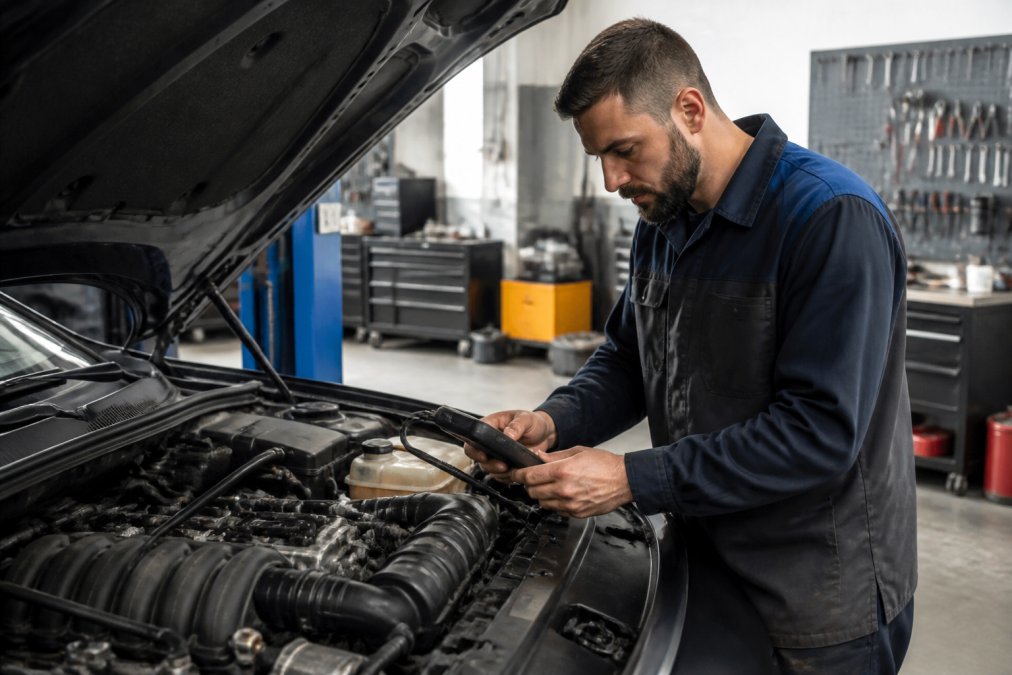
Common issues include valve timing problems, spark plug fouling, fuel system issues, and cooling system failures. Each produces specific symptoms. A rough idle might indicate spark plug wear or a fuel system problem. Overheating points to cooling system failure or thermostat malfunction.
Diagnostic testing uses specialized equipment to read your engine's computer. Modern Challengers report hundreds of data points through their onboard diagnostic system. A technician connects a diagnostic scanner, reads fault codes, and interprets the results. This process identifies the actual problem rather than guessing based on symptoms.
Warning signs of common model-specific failures include check engine lights, loss of power, excessive exhaust smoke, and coolant leaks. Don't ignore these signals. A small leak at 50,000 miles becomes an engine failure at 55,000 miles if left unaddressed.
Electrical diagnostics are particularly important on performance vehicles. Alternator failure, battery issues, and sensor malfunctions all affect engine performance. Diagnostic testing distinguishes between electrical problems and mechanical ones, saving you from replacing expensive components unnecessarily.
Performance Vehicle Tuning and Upgrades for Your Challenger
Beyond maintenance, many Challenger owners pursue performance upgrades. Tuning and upgrades enhance engine output, improve handling, or upgrade interior features. These modifications require expertise beyond basic maintenance.
Performance tuning adjusts engine parameters through software or mechanical modifications. ECU tuning optimizes fuel injection timing and boost pressure. Intake and exhaust upgrades improve airflow. These modifications increase horsepower and torque but require knowledge of your specific engine type.
Upgrades differ from maintenance. A new exhaust system is an upgrade. A timing belt replacement is maintenance. Mixing the two confuses your service planning. Maintenance keeps your Challenger running; upgrades enhance performance.
Choose a service center experienced with performance vehicles. Not every shop understands tuning or has the equipment for advanced diagnostics on modified vehicles. Ask about their experience with Challenger-specific modifications before authorizing work.
Finding a Reliable Service Center for Challenger Maintenance
Your choice of service center affects maintenance quality, costs, and peace of mind. The right shop becomes a trusted partner; the wrong one creates frustration and financial problems.
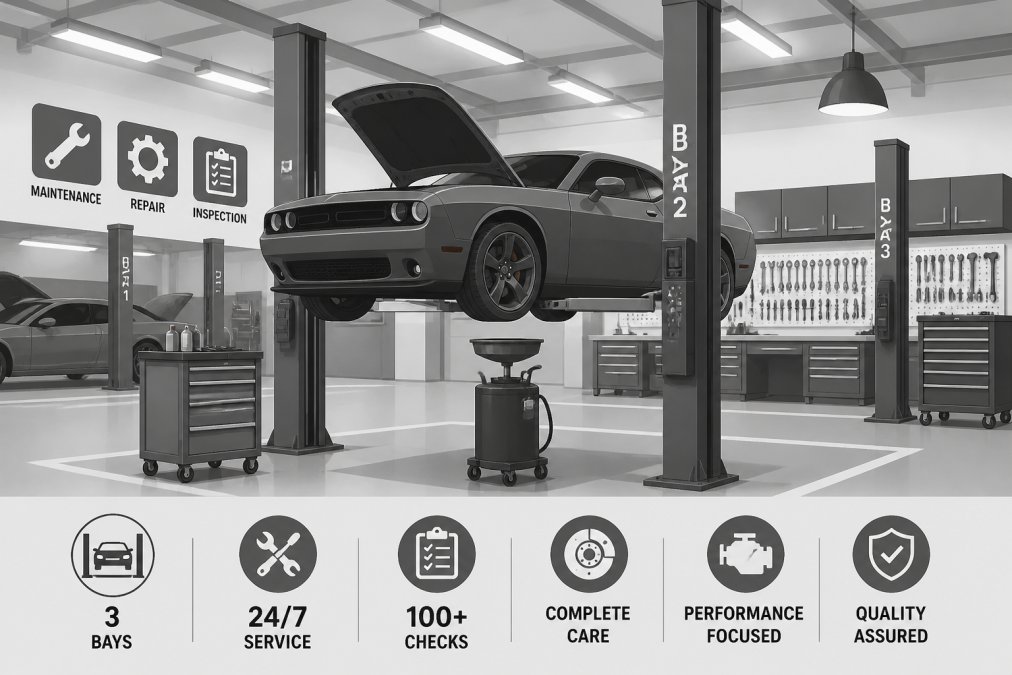
Start by asking for referrals. Friends, family, and online reviews reveal real experiences. Look specifically for reviews mentioning Challenger service or performance vehicle work. Generic praise for "great service" means less than specific feedback about a particular repair.
Check credentials. ASE certification indicates professional standards. Ask how long the shop has been in business and whether they specialize in Dodge vehicles or performance cars. A shop with 20 years of experience carries more weight than one opened last year.
Visit in person. A well-organized shop with clean work bays and proper equipment suggests professionalism. Talk to the service manager about their approach to diagnostics and maintenance. How do they handle warranty work? What's their process for communicating repairs to customers?
What to Look for in an Automotive Technician
The technician matters more than the shop name. A skilled technician at a small independent shop outperforms an inexperienced technician at a dealership. Ask about specific experience with your Challenger model year and engine type.
Request transparency in pricing and communication. A good technician explains what's wrong, why it matters, and what it costs. They show you the problem when possible. They don't recommend repairs you don't need.
Ask about warranty coverage on their work. Reputable technicians stand behind repairs with written warranties. They also carry liability insurance protecting you if something goes wrong.
Look for ongoing education. The automotive industry changes constantly. New diagnostic equipment, updated procedures, and model-specific knowledge require continuous learning. Technicians who invest in education deliver better service.
Reliability matters. Does the shop keep appointments? Do they call if work takes longer than expected? Do they respond to questions after the repair? These behaviors indicate professionalism and customer respect.
Finding challenger maintenance near me means finding people who understand your vehicle and respect your time and money. Whether you choose a dealership or independent shop, prioritize ASE-certified technicians, transparent communication, and documented warranties. Your Challenger deserves expertise, and you deserve honesty.
305 Sky specializes in comprehensive, 24/7 aircraft maintenance and management services across South Florida. With over 55 years of combined aviation experience, our team delivers expert care ranging from routine inspections and AOG emergency response to bespoke cabin transformations and avionics upgrades. We pride ourselves on a transparent, family-oriented approach that ensures your aircraft remains airworthy, compliant, and in peak condition. Trust our dedicated professionals to handle every detail of your aviation needs with efficiency, honesty, and unmatched technical expertise. Get a Quote
Frequently Asked Questions
What is the recommended maintenance schedule for a Dodge Challenger?
Dodge Challenger maintenance follows factory-scheduled intervals typically at 3,000, 6,000, 12,000, and 24,000 miles. Early intervals focus on oil changes and fluid checks. At 12,000 miles, tire rotation and brake inspection occur. At 24,000 miles, transmission fluid and coolant system flush may be needed. Your owner's manual provides the exact schedule for your model year. High-performance driving or towing requires more frequent service intervals and closer attention to drivetrain service and suspension alignment.
Are Dodge Challengers expensive to maintain?
Maintenance costs depend on whether you choose dealership or independent service. Routine oil changes and tire rotation are standard expenses. Brake service, suspension alignment, and electrical diagnostics add to costs over time. Performance vehicles like the Challenger may require higher-grade fluids and specialized parts. Independent repair shops typically charge less than dealerships for the same work. Getting a repair estimate before authorization helps control costs. Parts warranty coverage varies by service provider, affecting long-term expenses.
Should I take my Dodge Challenger to a dealership or an independent mechanic?
Dealerships offer factory-trained technicians familiar with Challenger-specific systems and manufacturer warranty requirements. They stock OEM parts and provide service records recognized by future buyers. Independent shops often provide more personalized service at lower rates and can handle engine repair, brake service, and transmission repair competently. ASE-certified independent technicians deliver quality diagnostic services and routine maintenance. Consider your warranty status, budget, and preference for personalized attention. Many owners use dealerships for warranty work and independents for routine maintenance after warranty expires.
How do I find a certified Dodge mechanic in my area?
Search for ASE-certified automotive technicians or service centers specializing in Dodge vehicles. Check online reviews and ask for references from other Challenger owners. The National Institute for Automotive Service Excellence (ASE) maintains a locator tool for certified technicians. Verify that the shop has experience with your Challenger's model year and engine type. Ask about their diagnostic services, parts warranty, and service interval recommendations. A reputable auto repair shop will provide transparent communication about repairs and offer repair estimates upfront.
This article was written using GrandRanker