Table of Contents
- Why Private Jet Avionics Upgrade Benefits Matter in 2026
- Enhanced Safety and Flight Performance
- Operational Efficiency and Reduced Downtime
- Private Jet Cockpit Modernization Cost and Budget Planning
- Aircraft Avionics Installation Timeline: What to Expect
- Avionics Upgrade Resale Value Impact on Your Aircraft
- FAA Compliance, Cybersecurity, and Modern Avionics Integration
- 2026 Bonus Depreciation and Financial Benefits
Last Updated: July 14, 2026
Private jet avionics upgrade benefits in 2026 represent a rare convergence of regulatory deadlines, tax incentive windows, and technological advancement where upgrading makes both operational and financial sense. The FAA's NextGen airspace mandate is now in enforcement season, and bonus depreciation rules favoring aviation equipment investments phase down after 2026. This guide walks you through what's changed, what you'll spend, and how to calculate whether an upgrade makes sense for your aircraft.
Why Private Jet Avionics Upgrade Benefits Matter in 2026
The case for upgrading has never been stronger. While safety and compliance matter, the real story in 2026 is financial: the tax incentive window is closing, and aircraft values are correcting downward for non-compliant platforms.
Under current IRS guidance, a properly structured avionics upgrade qualifies for bonus depreciation, allowing you to deduct the full equipment cost in the year of installation rather than depreciating it over time. This creates immediate tax relief. The rules tighten significantly after 2026, making this year the last realistic window for owners considering an upgrade.
Operationally, modern glass cockpit systems reduce pilot workload during critical flight phases. Weather radar integration enables better route planning and fewer delays. ADS-B Out compliance keeps you legal in controlled airspace. The real operational win is reduced downtime: older avionics require more frequent maintenance with parts lead times stretching to months. Modern systems are more reliable and easier to repair.
Enhanced Safety and Flight Performance
Upgrading from legacy steam gauges or first-generation glass cockpits to modern avionics suites fundamentally changes how your aircraft handles weather, terrain, and navigation challenges.
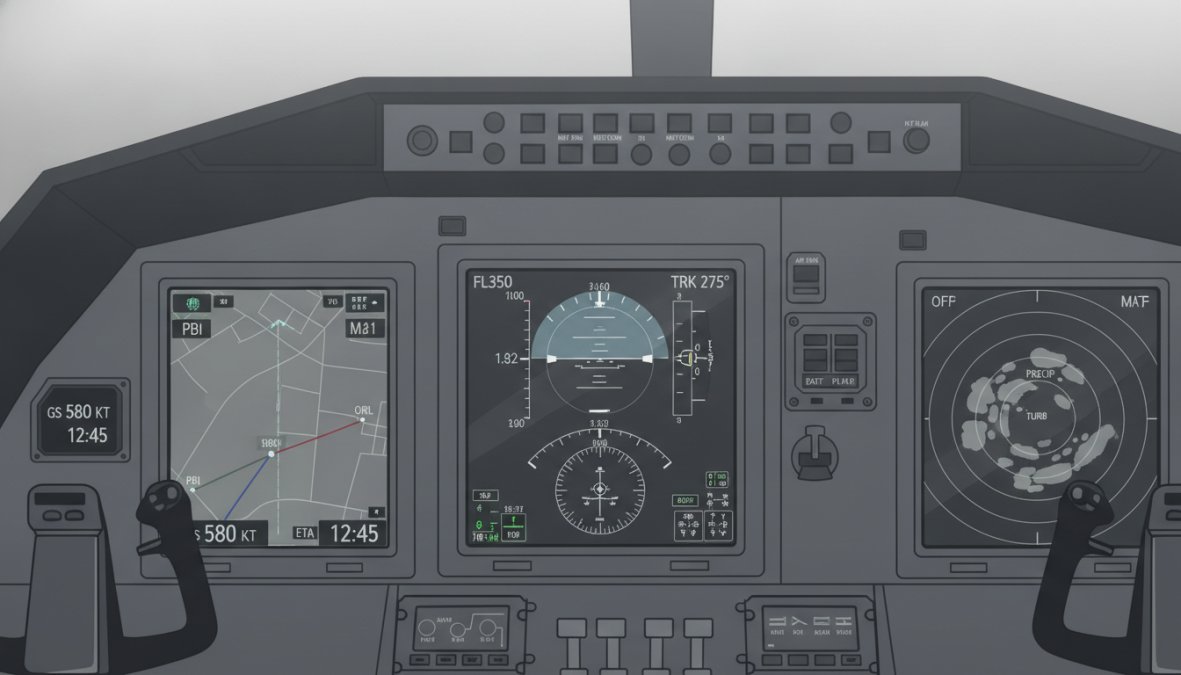
ADS-B Out and NextGen Airspace Compliance
ADS-B Out (Automatic Dependent Surveillance-Broadcast) is no longer optional in most U.S. airspace. Non-compliant aircraft face restrictions on controlled airspace access, directly impacting operational flexibility.
Modern ADS-B systems transmit your aircraft's position, altitude, and velocity to air traffic control and other equipped aircraft, creating cleaner airspace pictures and reducing separation minimums. For operators flying frequently into busy terminal areas, the operational benefit is measurable: shorter flight times, fewer holds, and better coordination with approach control.
If your aircraft operates in Class B, C, or D airspace, you need ADS-B Out. The upgrade typically includes a new transponder, antenna, and integration with your existing avionics suite. Installation takes 20-40 hours depending on your current setup and aircraft type.
Advanced Navigation and Weather Radar Integration
Modern GPS-based flight management systems integrate GPS, inertial reference units, and ground-based navigation aids into a unified solution more accurate and resilient than any single source.
Weather radar integration is where the safety story becomes compelling. Real-time weather data overlaid on your moving map allows pilots to navigate around convective activity with precision. Modern systems enable proactive decision-making rather than reactive responses to pilot reports and ATC vectors.
Better weather avoidance means fewer diversions, fewer delays, and reduced turbulence exposure. For aircraft operating in regions with frequent thunderstorm activity, the reduction in unplanned landings alone can justify the upgrade cost within a few years.
Operational Efficiency and Reduced Downtime
Older avionics systems fail more frequently and take longer to repair. When your aircraft is grounded waiting for parts, you lose revenue and disappoint clients.
Modern avionics suites use modular architectures where components can be swapped quickly. If a display unit fails, you replace the display, not the entire system. Parts availability is better, maintenance intervals are longer, and service bulletins are fewer. Operators report 30-40% reductions in unscheduled maintenance events after upgrading to modern systems.
Modern systems use more intuitive interfaces, requiring less recurrent training than older glass cockpits. For operators with multiple aircraft, standardization across the fleet improves pilot cross-training efficiency, deepens maintenance technician expertise, and optimizes spare parts inventory.
Private Jet Cockpit Modernization Cost and Budget Planning
A comprehensive avionics upgrade for a mid-size jet runs between $400K-$2M depending on your aircraft type, current avionics, and desired feature set. The cost includes equipment, installation labor, certification testing, and pilot training.
Capital Expenditure and Tax Incentive Strategy
The IRS bonus depreciation rules allow you to deduct the full cost of qualified property improvements in the year they're placed in service. For avionics upgrades, this means deducting the entire equipment and installation cost against your 2026 income rather than depreciating it over 5-7 years.
For operators in high tax brackets, the after-tax cost of an upgrade can be 30-40% lower than the sticker price. The window closes after 2026, when bonus depreciation rules phase down. This creates urgency for operators considering an upgrade.
Work with your tax advisor to model the specific benefit for your situation. The calculation depends on your current income, expected future income, and overall tax position.
Aircraft Avionics Installation Timeline: What to Expect
The actual timeline depends on your aircraft, current avionics, and specific systems you're upgrading. Avionics manufacturers have normalized long lead times: a new glass cockpit system can take 8-12 weeks from order to delivery.
Your installation timeline has three phases: procurement (2-4 weeks), installation (60-100 hours of labor, translating to 2-4 weeks depending on shop availability), and certification testing (1-2 weeks). Total time from order to first flight with new avionics is typically 8-14 weeks.
The critical variable is shop availability. Major avionics shops in busy markets have backlogs. Starting the process 16-20 weeks before your desired completion date provides a realistic buffer. Plan for your aircraft to be down during installation, you cannot operate with open avionics bays or incomplete wiring.
Avionics Upgrade Resale Value Impact on Your Aircraft
Aircraft with modern avionics suites command 8-15% price premiums compared to similar aircraft with legacy systems. For a mid-size jet valued at $8-12 million, that's a $640K-$1.8M premium.
However, upgrade costs vary. A basic glass cockpit retrofit might cost $400K-$600K, while a comprehensive upgrade with weather radar and flight management system could run $1.2M-$2M. If you spend $1.5M upgrading and recover $1.2M in resale value, you've effectively paid $300K for 8-10 years of improved safety, reduced downtime, and operational efficiency.
For long-term operators (5+ years), the upgrade typically delivers positive ROI when downtime reduction and maintenance savings are factored into total cost of ownership. Short-term owners should model the specific resale impact for their aircraft type before committing.
FAA Compliance, Cybersecurity, and Modern Avionics Integration
The FAA increasingly focuses on cybersecurity in avionics systems. Older platforms were never designed with cyber threats in mind.
Glass Cockpit Systems and Autopilot Integration
Modern glass cockpit systems integrate autopilot functions, flight management, navigation, and communication into unified architectures using distributed designs where critical functions are separated across independent processors. If one system fails, others continue operating.
Advanced autopilot modes handle complex approaches, weather avoidance, and fuel optimization. For single-pilot operations, modern autopilot capabilities are genuinely safety-enhancing because they reduce workload during critical phases.
Cybersecurity for Modern Avionics Suites
Modern avionics systems have network connectivity for weather data and flight plan updates. Each connection point is a potential vulnerability. Modern avionics manufacturers have implemented security practices that didn't exist in older systems: firmware updates are signed and verified, communication protocols include encryption and authentication, and systems fail safely if a security breach is detected.
At minimum, your avionics system should have secure firmware update mechanisms, encrypted communication for data transmission, and network isolation from non-critical systems. In-flight entertainment and cabin management systems should be completely segregated from avionics systems.
2026 Bonus Depreciation and Financial Benefits
Bonus depreciation allows you to deduct the full cost of qualified property in the year it's placed in service. For avionics equipment, "placed in service" means the aircraft is operational with new systems installed and FAA-certified.
The effective cost depends on your tax bracket. In the 37% federal bracket plus state taxes, a $1.5M avionics upgrade effectively costs roughly $900K after tax benefits. In the 24% bracket, the effective cost is roughly $1.14M.
This calculation assumes sufficient taxable income to use the full deduction. The bonus depreciation window phases down after 2026, creating urgency for operators considering an upgrade. Work with your tax advisor and avionics shop to coordinate timing, you want to place the system in service before year-end. This typically requires starting the process by August or September.
Navigating an avionics upgrade decision involves balancing regulatory compliance, operational benefits, and financial timing. The 305 Sky team specializes in coordinating these elements across our South Florida operations, with expertise in pre-upgrade aircraft assessment through post-installation certification and pilot training. Our transparent approach ensures you understand exactly what the upgrade entails, how long it will take, and what to expect afterward. Get a quote from 305 Sky today and let our 55+ years of combined aviation experience guide your upgrade strategy.
Frequently Asked Questions
What are the main private jet avionics upgrade benefits in 2026?
The primary benefits include enhanced safety through modern navigation and collision avoidance systems, FAA NextGen compliance, improved operational efficiency with reduced maintenance downtime, increased aircraft resale value, and access to 2026 bonus depreciation tax incentives. Glass cockpit systems also reduce pilot workload and enable better integration with air traffic control data links.
How does an aircraft avionics installation timeline affect my operation?
Installation timelines typically range from several weeks to months depending on system complexity and supply chain availability. Planning ahead is critical, lead times for specialized avionics components can extend 12-16 weeks. Coordinate with your avionics shop to schedule installation during planned maintenance windows to minimize aircraft downtime and operational disruption.
Does an avionics upgrade resale value impact justify the investment?
Yes, modern avionics upgrades significantly enhance aircraft resale value. Buyers prioritize aircraft with current glass cockpit systems, IFR certification upgrades, and FAA-compliant ADS-B Out equipment. A well-documented retrofit increases buyer confidence and justifies higher asking prices, often recovering 40-60% of upgrade costs through improved market positioning.
What cybersecurity concerns should I consider with modern avionics?
Modern avionics suites with data link and GPS integration require robust cybersecurity protocols. Ensure your avionics integration includes encrypted communications, regular firmware updates, and isolated flight management systems. Work with certified avionics shops that follow FAA security guidelines. Cybersecurity for modern avionics is increasingly critical as systems become more networked.
This article was written using GrandRanker