Table of Contents
- Why Cockpit Modernization Matters for Your Aircraft
- Aircraft Avionics Upgrade Financing: Your Core Options
- FAA NextGen Avionics Compliance and Financial Planning
- Avionics Installation Cost Estimation and Budgeting
- Loan Terms, Down Payments, and Interest Rates
- ROI of Cockpit Modernization: Resale Value and Operating Efficiency
- Step-by-Step Financing Workflow for Your Project
- Frequently Asked Questions
Last Updated: September 18, 2026
Why Cockpit Modernization Matters for Your Aircraft
Avionics upgrades aren't luxuries for private jet owners, they're strategic investments that directly impact resale value, operational safety, and regulatory compliance. A modern glass cockpit transforms how you fly, reducing pilot workload while delivering real-time data that older steam gauges simply can't match.
Whether you operate a Citation, King Air, Challenger, Learjet, or Gulfstream, cockpit modernization financing options exist specifically designed for aviation assets. At 305 Sky, we've guided operators through this process, and a well-structured financing plan yields substantially better outcomes than reactive approaches.
NextGen compliance deadlines are real, resale buyers expect modern avionics, and delays increase retrofit costs. This guide covers your cockpit modernization financing options.
Aircraft Avionics Upgrade Financing: Your Core Options
Aircraft-Secured Loans remain the most common choice for established owners. These loans use your aircraft as collateral, which typically means lower interest rates than unsecured personal loans. The lender performs a technical inspection and asset valuation to determine loan-to-value ratios. For an aircraft owner in South Florida, this usually means lenders will finance a significant portion of the retrofit cost, depending on the aircraft's age and condition.
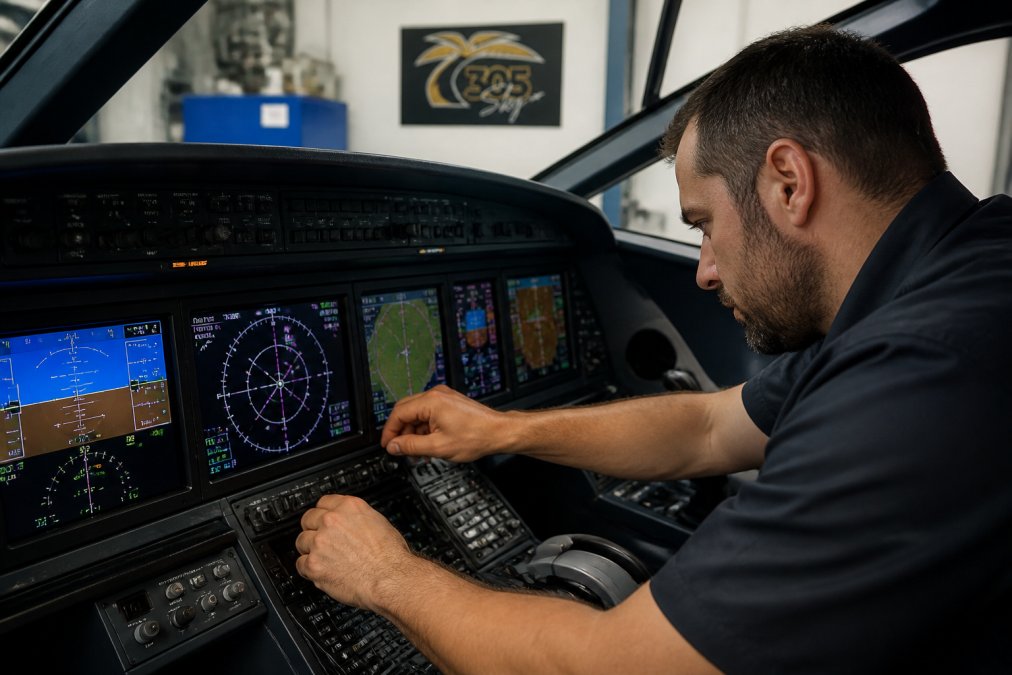
Equipment Financing treats the avionics system as collateral, preserving your aircraft mortgage and offering 3-7 year terms with competitive rates. The trade-off: you remain obligated even if the avionics become obsolete before loan maturity.
Lines of Credit allow staged draws as installation phases complete, useful for owners managing multiple aircraft or coordinating avionics work with other maintenance.
Leaseback Programs allow specialized lenders to finance and retain avionics ownership while you pay monthly fees, with purchase or return options at term end. This minimizes upfront capital but typically costs more overall.
FAA NextGen Avionics Compliance and Financial Planning
The FAA's NextGen mandate is regulatory, not optional, and directly affects your financing timeline and retrofit scope.
The FAA's ADS-B Out requirement drives many owners toward broader cockpit modernization, since upgrading only the transponder rarely makes economic sense in isolation. You're not choosing whether to upgrade; you're choosing when and how to finance the inevitable work.
A modern glass cockpit reduces pilot workload, improves situational awareness, and increases resale appeal. Since you're financing the upgrade for compliance anyway, the incremental cost of a full-capability system is often modest compared to operational and resale gains.
South Florida's high-density airspace makes modern avionics particularly valuable; lenders recognize this and may offer favorable terms for aircraft with current systems due to lower operational risk.
Avionics Installation Cost Estimation and Budgeting
Accurate cost estimation is critical. Total retrofit cost depends on aircraft type, existing systems, installation complexity, and certification requirements.
Retrofits for various aircraft types typically replace core flight deck instruments with modern glass cockpits and integrate navigation and weather systems. The complexity and cost can vary depending on the aircraft's existing systems and the scope of the upgrade.
Beyond the avionics hardware itself, budget for:
- Removal and disposal of legacy systems (older equipment often has disposal costs)
- Wiring harness upgrades (modern systems demand more robust electrical infrastructure)
- Cockpit panel modifications (physical fit-and-finish work)
- Testing and certification (FAA approval adds time and cost)
- Pilot training (new glass cockpit systems require type-specific training)
- Downtime (your aircraft is out of service during installation, typically 4-12 weeks depending on scope)
Include all ancillary costs in your loan request. Underestimating total project cost risks capital shortfalls mid-project.
Get a detailed quote from an authorized service center and use that total as your financing target. Lenders expect precision and it protects you from unexpected expenses.
Loan Terms, Down Payments, and Interest Rates
Down payments typically range from 10-30% of retrofit cost. Larger down payments reduce lender risk and typically lower interest rates; 20-25% often unlocks the best available rates for well-qualified borrowers.
Loan terms typically run 5-10 years. Shorter terms mean higher monthly payments but lower total interest; longer terms reduce monthly burden but increase total interest. Choose based on cash flow and ownership timeline.
Interest rates vary based on credit profile, aircraft age and condition, loan-to-value ratio, and lender type. Always compare multiple lenders; rates vary significantly.
Prepayment penalties exist on some aviation loans. Confirm early repayment terms before signing, especially if you plan to sell or refinance within 3-5 years.
Down payment, term length, and interest rate create a three-way trade-off. Prioritize what matters most, lowest monthly payment, lowest total interest, or fastest payoff, then structure accordingly.
ROI of Cockpit Modernization: Resale Value and Operating Efficiency
Resale Value Premium by Aircraft Type
Modern glass cockpit systems command measurable premiums in the pre-owned market. Buyers seek current avionics to avoid retrofit costs and downtime.
Modernized flight decks are a valuable upgrade for resale pricing. Buyers value operational capability and regulatory future-proofing, avoiding aircraft requiring expensive retrofits.
Compare retrofit cost against anticipated resale premium. Lenders recognize that aircraft collateral appreciates alongside the loan balance and often approve larger retrofit loans accordingly.
Operating Efficiency and Cost Reduction
Modern integrated avionics reduce operating costs by automating routine flight management tasks and reducing pilot fatigue. For operators flying multiple legs per day, this improves dispatch reliability and reduces fatigue-related mistakes.
Modern avionics reduce pre-flight checks, approach briefings, and descent planning time, allowing pilots to focus on safe aircraft operation. Measurable operational benefits include:
- Reduced pilot workload minimizes fatigue on long-range missions, improving safety margins
- Faster approach and landing procedures reduce ground delays and improve on-time performance for charter or management operations
- Integrated weather and terrain awareness reduces the risk of weather-related diversions and unplanned fuel stops
- Automated flight planning reduces the time required for crew briefing and reduces navigation errors
For management and charter operators, efficiency gains directly impact revenue through higher utilization rates. Modern avionics may reduce insurance premiums for some operators.
Financing ROI: The Collateral Appreciation Model
Lenders evaluate cockpit modernization financing using a collateral appreciation framework: baseline aircraft value is established through appraisal, retrofit cost is quoted by an authorized service center, post-retrofit value is estimated from comparable sales, and net financing cost is the difference between retrofit cost and value appreciation.
Your aircraft collateral may increase in value as you repay the loan. An aircraft with modern avionics is more valuable and operationally capable, so lenders may offer more favorable rates than unsecured personal loans.
Timing the Retrofit for Maximum ROI
Retrofit timing directly impacts ROI. Too early and you finance for years before selling; too late and you miss resale premiums and face buyer hesitation about compliance work.
The timing of a retrofit can impact ROI, allowing you to complete the retrofit, demonstrate system reliability, and capture resale premiums.
If you plan to operate for an extended period, retrofitting can offer compounding operational benefits and help recoup costs through improved dispatch reliability and resale appreciation.
For uncertain holding periods, equipment financing (3-7 year terms) offers a middle path, minimizing long-term burden while capturing most operational and resale benefits.
Step-by-Step Financing Workflow for Your Project
Step 1: Define Your Retrofit Scope and Get a Detailed Statement of Work
Meet with an authorized avionics service center certified by the airframe manufacturer for your aircraft type. Different aircraft have different certification pathways, electrical infrastructure requirements, and system integration options.
Request a detailed statement of work (SOW) specifying: exact avionics hardware, labor hours, legacy system removal, wiring harness upgrades, cockpit panel modifications, FAA certification scope, pilot training requirements, estimated downtime (4-12 weeks), and warranty terms. Coordinate with your service center on any aircraft maintenance or routine maintenance needs that may overlap with the retrofit timeline, ensuring comprehensive planning and cost accuracy.
This SOW becomes your financing blueprint and protects you by locking in scope and cost. Lenders expect precision; vague estimates are red flags.
Step 2: Obtain an Independent Aircraft Valuation
Commission an independent aircraft valuation from an FAA-certified appraiser before approaching lenders. This establishes market value and LTV basis, and accelerates the lending process.
The appraiser evaluates aircraft type, serial number, flight hours, maintenance status, avionics condition, interior condition, damage history, and comparable sales.
Appraisals take 1-2 weeks and prevent disputes later about collateral value.
Step 3: Request Loan Estimates from Multiple Aviation Lenders
Contact at least three aviation lenders. Provide retrofit SOW, aircraft specifications, independent valuation, personal financial information, and intended aircraft use.
Request formal loan estimates showing interest rate, loan term, monthly payment, total interest cost, LTV, down payment, prepayment penalties, and funding schedule.
Compare total cost over the loan term, not just interest rate. Aviation lenders vary significantly; comparing three offers reveals substantial differences in rates and prepayment flexibility.
Step 4: Secure Pre-Approval and Collateral Verification
Step 5: Coordinate Installation Timeline with Lender Funding Schedule
Step 6: Close the Loan and Begin Installation
Step 7: Final FAA Inspection, Certification, and System Testing
Step 8: Pilot Training and Operational Readiness
Step 9: Begin Loan Repayment
Key Workflow Principles
Frequently Asked Questions
Can you finance avionics upgrades for private jets?
Yes. Aircraft-specific lenders offer financing tailored to cockpit modernization projects. These loans treat your avionics upgrade as a capital improvement to your asset, allowing you to spread the cost over multiple years. Most aviation lenders will finance NextGen-compliant systems and retrofit installations on eligible aircraft types. Approval depends on your credit profile, aircraft valuation, and the lender's assessment of the upgrade's technical scope.
What are typical loan terms for aircraft cockpit modernization financing?
Aviation financing terms vary depending on the upgrade cost and your lender. Down payments are generally required for the total project cost. Interest rates vary based on credit approval, collateral value, and market conditions. Pre-payment penalties may apply with some lenders, so confirm terms before committing.
Does cockpit modernization increase the resale value of a private jet?
Yes, significantly. Modern avionics enhance both safety and operational efficiency, making your aircraft more attractive to buyers. NextGen-compliant systems can reduce fuel consumption and expand available airspace, potentially lowering operating costs. Aircraft with recently upgraded instrument panels often command higher prices and may sell faster than comparable models with aging flight decks.
What FAA regulations should I consider when upgrading my avionics?
FAA NextGen mandates affect your upgrade path. The FAA's ADS-B Out requirement (now in effect) means your aircraft's avionics must transmit position data. Compliance financing is available for retrofitting eligible aircraft. Additionally, your upgrade must meet Technical Standard Order (TSO) certification requirements. Work with your maintenance provider to ensure your new instrument panel meets all regulatory standards. Some lenders specifically offer compliance-focused financing to help owners meet these FAA deadlines.