Table of Contents
- Why Private Jet Maintenance Providers Matter in Florida
- 305 Sky: 24/7 AOG Support and Comprehensive Aircraft Services
- FAA Part 145 Repair Station Requirements Explained
- How to Select an Aircraft MRO Provider for Your Fleet
- Private Jet Annual Maintenance Cost Breakdown
- Key Services: Line Maintenance, Heavy Overhaul, and Avionics
- What to Expect From a Pre-Purchase Inspection
- Conclusion
Last Updated: August 13, 2026
Why Private Jet Maintenance Providers Matter in Florida
Private jet ownership demands consistent, expert care to remain airworthy, compliant, and reliable. Finding the right private jet maintenance service providers florida means the difference between peace of mind and costly downtime.
Fort Lauderdale sits at the heart of one of the busiest aviation corridors in the country. The region's warm climate, salt-air environment, and high flight frequency create unique maintenance demands. Corrosion accelerates, components wear faster, and unscheduled maintenance happens when you least expect it, often at 2 AM on a Sunday when your aircraft is grounded at a remote airport.
Specialized jet maintenance providers florida prevent problems rather than just fix them. They handle routine line maintenance, emergency AOG support, heavy overhaul work, avionics upgrades, and everything in between with the transparency and responsiveness your operation demands.
This guide covers essential services, regulatory requirements, cost considerations, and the decision framework you need to select a maintenance partner that fits your operation.
305 Sky: 24/7 AOG Support and Comprehensive Aircraft Services
305 Sky stands apart in the South Florida maintenance landscape because their entire operation centers on one principle: your aircraft stays flying.
The company operates four strategically positioned facilities across South Florida, staffed by technicians with over 55 years of combined aviation experience. Their 24/7 AOG response capability is the real differentiator. When your aircraft is grounded, 305 Sky dispatches a mobile maintenance van equipped to diagnose and often resolve issues on-site, minimizing downtime and keeping your schedule intact.
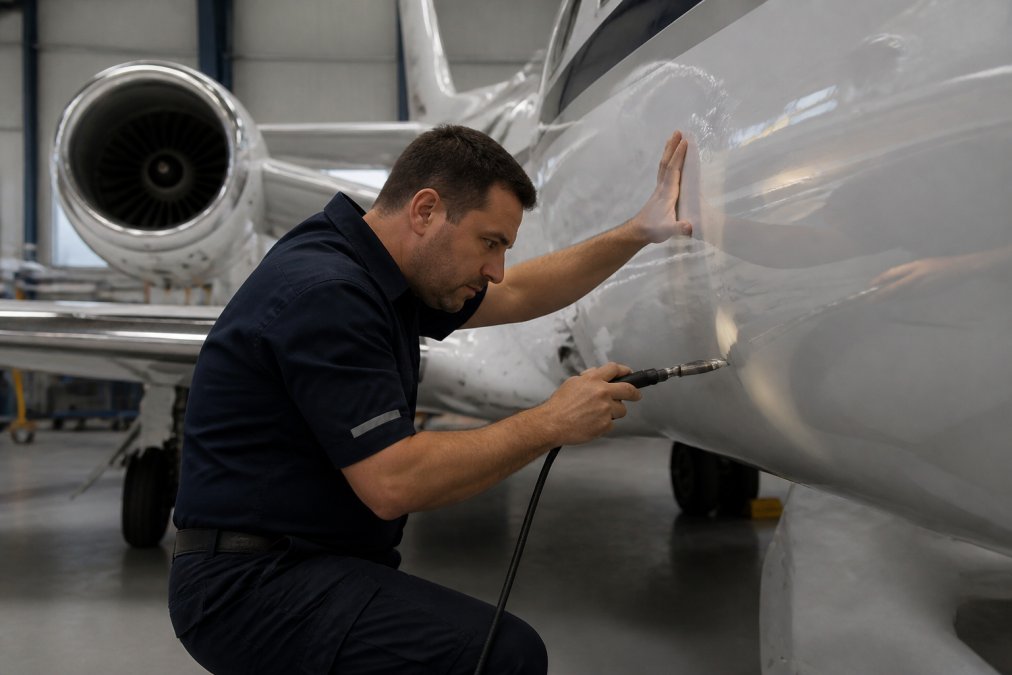
What separates them from larger shops is their transparent pricing and communication model. You get upfront estimates, no surprise charges, and regular updates throughout any maintenance event. For corporate flight departments managing multiple aircraft or charter operators juggling fleet reliability, that predictability matters enormously.
305 Sky handles the full scope of maintenance work: routine inspections, scheduled maintenance programs, emergency repairs, heavy airframe overhaul, avionics integration, and cabin interior transformations. Many owners appreciate consolidating all maintenance needs with one trusted partner rather than juggling multiple vendors.
FAA Part 145 Repair Station Requirements Explained
Before selecting any private jet maintenance service providers florida, understand what makes a repair station legitimate. This directly affects your aircraft's airworthiness and your liability.
An FAA Part 145 repair station is a facility authorized by the Federal Aviation Administration to perform maintenance, preventive maintenance, rebuilding, and alteration on aircraft and aircraft components. The certification process is rigorous, requiring documented procedures, qualified personnel, appropriate facilities, and ongoing compliance audits.
Not every maintenance shop holds Part 145 certification. Some operate under different regulatory frameworks. For your private aircraft, you want a Part 145 facility, that certification signals the FAA has verified their processes, training, and record-keeping meet federal standards.
The certification applies to specific work categories. A shop might be certified for airframe maintenance but not avionics work. When evaluating a provider, confirm their scope of certification covers the work you need. Ask to see their FAA certificate; it's public record and should be displayed prominently.
Your aircraft's logbooks must document every maintenance action with the technician's name, certificate number, and work performed. A reputable shop maintains digital records alongside paper logs, ensuring nothing gets lost and your maintenance history is instantly retrievable.
How to Select an Aircraft MRO Provider for Your Fleet
Choosing the right maintenance partner is one of the most consequential decisions you'll make as an aircraft owner.
Start with non-negotiable criteria. Does the provider hold FAA Part 145 certification for the work your aircraft needs? Do they have experience with your specific aircraft type? Ask directly about their maintenance history on your make and model.
Next, evaluate responsiveness and availability. Call their AOG line at an off-hours time and note how quickly they answer. Do they have mobile capability, or must you fly to their facility? For South Florida operators, having a maintenance partner with multiple locations and mobile vans reduces ferry time significantly.
Pricing transparency separates trustworthy shops from those that nickel-and-dime you later. Request detailed estimates for known maintenance tasks and compare across three providers. The lowest quote isn't always best; look for estimates that itemize labor, parts, and overhead clearly, with assumptions stated upfront.
Ask about their maintenance tracking and compliance systems. Do they use digital logbook management? Can you access your maintenance records online? Can they generate compliance reports for your insurance company or pre-purchase inspections?
Reference checks matter. Ask the provider for three owner references, ideally operators with similar aircraft and usage patterns. Finally, assess their commitment to your specific needs. Do they understand your operation and ask detailed questions about your mission, schedule, and concerns?
Private Jet Annual Maintenance Cost Breakdown
Understanding maintenance costs helps you budget accurately and spot unrealistic quotes.
Scheduled maintenance forms the foundation. Every aircraft has manufacturer-recommended inspection intervals: 100-hour inspections, annual inspections, progressive inspections, and phase checks. An annual inspection on a mid-size jet typically requires 40-60 labor hours, depending on aircraft and condition. Parts discovered during inspection add to that cost.
Unscheduled maintenance is the variable. An older or neglected aircraft will rack up surprise repairs; a well-maintained aircraft surprises you less often. Preventative maintenance pays for itself by catching problems early.
Avionics maintenance and upgrades represent another significant line item. Modern glass cockpits require periodic software updates, database refreshes, and occasional component replacement. Upgrading to newer avionics, adding synthetic vision, or integrating new flight management systems requires additional budgeting.
Labor rates in South Florida vary based on technician experience and facility overhead. Ask your maintenance provider to break down labor costs by category. Parts sourcing adds complexity; original manufacturer parts cost more than aftermarket alternatives but carry warranty and reliability guarantees. Clarify the parts sourcing policy upfront.
Key Services: Line Maintenance, Heavy Overhaul, and Avionics
The scope of services a maintenance provider offers determines whether they can be your single point of contact.
Line Maintenance covers routine checks and minor repairs performed between flights: pre-flight inspections, fluid top-offs, tire pressure checks, light replacements, and quick troubleshooting. A responsive line maintenance team keeps your aircraft mission-ready without extended downtime.
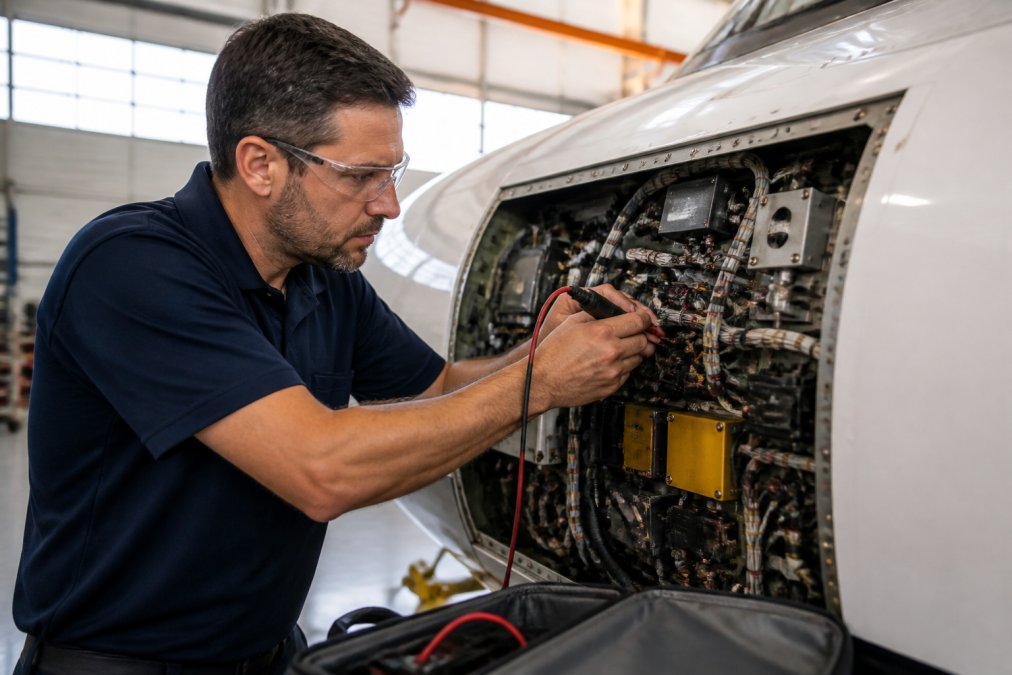
Heavy Maintenance and Overhaul (MRO) involves comprehensive airframe inspections, structural repairs, and component rebuilds. Annual inspections and phase checks fall into this category. Heavy maintenance requires specialized facilities, extensive documentation, and significant downtime. Not every shop performs heavy work; many focus on line maintenance only.
Avionics Repair and Upgrades deserve special attention. Modern business jets rely on sophisticated flight management systems, autopilots, weather radar, and communication equipment. Finding a shop with certified avionics technicians and access to manufacturer support is critical. Beyond repairs, many owners upgrade avionics, adding synthetic vision or integrating new glass cockpits.
A comprehensive provider like 305 Sky handles all three categories in-house, eliminating coordination headaches. Instead of scheduling with multiple shops, you work with one team that understands your aircraft holistically.
What to Expect From a Pre-Purchase Inspection
If you're in the market for a private aircraft, a professional pre-purchase inspection is non-negotiable. This inspection reveals hidden problems, supports your negotiation position, and protects your investment.
A thorough pre-buy typically takes 2-4 days, depending on aircraft type and complexity. The inspection covers airframe condition, engine status, avionics functionality, interior condition, and compliance with all applicable airworthiness directives. The technician will review maintenance logs and verify service bulletins have been complied with.
Expect the inspection to cost between a percentage of the aircraft's purchase price or a fixed daily rate. It's money well spent. A pre-buy inspection often identifies deferred maintenance or hidden damage that could cost tens of thousands to repair after purchase.
The inspection produces a detailed report documenting findings, photographs of any damage, and recommendations for corrective action. This report becomes your roadmap for negotiating repairs before closing or adjusting the purchase price.
A seller who refuses to allow a thorough pre-buy is a red flag. Legitimate sellers expect pre-buy inspections and cooperate fully because they're confident in their aircraft's condition.
After the inspection, clarify what repairs the seller will complete before closing and what you'll handle post-purchase.
Conclusion
Selecting the right private jet maintenance service providers florida requires balancing expertise, availability, transparency, and responsiveness. The lowest cost rarely delivers the best value.
For many operators in South Florida, 305 Sky delivers the combination that matters most: 24/7 AOG support with mobile response capability, four strategically positioned facilities, comprehensive service scope, and transparent pricing backed by over 55 years of combined aviation experience.
The difference between a mediocre maintenance provider and an exceptional one shows up when your aircraft is grounded at 2 AM on a Sunday, when you need emergency avionics repair, or when you're preparing for a pre-purchase inspection. That's when responsiveness, expertise, and honest communication become invaluable.
Get a quote from 305 Sky and ask about their 24/7 AOG response process. Understand their maintenance tracking system. Request references from operators with similar aircraft. Then make your decision based on which provider gives you the confidence that your aircraft will remain airworthy, compliant, and ready to fly when you need it.
| Service Category | Typical Scope | Frequency | Facility Required |
|---|---|---|---|
| Line Maintenance | Pre-flight checks, fluid top-offs, minor repairs | As needed, between flights | Mobile or fixed facility |
| Annual Inspection | Comprehensive airframe and system review | Once per calendar year | Heavy maintenance facility |
| Phase Checks | Progressive system inspections on rotating schedule | Per manufacturer interval | Heavy maintenance facility |
| Avionics Repair | Troubleshooting and component replacement | As needed, when failures occur | Avionics-certified facility |
| Avionics Upgrades | Glass cockpit installation, autopilot upgrades, integration | Project-based | Avionics-certified facility |
| Pre-Purchase Inspection | Comprehensive aircraft evaluation for buyers | One-time, before purchase | Heavy maintenance facility |
Frequently Asked Questions
How often does a private jet require maintenance?
Private jets follow scheduled maintenance programs based on flight hours, calendar days, and cycles. Annual inspections are mandatory, with additional line maintenance checks every 50-100 flight hours and heavy maintenance every 4-6 years or 3,500 flight hours, whichever comes first. Your MRO provider will establish a customized maintenance schedule based on your aircraft type and usage patterns. Airworthiness directives from the FAA may also trigger unscheduled maintenance.
What does FAA Part 145 repair station certification mean?
FAA Part 145 certification verifies that an aircraft maintenance facility meets strict federal standards for personnel qualifications, equipment, technical data, and safety procedures. A Part 145-certified repair station has passed rigorous FAA inspections and maintains ongoing compliance through audits and record-keeping requirements. This certification ensures your aircraft receives maintenance from a facility that meets the same regulatory standards as major commercial operators, protecting your airworthiness and liability.
How do I choose the right aircraft MRO provider for my needs?
Evaluate MRO providers based on FAA Part 145 certification, availability of 24/7 AOG support, facility locations relative to your typical flight patterns, range of services (line maintenance, heavy overhaul, avionics, cabin work), turnaround times, and transparent pricing structures. Request references from operators flying similar aircraft, verify technician certifications, and confirm their experience with your specific airframe. Ask about their maintenance tracking systems and how they handle regulatory compliance documentation. A family-oriented provider that communicates clearly about costs and timelines typically delivers better long-term value than large, impersonal shops.
What is included in a pre-purchase aircraft inspection?
A pre-purchase inspection examines the airframe for corrosion and structural damage, reviews complete maintenance logbook entries and service bulletins, tests all avionics and systems, verifies engine condition and time remaining, checks compliance with airworthiness directives, and inspects the cabin interior. The inspection typically takes 2-5 days depending on aircraft age and complexity. A certified technician will provide a detailed report identifying any deferred maintenance, required repairs, and estimated costs. This inspection protects your investment by revealing hidden issues before you commit to the purchase.
EXTERNAL CITATIONS:
[EXTERNAL_LINK: FAA Part 145 Repair Station Regulations | faa.gov]
[EXTERNAL_LINK: Aircraft Maintenance Requirements and Procedures | faa.gov]
[EXTERNAL_LINK: Aviation Safety and Maintenance Best Practices | ntsb.gov]
This article was written using GrandRanker