Table of Contents
- Private Jet Pre-Buy Inspection Checklist: Essential Areas to Evaluate
- Private Jet Maintenance Records Review: What You Must Audit
- Aircraft Pre-Buy Inspection Cost: Budgeting for Your Survey
- How Long Does a Pre-Buy Inspection Take: Timeline Expectations
- Aircraft Purchase Agreement Inspection Clause: Legal Protections
- Digital Inspection Tools and Remote Assessment Options
- Common Pre-Buy Inspection Issues and Red Flags
- Conclusion
Private Jet Pre-Buy Inspection Checklist: Complete Guide
Last Updated: July 11, 2026
When purchasing a private aircraft, a comprehensive pre-buy inspection checklist is your most critical tool. This guide breaks down every essential area to evaluate before signing the purchase agreement. Many buyers skip this step, which is precisely how expensive surprises happen after closing.
A proper pre-buy inspection protects your investment by uncovering mechanical, structural, and compliance issues before they become your problem. The inspection typically costs 1-3% of the aircraft's purchase price but can save you hundreds of thousands in post-purchase repairs.
Private Jet Pre-Buy Inspection Checklist: Essential Areas to Evaluate
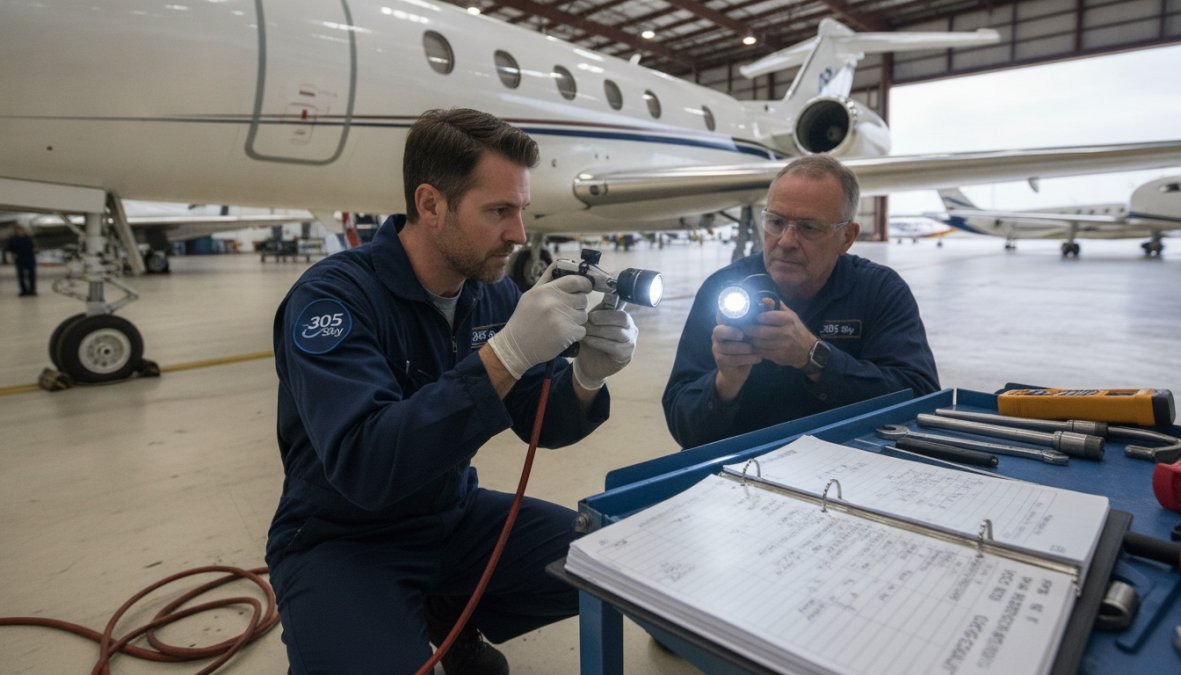
A thorough inspection covers three primary domains: the engine and systems, the airframe and exterior structure, and the avionics and cockpit equipment.
Engine and Systems Review
The engine directly determines your operating costs and safety margins. Start by reviewing total time since major overhaul (TTSMOH) and total time aloft (TTAF) for each engine.
Request the most recent oil analysis report, which shows metal particle counts revealing internal wear patterns. Abnormally high levels of iron, aluminum, or chrome particles suggest bearing wear or internal damage.
Examine engine logbooks for recurring issues. If the same problem appears multiple times, it suggests an underlying defect rather than a one-time repair. Look for entries about hot-start problems, rough idle, or power loss at altitude.
Check that all major engine work was performed at authorized service centers. Unapproved repairs can void warranties and create airworthiness concerns. Verify that all modifications comply with FAA directives.
Test-run the engines during inspection if possible. A healthy engine starts smoothly and idles evenly. Rough starts or sputtering during acceleration warrant further investigation.
Airframe and Exterior Inspection
The airframe is your aircraft's skeleton. The inspector should examine the fuselage, wings, empennage, ailerons, flaps, and landing gear for corrosion, cracks, dents, and previous damage repairs.
Corrosion spreads beneath paint and can compromise structural strength without obvious external signs. The inspector should use borescopes to examine hidden areas like fuel tank interiors and wheel wells.
Pay special attention to the landing gear. Hydraulic leaks, worn components, and corroded actuators are expensive to repair. The inspector should cycle the landing gear multiple times and check for smooth operation.
Examine all control surfaces for proper movement and alignment. Bent or misaligned surfaces affect handling and create safety hazards.
Request documentation of any major repairs on FAA Form 337. If the aircraft has been in an accident or had significant structural work, this information must be clearly disclosed and properly documented.
Avionics and Cockpit Systems
Review the avionics suite and confirm all systems function properly. Request maintenance records for each major component: autopilot, navigation systems, communication radios, and flight management systems.
Check the age of each avionics component. Older systems may be approaching obsolescence, and replacement parts become difficult to source.
Test all systems in flight if possible. Flight testing reveals whether systems function correctly under real-world conditions. Navigation accuracy, autopilot stability, and communication clarity matter far more than a power-on test.
Verify that the glass cockpit has current database subscriptions and software versions.
Private Jet Maintenance Records Review: What You Must Audit
Your aircraft's maintenance history tells the story of how well it's been cared for. A meticulous owner creates a clear paper trail; a neglectful one leaves gaps and inconsistencies.
Logbook and Service Documentation
The aircraft logbook is a legal document recording every maintenance action. Review it chronologically from the first entry to the most recent. Look for gaps suggesting either poor record-keeping or deferred maintenance.
Verify that all required inspections appear in the logbook: annual inspections, 100-hour inspections (if applicable), and manufacturer-recommended service bulletins.
Cross-reference logbook entries with invoices from the maintenance facility. Logbook entries should match invoice descriptions.
Check for entries indicating recurring issues. If the same component has been repaired multiple times, ask why.
Review engine-specific logbooks separately. Understand the engine overhaul status and when the next overhaul will be due.
Compliance and Form 337 Verification
FAA Form 337 documents all major repairs and alterations. Any modification beyond routine maintenance requires a Form 337.
Obtain a complete list of all Form 337s filed for your aircraft. The FAA maintains these records and you can request them.
Verify that all modifications are properly installed and functional. Incomplete modifications are a compliance issue.
Check that all AD (Airworthiness Directive) compliance is documented. ADs are mandatory safety directives issued by the FAA. The logbook should show that all applicable ADs have been complied with.
Service bulletins are manufacturer recommendations (not mandatory like ADs). Review which service bulletins apply to your aircraft model and verify that critical ones have been completed.
| Maintenance Document | What to Look For | Red Flags |
|---|---|---|
| Aircraft Logbook | Consistent, regular entries; no gaps | Months without entries; unclear descriptions |
| Engine Logbook | TTSMOH tracking; overhaul history | High time approaching overhaul; no overhaul history |
| Maintenance Invoices | Detailed descriptions; professional facilities | Vague descriptions; unqualified technicians |
| FAA Form 337 | All major repairs documented; proper filing | Missing forms; incomplete modifications |
| AD Compliance | Dates and completion status | Expired ADs not complied with; no documentation |
Aircraft Pre-Buy Inspection Cost: Budgeting for Your Survey
A thorough inspection typically costs between $2,500 and $8,000 depending on aircraft type and complexity. Larger aircraft with advanced systems cost more to inspect.
Your inspector's expertise directly affects quality. A certified aircraft mechanic with experience on your specific aircraft type will identify issues that a generalist might miss.
Consider the inspection a non-negotiable investment. It's far cheaper than discovering major defects after closing.
Some sellers attempt to avoid inspection clauses or limit scope. Resist this pressure. A seller who won't allow thorough inspection is signaling hidden problems. Your purchase agreement should explicitly allow full access for inspection purposes.
How Long Does a Pre-Buy Inspection Take: Timeline Expectations
A comprehensive inspection typically requires 2-4 days depending on aircraft size and complexity.
The first phase is ground inspection of the exterior, interior, and accessible systems, usually taking 1-2 days. The second phase is a test flight (if airworthy), typically lasting 2-3 hours. The final phase is the detailed report, usually delivered within 1-2 weeks.
Plan for the inspection to occur before committing funds to escrow. The inspection period is your contingency window; if major issues are discovered, you have the right to renegotiate or walk away.
Aircraft Purchase Agreement Inspection Clause: Legal Protections
Your purchase agreement must include clear language protecting your right to conduct a thorough pre-buy inspection.
Escrow and Contingency Structures
Escrow is a neutral third-party account holding funds during the transaction. The inspection contingency allows you to conduct the pre-buy inspection and renegotiate or withdraw if major issues are discovered.
Structure your escrow agreement to include specific inspection milestones:
- The inspection period (typically 7-14 days)
- The right to conduct a test flight
- The right to hire your own inspector
- The right to renegotiate or terminate if major defects are found
- The definition of "major defects" (typically repairs exceeding a certain dollar threshold)
The seller should not have access to the aircraft during the inspection period.
Insurance Implications and Coverage
Before closing, you'll need insurance. The insurance company will require proof of airworthiness, and the pre-buy inspection report becomes critical documentation.
Discuss inspection findings with your insurance broker before finalizing coverage. Some defects or aging systems may result in higher premiums or coverage exclusions. Understanding these implications before closing allows you to renegotiate or walk away.
Digital Inspection Tools and Remote Assessment Options
Modern inspection technology is changing how pre-buy inspections are conducted. Digital tools allow inspectors to document findings with precision and share real-time data with buyers.
Borescope cameras enable visual inspection of internal engine components without disassembly. These cameras send high-resolution images to a display, allowing examination of valve seats, cylinder walls, and bearing surfaces.
Thermal imaging cameras detect temperature variations indicating corrosion, fluid leaks, or electrical issues.
Digital logbook systems are replacing paper records on many modern aircraft, providing real-time maintenance tracking and automatic compliance alerts.
Remote inspection protocols allow buyers who cannot be present to participate via video conferencing and high-quality camera feeds.
Common Pre-Buy Inspection Issues and Red Flags
Corrosion, Component Life, and Performance Trends
Corrosion is the most common issue discovered during pre-buy inspections. It appears in fuel tanks, wheel wells, and structural joints. Surface corrosion can be cleaned and treated, but deep pitting requires expensive repairs.
Component life limits are manufacturer-specified maximum operating hours for critical parts. As components approach their limits, they must be overhauled or replaced.
Performance trends reveal how the aircraft is aging. Compare current engine parameters against historical data. If performance is degrading, it suggests mechanical wear or developing problems.
AD Compliance and Service Bulletins
Airworthiness Directives (ADs) are mandatory safety requirements issued by the FAA. Every AD applicable to your aircraft model must be complied with. Non-compliance is a serious legal issue that can ground the aircraft.
Verify compliance dates for all ADs. Some ADs are one-time actions; others require recurring compliance.
Service bulletins are manufacturer recommendations addressing known issues. Critical service bulletins should be completed before purchase. Missing compliance is a negotiating point; the seller should either complete the work or credit you for the cost.
Conclusion
A comprehensive private jet pre-buy inspection checklist protects your investment and ensures you're purchasing an airworthy, compliant aircraft. The inspection reveals hidden defects, documents maintenance history, and provides the foundation for your purchase decision.
Only a detailed inspection uncovers the truth about an aircraft's condition. 305 Sky brings over 55 years of combined aviation experience to every pre-buy inspection, examining engines, airframes, avionics, and compliance documentation with meticulous attention to detail. Our team identifies issues early, documents findings thoroughly, and provides the clear, honest assessment you need to make an informed decision. Get a quote for your pre-buy inspection and protect your aircraft investment with expert guidance from professionals who understand every detail of private aviation.
Frequently Asked Questions
What is included in a private jet pre-buy inspection checklist?
A comprehensive private jet pre-buy inspection checklist covers engine condition (TTAF, TTSMOH, oil analysis history), airframe integrity (fuselage, empennage, landing gear), avionics functionality, logbook audit, FAA Form 337 compliance, corrosion assessment, and component life limits. The inspection evaluates the aircraft's airworthiness certification status, verifies all major repairs and alterations are documented, and confirms service bulletins and AD compliance. A thorough pre-purchase survey typically takes 20-40 hours depending on aircraft type and condition.
How much does a private jet pre-buy inspection cost?
Aircraft pre-buy inspection costs depend on aircraft type, size, age, and inspection scope. Pricing varies significantly based on whether you choose a basic mechanical inspection or a comprehensive survey including avionics, systems, and records audit. Contact 305 Sky or a qualified inspector for a detailed quote tailored to your specific aircraft and needs. Costs also depend on hangar availability, travel distance, and whether remote inspection protocols are used to supplement on-site evaluation.
How long does a pre-buy inspection take for a private jet?
A typical private jet pre-buy inspection takes 20-40 hours of hands-on evaluation, spread across 2-5 business days depending on aircraft complexity and condition. The timeline includes engine teardown inspection, systems testing, logbook review, avionics evaluation, and corrosion assessment. Larger or older aircraft may require additional time. Planning ahead with your inspector and ensuring hangar access minimizes delays and ensures thorough documentation of all findings.
What happens if a pre-buy inspection reveals major issues?
If significant issues are discovered during inspection, you have several options: negotiate repair credits with the seller, request the seller complete repairs before closing, arrange escrow funding to cover repairs post-purchase, or walk away from the deal. Your aircraft purchase agreement inspection clause should clearly define contingencies and remedies. Working with a buyer's agent and legal counsel ensures your pre-buy agreement protects your interests and provides clear pathways to address defects discovered during the survey.
Is a pre-buy inspection mandatory when buying a private jet?
While not legally mandated by the FAA, a pre-buy inspection is essential due diligence for any aircraft purchase. It protects your investment, confirms airworthiness, verifies compliance with regulatory requirements, and identifies hidden maintenance liabilities. Most lenders require evidence of a thorough pre-purchase survey before financing. Insurance underwriters also expect inspection documentation. Skipping a pre-buy inspection exposes you to costly surprises, safety risks, and potential legal liability.
Who should perform a private jet pre-buy inspection?
Hire an independent, FAA-qualified aircraft maintenance technician or inspection service with experience in your specific aircraft type. Look for inspectors with strong credentials, no conflict of interest with the seller, and comprehensive knowledge of avionics, engines, and airframe systems. Many buyers work with specialized pre-purchase survey firms that combine mechanical expertise with records auditing and compliance verification. Ensure your inspector has access to the aircraft logbook, service bulletins, and maintenance history before the inspection begins.
[EXTERNAL_LINK: FAA Airworthiness Directives database | faa.gov]
[EXTERNAL_LINK: Aircraft Owners and Pilots Association pre-purchase inspection guidance | aopa.org]
[EXTERNAL_LINK: Society of Aviation and Aerospace Professionals maintenance standards | saap.org]
This article was written using GrandRanker