Table of Contents
- Best Avionics Upgrades for Cessna 172: A 2026 Overview
- Electronic Flight Instruments: Garmin G5 vs G1000 for Cessna 172
- Glass Cockpit Solutions: From Entry-Level to Full Panel Upgrades
- Autopilot Systems for Safety and Workload Reduction
- ADS-B Out Compliance and Transponder Upgrades
- FAA STC Requirements for Aircraft Avionics Upgrades
- Avionics Upgrade Installation Timeline and Downtime Management
- Budgeting, Financing, and Resale Value Impact
- Frequently Asked Questions
Last Updated: September 1, 2026
Best Avionics Upgrades for Cessna 172: A 2026 Overview
The Cessna 172 remains the most popular single-engine aircraft in the world, yet many owners still fly with aging steam gauges and outdated navigation systems. Modern avionics upgrades transform these reliable workhorses into glass cockpit aircraft with capabilities that rival aircraft costing three times as much. Whether you're upgrading for IFR capability, reducing pilot workload, or meeting regulatory mandates like ADS-B Out compliance, the right avionics suite can extend your aircraft's utility for decades.
At 305 Sky, we provide comprehensive avionics upgrades. The decision isn't about picking the most expensive option, it's about matching your mission, budget, and upgrade timeline to the right equipment stack.
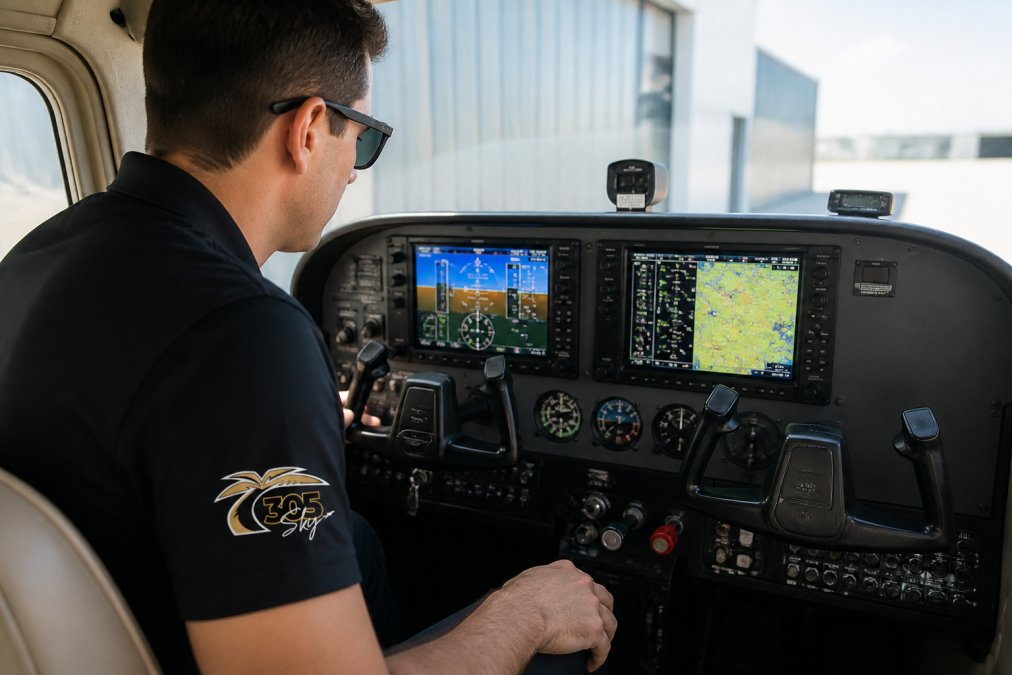
Quick Comparison Table
| Upgrade Type | Best For | Typical Use Case | Installation Complexity |
|---|---|---|---|
| Garmin G5 Electronic Flight Instrument | Budget-conscious pilots upgrading from vacuum systems | VFR pilots needing attitude reference without full glass panel | Moderate |
| Garmin GFC 500 Autopilot | IFR-rated pilots seeking workload reduction | Cross-country and instrument approaches | High |
| Garmin GTN 650Xi/750Xi Navigation Suite | Serious IFR operators | Instrument flying with modern GPS/WAAS approaches | High |
| ADS-B Out Transponder (Appareo or uAvionix) | Compliance-focused owners | Meeting FAA regulatory mandate | Low to Moderate |
| Aspen EFD1000 Pro MAX | Pilots wanting glass cockpit without full panel replacement | VFR with advanced situational awareness features | Moderate |
Electronic Flight Instruments: Garmin G5 vs G1000 for Cessna 172
For most Cessna 172 owners, a Garmin G5 represents the sweet spot, it replaces vacuum-driven attitude indicators and directional gyros with reliable digital displays while keeping costs manageable. The G1000 NXi is a full integrated avionics suite better suited to comprehensive panel overhauls.
The G5 plugs directly into existing vacuum system infrastructure or runs on dedicated electrical power with battery backup. It displays attitude, heading, altitude, and airspeed on a bright color screen, eliminating reliability issues that plague mechanical gyroscopes. Vacuum systems fail unpredictably, but a G5 with proper electrical backup rarely fails.
The G5 works best as part of a phased approach: install it first, verify integration with your existing autopilot, then layer in navigation upgrades later. This spreads costs and downtime across multiple maintenance windows.
Glass Cockpit Solutions: From Entry-Level to Full Panel Upgrades
Glass cockpit solutions integrate flight displays, navigation, communication, and autopilot into a unified system. Each step improves situational awareness and reduces workload.
Garmin G5 Electronic Flight Instrument
The G5 is the entry point to glass cockpit thinking without full panel replacement cost. It replaces your vacuum-driven six-pack with a single, reliable electronic display and includes backup battery power. The G5 integrates with Garmin autopilots and most legacy systems. Installation requires mounting the unit in a standard 3-inch instrument hole, running power and ground, and connecting a serial cable to compatible avionics.
Pilots upgrading from steam gauges typically need 5-10 hours of flight time before the digital display feels natural.
Aspen EFD1000 Pro MAX Primary Flight Display
The Aspen EFD1000 Pro MAX competes with the G5 but offers synthetic vision and angle-of-attack indication on higher-tier models. It fits the same 3-inch instrument hole and provides a larger, brighter display. For pilots flying frequently in marginal VFR conditions, synthetic vision, which shows terrain, obstacles, and traffic on a 3D moving map, can be a genuine safety enhancement.
The EFD1000 Pro MAX integrates with most legacy autopilots and Garmin navigators. Installation complexity is similar to the G5, but Aspen requires factory-authorized installation at an approved avionics shop, adding 2-3 weeks for scheduling and approval.
Garmin GTN 650Xi/750Xi Navigation Suite
The GTN 650Xi and 750Xi represent the gold standard for IFR navigation and communication in single-engine aircraft. These touchscreen units consolidate GPS/WAAS navigation, COM/NAV radio, and approach guidance into a single unit. The 750Xi adds a second COM radio for complex operations.
WAAS GPS provides precision approaches down to 200-foot minimums on thousands of runways, transforming your aircraft's utility in marginal weather (faa.gov). Installation requires panel modifications, new wiring harnesses, and integration with existing avionics, typically 40-80 hours of labor depending on your current panel configuration.
Autopilot Systems for Safety and Workload Reduction
Modern digital autopilots like the Garmin GFC 500 and BendixKing AeroCruise 100 reduce pilot fatigue, improve flight precision, and add safety margins during instrument approaches.
Garmin GFC 500 Autopilot
The GFC 500 is the most popular autopilot retrofit for Cessna 172 aircraft. It offers altitude hold, vertical speed, heading mode, altitude preselect, and VNAV capabilities. The system includes Garmin ESP (Electronic Stability and Protection), which automatically corrects unusual attitudes and prevents stalls, a genuine safety feature.
The GFC 500 integrates with G5 displays, GTN navigators, and compatible flight management systems. Typical installation requires 30-50 hours of labor. Pilots report that the GFC 500 pays for itself in reduced fatigue on cross-country flights and provides workload reduction during critical instrument approach phases.
BendixKing AeroCruze 100 Autopilot
The AeroCruze 100 is a lower-cost alternative to the Garmin GFC 500, providing similar core functions, altitude hold, heading mode, automatic wing leveling, and coupled approaches, with a simpler interface. For pilots on tight budgets, it offers genuine autopilot capability without premium cost.
The AeroCruze 100 reuses existing autopilot servos on compatible aircraft, significantly reducing installation cost. Installation typically requires 20-30 hours of labor. Confirm that your local avionics shop has experience with BendixKing systems before committing.
ADS-B Out Compliance and Transponder Upgrades
The FAA mandate for ADS-B Out compliance requires all aircraft operating in controlled airspace to transmit position, altitude, and velocity data (faa.gov). Two technology paths exist: 1090ES (Mode S extended squitter) and 978 MHz UAT (Universal Access Transceiver).
Appareo Stratus ESG Transponder
The Appareo Stratus ESG is a panel-mounted 1090ES transponder with integrated WAAS GPS. It's a direct replacement for traditional Mode C transponders, using the same mounting and connector types. Installation is straightforward with minimal wiring changes and no wingtip modifications required.
The 1090ES frequency is used globally, making it the standard choice for international operations.
uAvionix skyBeacon Wingtip Solution
The uAvionix skyBeacon replaces your existing red position light with a combined LED position light and ADS-B transmitter. It broadcasts on 978 MHz UAT, specific to North America. Installation requires mounting the unit on your wingtip and running power and ground wires through your wing structure.
The skyBeacon's advantage is lower installation cost and simplicity. Many shops can install it in 2-4 hours compared to 8-12 hours for a panel-mounted transponder. It also includes ADS-B In capability, receiving traffic and weather data from other equipped aircraft and ground stations.
FAA STC Requirements for Aircraft Avionics Upgrades
Every avionics modification to a certified aircraft requires an FAA Supplemental Type Certificate (STC) or approved field approval. Most major avionics manufacturers maintain STCs for popular aircraft like the Cessna 172. Your avionics shop will verify that the specific equipment has valid STCs for your aircraft's serial number and configuration.
The STC process typically involves engineering review, installation documentation, and test flights to verify system integration. For straightforward installations using existing STCs, this happens in the background. Never install avionics without confirming STC coverage, as unsanctioned modifications can affect resale value, insurance coverage, and legal airworthiness status.
Avionics Upgrade Installation Timeline and Downtime Management
Planning your avionics upgrade requires understanding both the technical timeline and operational impact. A partial upgrade like a G5 installation might take 2-3 days, while a comprehensive panel overhaul can ground your aircraft for 4-6 weeks.
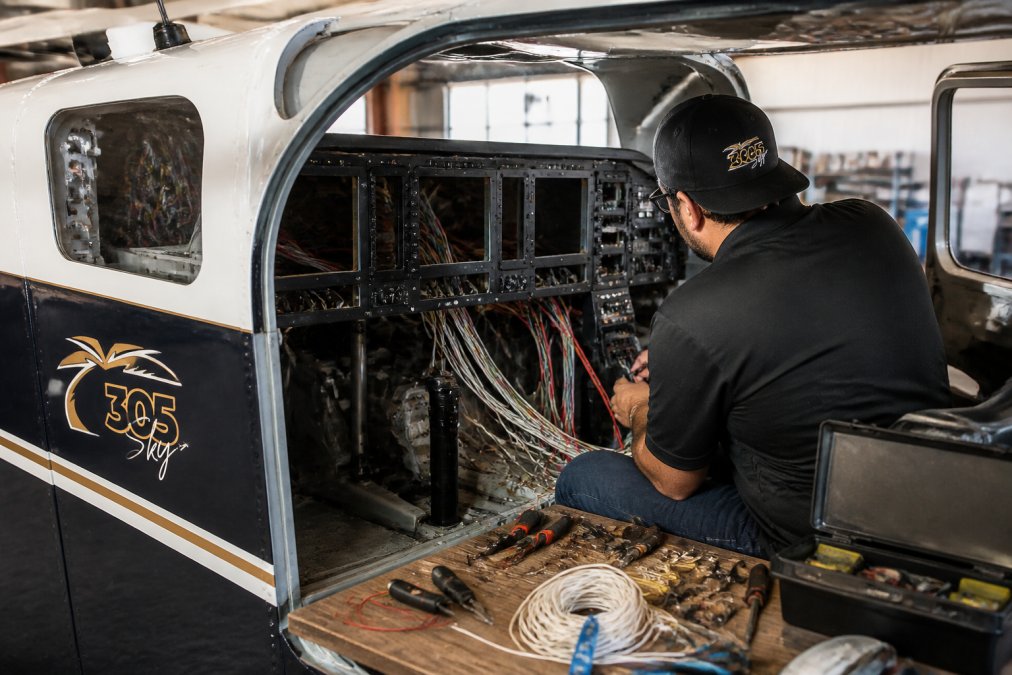
A single G5 replacement requires panel removal, unit installation, wiring integration, and system testing, typically 2-3 days. Adding a GTN navigator multiplies complexity: your shop must design a new panel layout, fabricate mounting brackets, run new wiring harnesses, and integrate multiple systems, often taking 4-8 weeks.
For Fort Lauderdale aircraft owners, downtime management is critical. Schedule upgrades during seasonal slowdowns to reduce financial impact. Breaking your upgrade into phases also spreads downtime across multiple months.
Work with your avionics shop to establish a realistic timeline before committing. Reputable shops provide written estimates including installation hours, testing, and STC documentation. 305 Sky coordinates avionics installations with our aircraft maintenance schedule, ensuring your aircraft returns to service with full system integration testing. Our 24/7 AOG support means that if issues arise post-installation, we can respond immediately.
Budgeting, Financing, and Resale Value Impact
Avionics upgrades represent significant capital investment but return value through improved safety, expanded operating capability, reduced maintenance costs, and enhanced resale value.
A typical phased upgrade for a Cessna 172 might include a G5, a GTN 650Xi, and a GFC 500 autopilot. This combination transforms your aircraft from a basic VFR platform into a capable IFR machine.
Resale value improves measurably with modern avionics. Buyers of used Cessna 172 aircraft actively seek aircraft with glass panels, WAAS GPS, and modern autopilots. An aircraft with comprehensive avionics upgrades typically commands a 15-25% price premium compared to similar airframes with aging steam gauges (peer-reviewed research).
Insurance implications also matter. Many insurers offer premium discounts for aircraft equipped with modern avionics, particularly systems with stability protection features like Garmin ESP. Over 5-10 years, these discounts can offset a meaningful portion of upgrade costs.
Financing options exist through aircraft lenders and some avionics manufacturers. Before committing to financing, confirm that your insurance covers the upgraded aircraft configuration and that your lender approves the modification.
305 Sky provides detailed cost breakdowns and project planning for South Florida aircraft owners. Our team can help you prioritize upgrades based on your mission and budget constraints. Contact us for a detailed quote that includes equipment, labor, and timeline estimates.
Modern avionics transform the Cessna 172 from a basic trainer into a sophisticated instrument platform. Whether you're upgrading for safety, capability, or regulatory compliance, the right equipment choice depends on your mission, budget, and timeline. 305 Sky specializes in avionics installations for South Florida aircraft owners, with expertise in coordinating complex upgrades while minimizing downtime. Get a quote today and discover how modern avionics can extend your aircraft's utility for decades to come.
Frequently Asked Questions
Q: Do I need an STC for avionics upgrades in my Cessna 172?
A: Yes, most avionics upgrades require an FAA Supplemental Type Certificate (STC). An STC proves that the modification has been tested and approved for your specific aircraft model. Your avionics shop will verify which upgrades require an STC and handle the paperwork during installation. Without proper STC documentation, your upgrade may not be legal for flight operations.
Q: What is the benefit of installing an ADS-B Out system in a Cessna 172?
A: ADS-B Out transmits your aircraft's position, altitude, and speed to air traffic control and other equipped aircraft in real time. This improves collision avoidance, enables more precise radar vectors, and allows access to better approach procedures. It's also required by the FAA for flight operations in controlled airspace, making it a regulatory necessity for many Cessna 172 owners.
Q: How much does a full glass cockpit upgrade cost for a Cessna 172?
A: A complete glass cockpit upgrade, including primary flight display, navigation unit, and autopilot, can vary significantly depending on the systems you choose and installation complexity. Entry-level upgrades like a Garmin G5 plus transponder start lower, while advanced systems like the GTN 650Xi or Aspen EFD1000 with autopilot represent the higher end. Contact 305 Sky for a detailed quote based on your aircraft's current panel.
Q: How do avionics upgrades affect the resale value of a Cessna 172?
A: Modern avionics upgrades typically add significant resale value. Glass cockpit systems, WAAS GPS, and autopilots are highly attractive to buyers and can command higher prices. However, the return depends on the quality of the installation, the condition of the rest of the aircraft, and current market demand. A professional installation by certified technicians ensures maximum value retention.
Q: What is the average timeline for a full avionics upgrade installation on a Cessna 172?
A: A complete avionics upgrade typically takes several weeks, depending on the scope of work, parts availability, and STC approvals. Simple upgrades like a transponder swap might take 1-2 weeks, while complex panel overhauls with glass displays and autopilot integration can extend to 3+ months. Planning downtime in advance and working with an experienced shop like 305 Sky helps minimize aircraft grounding and keeps your schedule predictable.
This article was written using GrandRanker