Table of Contents
- Step 1: Assess Your Cabin's Upholstery Materials and Condition
- Step 2: Select FAA-Approved Aircraft Interior Cleaning Products
- Step 3: Follow a Material-Specific Cleaning Protocol for Private Jet Upholstery
- Step 4: Master Stain Removal Troubleshooting for Common Cabin Spills
- Step 5: Prevent Mold and Mildew in Aircraft Cabins
- Step 6: Understand Aircraft Upholstery Fire Retardant Standards
- Step 7: Build a Preventative Maintenance Schedule for Long-Term Cabin Care
- Frequently Asked Questions
Last Updated: September 10, 2026
Step 1: Assess Your Cabin's Upholstery Materials and Condition
Knowing how to maintain private jet upholstery fabrics starts with one honest walkthrough of the cabin before you touch a single bottle. This guide from 305 Sky covers the assessment, cleaning, and prevention routine we recommend to owners across South Florida, from Fort Lauderdale to Vero Beach. The first pass takes about 20 minutes. Get it right and every later step gets easier.
Identifying Leather, Wool, Silk, and Synthetic Fabrics
Leather hides in plain sight: it flexes, warms under your hand, and shows fine grain. Wool has a matte, fuzzy surface. Silk is slick and cool. Synthetic blends stretch and spring back. Check seat tags, your aircraft's interior specification sheet, and a discreet test patch before applying anything.
Documenting Wear Patterns and Pre-Existing Damage
Photograph every seat, divan, and sidewall panel. Note cracking, fading, and compressed foam. For a Challenger, Citation, King Air, Learjet, Falcon, Hawker, Gulfstream, Beechjet, or Pilatus, wear concentrates where passengers board and where headsets rest. A common mistake is skipping this record. It becomes your baseline for spotting new damage early.
Step 2: Select FAA-Approved Aircraft Interior Cleaning Products
The right products carry documentation showing compliance with the FAA flammability requirements for transport category interiors. Aviation-grade chemicals are formulated for materials that must resist ignition, and household cleaners can strip the treatments that make that possible.
Avoid silicone-heavy dressings, bleach, and ammonia on aircraft textiles. They leave residue that attracts dust and can compromise surface decontamination. Keep a dedicated kit per material type, labeled and stored in the hangar, not the galley.
Step 3: Follow a Material-Specific Cleaning Protocol for Private Jet Upholstery
One protocol does not fit every seat. Match the method to the material and test on a hidden area first. The table below provides a chemical-safety reference.
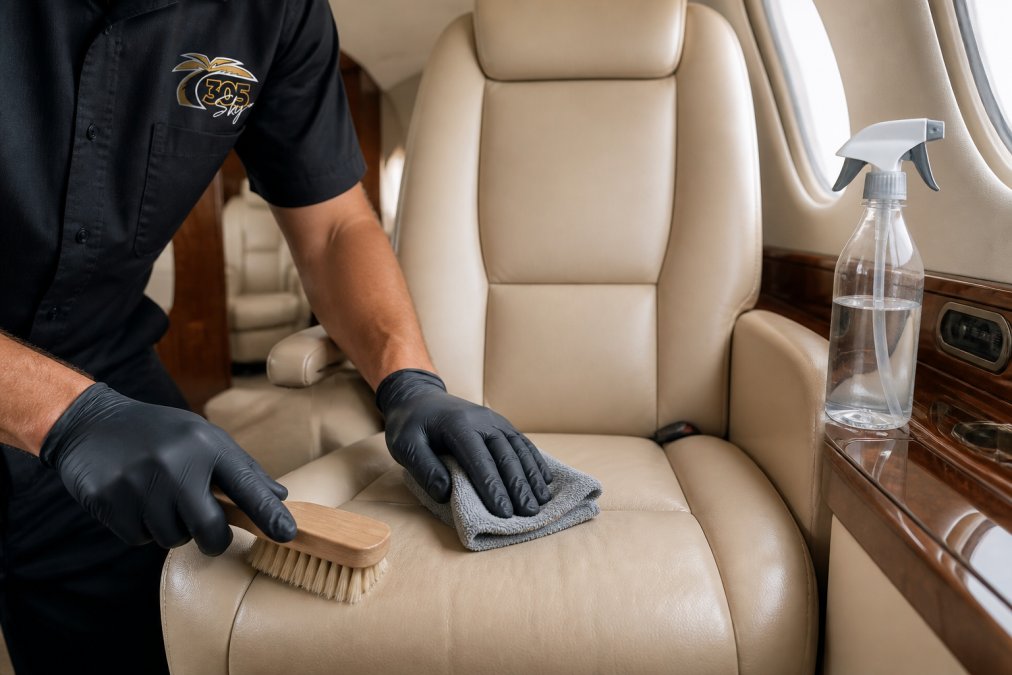
Material-Specific Chemical Safety Reference
| Material | Safe Agents | Avoid | Why |
|---|---|---|---|
| Finished leather (Challenger, Gulfstream, Falcon cabins) | pH-neutral leather cleaner, distilled water, dedicated leather conditioner | Ammonia, bleach, alcohol-heavy spot removers, silicone dressings | Strips the topcoat and fire-retardant finish; silicone attracts dust and dulls grain |
| Wool (divans, sidewall panels) | Wool-safe foam cleaner, cool distilled water, soft horsehair brush | Hot water, alkaline detergents, enzyme cleaners | Alkaline pH felts the fiber and shrinks backing |
| Silk (accent panels, decorative trim) | Dry-cleaning solvent on a cloth, minimal moisture | Water-based cleaners, agitation, citrus solvents | Water spotting and fiber distortion are permanent |
| Synthetic blends (Beechjet, King Air, Pilatus economy cabins) | Mild dish soap diluted in distilled water, microfiber blotting | Acetone, MEK, harsh solvents, scrub brushes | Solvents melt the weave; abrasion pills the surface |
| Ultraleather / polyurethane | Warm water, mild soap, isopropyl alcohol for disinfecting | Bleach, abrasive pads, oil-based conditioners | Breaks down the polyurethane topcoat and causes tackiness |
Leather Conditioning and Rejuvenation
Leather conditioning is the process of replacing oils that evaporate over time, keeping the hide supple and resistant to cracking. Wipe with a pH-neutral cleaner, let it dry fully, then apply a thin layer of conditioner. Work in small circles and buff off the excess. Do this quarterly in humid climates. On a Learjet or Hawker that sits in a South Florida hangar, plan on conditioning every 90 days, the humidity pulls oils out faster than a dry-climate operator would expect.
Fabric and Textile Cleaning Without Fiber Damage
Deep vacuuming comes first, always. Agitate gently with a soft brush, then extract soil with a low-moisture method. Excessive water distorts backing and promotes mildew. For specialty fabric care on wool or silk, use a foam cleaner and blot, never scrub. A common pattern among cabin managers is to keep two labeled spray bottles per material type, one cleaner, one rinse, so a well-meaning line tech never grabs the wrong bottle during a quick turn.
Step 4: Master Stain Removal Troubleshooting for Common Cabin Spills
Stain extraction is a race against time. Blot, never rub, and treat from the outside of the stain inward. The table below expands the standard quick-reference with the timing window and the material caveat that actually determines whether the stain comes out or sets in.
| Spill | First Move (within 5 min) | Follow-Up | Material Caveat |
|---|---|---|---|
| Coffee or tea | Blot, then cool distilled water | Mild foam cleaner | Safe on leather and synthetics; on silk, blot only, no water rings |
| Red wine | Blot, club soda dab | pH-neutral spotter | On wool, use foam not liquid; on leather, follow with conditioner |
| Hand lotion or oil | Absorbent powder (cornstarch) | Degreaser for textiles | On Ultraleather, skip oil-based degreasers, they cause tackiness |
| Ballpoint ink | Isopropyl alcohol on a white cloth, dab not rub | Leather cleaner if hide | Alcohol can lift dye on aniline leather, test the hidden seam first |
| Chewing gum | Ice to harden, then lift | Spot clean residue | Never use solvent on silk; freeze-and-lift only |
| Blood | Cold water, then enzyme spotter | Rinse with distilled water | Heat sets blood permanently, never use warm water |
| Deicing fluid tracked into cabin | Blot, then pH-neutral cleaner | Rinse twice | Glycol residue attracts dust; rinse until the cloth comes up clean |
Timing Windows That Actually Matter
The first five minutes can be crucial for treating protein stains (blood, milk, egg) and tannin stains (coffee, tea, wine). After 30 minutes, the stain may bond to the fiber, potentially requiring more extensive treatment and increasing the risk of fiber distortion.
When to Stop and Call a Specialist
Test every agent on a hidden seam first. When a stain resists two attempts, stop and call a specialist rather than risk fiber preservation. When a stain resists two attempts, stopping and calling a specialist is advisable to avoid further damage. Repeated attempts on leather or silk can lead to more significant repairs or replacements. For owners and management companies running Challenger, Citation, King Air, Learjet, Falcon, Hawker, Gulfstream, Beechjet, or Pilatus aircraft, that cutoff is the difference between a spot clean and a cabin refurbishment.
Step 5: Prevent Mold and Mildew in Aircraft Cabins
Preventing mold and mildew in aircraft cabins comes down to moisture control. Florida humidity punishes aircraft that sit closed for weeks. Run the environmental control system before and after flights, and leave cabin doors open during hangar time when it is safe.
Check under seat cushions and behind sidewall panels monthly. Mildew smells musty before it is visible. If you find it, treat the area, correct the moisture source, and inspect insulation. Left alone, mildew spreads into foam and becomes a refurbishment job.
Step 6: Understand Aircraft Upholstery Fire Retardant Standards
Aircraft upholstery fire retardant standards are not optional. Seat cushions, textiles, and sidewall materials must pass flammability and toxicity testing before they fly. The FAA fire safety branch guidance on cabin materials sets the framework, and materials carry documentation proving compliance.
Any replacement fabric, foam, or leather must arrive with certification. Refurbishment with an uncertified material grounds the aircraft until it is corrected. This is where cheap interior remodeling gets expensive.
Step 7: Build a Preventative Maintenance Schedule for Long-Term Cabin Care
Preventative care beats restoration every time. Build a calendar and assign owners.
- Weekly: vacuum seats and carpets, wipe high-touch surfaces
- Monthly: inspect under cushions, check for moisture
- Quarterly: condition leather, deep clean textiles
- Annually: professional cabin detail and material integrity review
Aircraft Owners and Pilots Association guidance on aircraft maintenance records is a useful reference for tracking what belongs in your logbook.
For owners near Fort Lauderdale, a mobile detailing visit fits this schedule without moving the aircraft. If you need interior work beyond cleaning, whether that is seat upholstery repair, cabin aesthetics, or a full aircraft interior refresh, 305 Sky handles it alongside routine maintenance and AOG service. With four South Florida facilities and a 24/7 mobile response van, our team keeps Challenger, Citation, King Air, Learjet, Falcon, Hawker, Gulfstream, Beechjet, and Pilatus cabins in condition. Searching for aircraft interior care near me? That is our daily work.
Cabin upholstery degrades quietly, and by the time damage is obvious, the fix is a refurbishment rather than a cleaning. 305 Sky brings over 55 years of combined aviation experience to every cabin we touch, from leather conditioning and textile restoration to full interior transformations and avionics upgrades. Our transparent pricing and family-oriented approach mean no surprises, and our four South Florida locations keep downtime short. Get a quote from 305 Sky and keep your cabin airworthy, compliant, and looking the way it should.
Frequently Asked Questions
How often should private jet cabin fabrics be deep cleaned?
Most private jet upholstery benefits from a deep clean every 90 to 120 days, depending on flight hours and passenger volume. High-traffic cabins on charter aircraft may need monthly attention. In South Florida's humid climate, inspect for moisture and odor more frequently. Between deep cleans, vacuum and wipe surfaces weekly to prevent soil from embedding in fibers. Always follow the manufacturer's care guidelines for your specific aircraft type, whether that's a Citation, Gulfstream, or King Air.
Can I use standard household upholstery cleaners on aircraft seats?
No. Household cleaners often contain solvents, surfactants, or additives that can degrade fire-retardant treatments and damage aviation-grade materials. The FAA requires that cleaning agents used on cabin interiors not compromise flammability standards. Using the wrong product may void your upholstery's certification and create safety hazards. Always choose FAA-approved aircraft interior cleaning products specifically formulated for aviation use, and test on a hidden area first.
How does the South Florida climate affect aircraft interior fabric longevity?
South Florida's high humidity and heat accelerate mold, mildew, and material breakdown in aircraft cabins. Leather can dry and crack when air conditioning cycles rapidly, while fabrics may develop musty odors from trapped moisture. Aircraft parked outside in Fort Lauderdale or West Palm Beach face more UV exposure that fades dyes. Regular conditioning, humidity control, and prompt spill cleanup extend upholstery life significantly. Consider a dehumidifier or cabin cover during extended parking.
What are the fire-retardant considerations for aircraft cabin fabrics?
FAA regulations require that all cabin upholstery meet flammability and toxicity standards under 14 CFR Part 25. Materials must pass oil burner and vertical burn tests, and cleaning products must not degrade these properties. When refurbishing or replacing upholstery, verify that replacement fabrics carry the appropriate FAA certifications. Document all cleaning agents used and retain records, as inspectors may request proof of compliance during routine aircraft inspections.