Table of Contents
- Understand the True Cost of Aircraft Downtime
- Build a Preventive Maintenance Schedule
- Implement Aircraft Maintenance Planning Systems
- Establish AOG Recovery Services and Emergency Response
- Optimize Maintenance Scheduling and Crew Management
- Ensure Regulatory Compliance and Airworthiness
- Conclusion
Last Updated: August 15, 2026
Understand the True Cost of Aircraft Downtime
Private jet downtime directly impacts operational efficiency and asset value. Maintenance delays, crew scheduling conflicts, and missed business opportunities compound quickly. The longer your aircraft remains grounded, the harder it becomes to recoup losses through future flights.
At 305 Sky, we've worked with operators across South Florida who've learned this lesson the hard way. A single unplanned maintenance event can disrupt weeks of flight schedules. What separates operators who minimize private jet downtime from those who don't is a proactive approach to planning and maintenance coordination.
The financial impact extends beyond obvious costs. Regulatory compliance failures, component degradation from deferred maintenance, and emergency repairs all cost significantly more than scheduled preventive work. Your aircraft's resale value depends on maintenance history and airworthiness compliance; gaps here create red flags for potential buyers.
Build a Preventive Maintenance Schedule
A solid preventive maintenance schedule is the foundation for minimizing private jet downtime. Scheduled maintenance addresses components before they fail, keeping your aircraft airworthy, compliant, and operational.
Preventive maintenance planning requires coordination across manufacturer service intervals, regulatory requirements, component life limits, and your actual flight patterns. Each aircraft type has specific maintenance demands. The key is building a schedule that aligns with your operational calendar, schedule major maintenance during slower periods to minimize cumulative downtime.
Routine Inspections and Service Intervals
Routine inspections catch small issues before they become expensive failures. Daily preflight checks, 100-hour inspections, annual inspections, and progressive inspections form the backbone of airworthiness maintenance. Each serves a specific purpose in identifying wear, corrosion, and component degradation.
Service intervals vary by aircraft type and engine manufacturer. Some components require replacement at fixed hours; others depend on calendar time. The Federal Aviation Administration (FAA) sets minimum inspection standards through airworthiness directives and general operating rules. Compliance is a legal requirement that directly impacts your ability to operate legally and creates liability exposure if deferred.
Scheduling routine inspections during predictable windows prevents surprise maintenance events. When you know an inspection is coming, you can plan around it. When an inspection reveals unexpected issues, you've still minimized surprise downtime because the problem was caught early.
Coordinate Lift Coverage for Scheduled Work
Lift coverage means arranging alternative aircraft availability while your primary jet undergoes maintenance. For operators who depend on aircraft availability, this coordination is critical. You can't eliminate maintenance downtime, but you can eliminate operational downtime through proper planning.
Several options exist for lift coverage. Some operators own or lease a second aircraft. Others arrange partnerships with nearby operators or use charter services during maintenance windows. Fort Lauderdale's aviation community includes numerous charter operators who can provide temporary aircraft access.
The cost of lift coverage depends on your needs and the market. A day of charter access costs less than losing a week of business due to aircraft unavailability. Coordinating lift coverage requires advance planning, secure alternative aircraft before your primary jet goes down, as last-minute arrangements cost more and often fail when multiple operators need coverage simultaneously.
Implement Aircraft Maintenance Planning Systems
Digital maintenance tracking transforms how you manage aircraft downtime. Modern maintenance planning systems provide real-time visibility into component status, service intervals, and compliance requirements, enabling better decision-making about when and how to schedule maintenance.
A good system tracks all major components, their service histories, remaining useful life, and upcoming maintenance requirements. It flags approaching service intervals before they become overdue and maintains complete records for regulatory audits and resale documentation. The system should integrate with your flight operations data so that if you fly 200 hours this month instead of the planned 150, the maintenance schedule adjusts accordingly.
Digital Tracking and Predictive Analytics
Digital tracking provides the foundation for predictive analytics in aircraft maintenance. Rather than reacting to failures, you can predict component degradation and schedule replacement before failure occurs. This shift from reactive to predictive maintenance is where modern operators gain their edge in minimizing private jet downtime.
Predictive analytics examines historical data on component performance, environmental factors, and usage patterns. Temperature sensors, vibration monitoring, and fluid analysis provide early warning signals. Oil analysis can detect metal particles indicating bearing wear weeks before catastrophic failure. These signals, tracked over time, reveal when components need replacement.
The investment in predictive analytics pays dividends through reduced emergency maintenance events. You schedule replacement during planned downtime rather than discovering failure during preflight.
Manage Parts Inventory and Supply Chain
Parts availability directly impacts maintenance turnaround time. If your maintenance facility has the parts needed for scheduled work, the job completes on schedule. If parts must be ordered and shipped, downtime extends significantly.
Critical components should be stocked locally. Common wear items like filters, hoses, and fasteners should always be available. Specialized components with longer lead times require advance ordering coordinated with your maintenance schedule. Building relationships with local suppliers and distributors reduces lead times and costs.
Your maintenance planning system should track parts inventory and flag reorder points. When stock of a critical item drops below threshold, automatic alerts trigger reordering, preventing the scenario where maintenance is scheduled but parts aren't available.
Establish AOG Recovery Services and Emergency Response
AOG (Aircraft on Ground) situations demand rapid response. When your aircraft experiences an unexpected maintenance issue, every hour of downtime costs money and creates operational disruption. Having 24/7 AOG recovery services available transforms how you handle emergencies.
AOG recovery services differ from standard maintenance. Standard maintenance is scheduled and executed at a maintenance facility. AOG recovery happens wherever your aircraft is located and must be completed quickly to restore operational capability.
24/7 Mobile Maintenance Response
True 24/7 mobile maintenance response means technicians available at any hour, any day, anywhere within your service area. When your aircraft experiences a problem at 2 AM on Sunday, you need someone who can respond immediately.
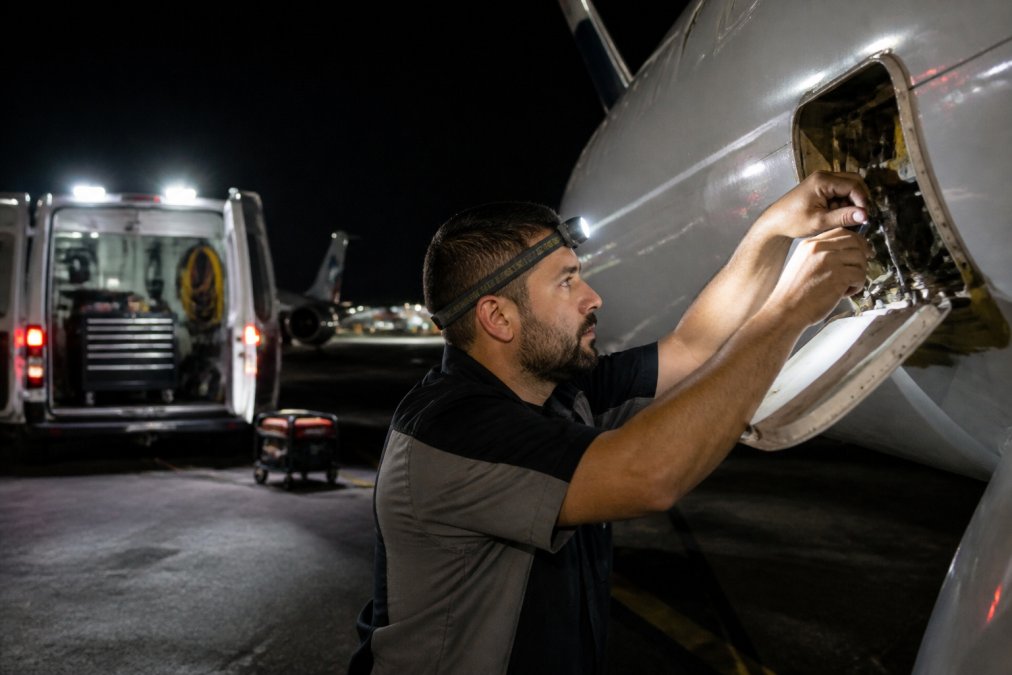
305 Sky operates 24/7 AOG response across South Florida with mobile maintenance vans equipped to handle common emergency repairs. Mobile response starts with rapid diagnosis. A qualified technician arrives at your aircraft, identifies the problem, and determines whether repair is possible on-site or requires facility-based work. Even if the aircraft must be towed, early diagnosis accelerates the repair process once it reaches the maintenance facility.
The technician communicates findings to your flight operations team immediately, enabling better decision-making about lift coverage, crew scheduling, and customer communication.
Reduce Repair Turnaround Time
Turnaround time, the duration from when an aircraft arrives for maintenance until it's ready to depart, directly impacts downtime costs. Reducing turnaround time requires efficient processes, available parts, and skilled technicians working without delays.
Efficient processes start with clear communication between flight operations and maintenance. When the aircraft arrives, maintenance knows exactly what work is needed, what parts are required, and what the priority timeline is. Parts availability accelerates turnaround time significantly. Skilled technicians working efficiently complete repairs faster than inexperienced technicians struggling with unfamiliar problems.
Optimize Maintenance Scheduling and Crew Management
Maintenance scheduling isn't just about aircraft availability, it's about coordinating with flight operations and crew management. A perfectly scheduled maintenance event becomes problematic if your crew is unavailable or if the timing conflicts with committed flights.
Integrating maintenance scheduling with flight operations requires visibility into your flight calendar weeks or months ahead. If you know you have critical flights scheduled in March, avoid major maintenance during that period. If you have a lighter schedule in February, that's an ideal window for comprehensive maintenance work.
Plan Around Flight Operations
Flight operations take priority in most cases. Your aircraft exists to support business missions. Maintenance planning must respect committed flights while creating opportunities for necessary work.
The ideal approach uses your flight calendar to identify natural maintenance windows. If you typically fly heavily Monday through Thursday but lighter on Fridays, schedule maintenance for Friday afternoon through Sunday. If you have seasonal patterns, schedule major maintenance during slow seasons.
This planning requires discipline and advance notice. Your maintenance facility needs your flight calendar months ahead to reserve capacity and coordinate resources. Last-minute maintenance requests disrupt scheduling and often result in delays or higher costs.
Manage Crew Availability During Downtime
When your aircraft goes down for maintenance, your crew faces downtime. Some operators use this time for training, rest, or reassignment to other duties. Consider training opportunities: type ratings, proficiency checks, or professional development. This turns maintenance downtime into crew development time.
Communication with your crew is essential. They need to know maintenance schedules in advance and understand how downtime affects their assignments. Crew members who understand the maintenance strategy become partners in minimizing downtime rather than viewing it as disruption.
Ensure Regulatory Compliance and Airworthiness
Regulatory compliance isn't separate from downtime minimization, it's integral to it. Aircraft that aren't maintained to regulatory standards face operational restrictions, grounding, and legal consequences. Staying compliant prevents forced downtime far more severe than planned maintenance.
The FAA establishes airworthiness standards through regulations, airworthiness directives, and service bulletins. These requirements are mandatory for legal operation. Airworthiness directives (ADs) require specific maintenance actions on certain aircraft types or components. When an AD is issued, you must comply within specified timeframes or ground the aircraft.
Your maintenance records document compliance with all regulatory requirements. These records are reviewed during annual inspections, when selling the aircraft, and during regulatory audits. Complete, accurate records demonstrate your commitment to airworthiness and reduce regulatory risk.
Working with a maintenance provider experienced in regulatory compliance, like 305 Sky's team with 55+ years of combined aviation experience, ensures your aircraft stays compliant. These providers understand regulatory requirements, track compliance deadlines, and maintain documentation standards that satisfy regulators.

Minimizing private jet downtime requires integrating preventive maintenance planning, digital tracking systems, emergency response capability, and crew coordination into a cohesive strategy. The operators who minimize downtime aren't lucky, they're disciplined about planning and proactive about maintenance.
305 Sky provides the expertise and 24/7 response capability that South Florida operators need to keep their aircraft operational. With mobile AOG recovery services, comprehensive maintenance planning, and transparent communication, your aircraft stays airworthy and available. When downtime becomes necessary, our team ensures rapid diagnosis, efficient repair, and minimal disruption to your operations. Get a quote today to discuss how our maintenance services can reduce your aircraft's downtime and protect your investment.
Frequently Asked Questions
What is the difference between AOG and scheduled maintenance downtime?
AOG (Aircraft on Ground) is unscheduled downtime caused by unexpected component failure or mechanical issues that ground the aircraft until repairs are complete. Scheduled maintenance downtime is planned in advance and allows you to coordinate lift coverage, arrange alternative aircraft, and prepare your operation. AOG typically costs more because repairs happen urgently, parts may need expedited shipping, and your crew and business operations are disrupted without warning. Scheduled downtime lets you minimize financial impact through proper planning.
How does aircraft maintenance planning reduce downtime?
Proactive aircraft maintenance planning identifies potential issues before they cause failures. By following manufacturer service intervals and conducting routine inspections, you catch wear and component degradation early. This lets you schedule repairs during planned maintenance windows rather than facing emergency AOG situations. You can also coordinate parts procurement in advance, arrange backup aircraft, and schedule work around your flight operations. Preventive maintenance typically reduces overall downtime by 40-60% compared to reactive repair approaches.
What should I include in my aircraft downtime cost analysis?
Your aircraft downtime cost analysis should include: charter revenue lost per day the aircraft is grounded, crew salary costs during idle periods, fuel and operating costs for alternative transportation, maintenance labor and parts expenses, and potential business impact from missed client commitments. For corporate operations, add the cost of renting replacement aircraft or commercial travel for executives. Many operators find that one week of unplanned downtime costs $15,000-$40,000 depending on aircraft type and utilization. This analysis justifies investment in preventive maintenance and AOG recovery services.
How can predictive analytics and digital maintenance tracking improve aircraft availability?
Digital maintenance tracking systems monitor component hours, flight cycles, and maintenance history to predict when parts will likely fail. Predictive analytics identifies trends in component wear, allowing you to schedule replacement during planned maintenance rather than waiting for failure. These systems also streamline compliance with FAA airworthiness directives and service bulletins. By knowing exactly when maintenance is needed, you can coordinate lift coverage, order parts in advance, and maintain higher aircraft availability. Real-time tracking also reduces paperwork and maintenance facility delays.
This article was written using GrandRanker