Table of Contents
- What Is Quiet Luxury in Aircraft Interior Design
- The Shift from Overt Opulence to Refined Minimalism
- Material Integrity and the Tactile Foundation of Quiet Luxury
- Bespoke Aircraft Cabin Transformations That Emphasize Restraint
- Private Jet Interior Design Trends Shaping Modern Cabins
- Aircraft Cabin Refurbishment Best Practices for Quiet Luxury
- Sensory Design Beyond Sight: Acoustic Engineering and Ambient Lighting
- Why Quiet Luxury Preserves Resale Value and Aircraft Performance
- Frequently Asked Questions
Last Updated: September 2, 2026
What Is Quiet Luxury in Aircraft Interior Design
Quiet luxury in aircraft interior design represents a shift toward understated elegance, material integrity, and refined minimalism. Rather than announcing wealth through ostentatious materials and bold design statements, it emphasizes quality through restraint. True sophistication whispers rather than shouts, with every tactile detail, from supple leather to brushed metal accents, communicating excellence through integrity.
At 305 Sky, we've worked with aircraft owners across South Florida who increasingly reject visual spectacle in favor of spaces that prioritize sensory experience and bespoke craftsmanship. Whether you own a Citation, King Air, Challenger, or Gulfstream, quiet luxury principles transform how you and your passengers experience the cabin. The philosophy eliminates unnecessary ornamentation while elevating every functional element to an art form: comfortable seating that supports long flights, ambient lighting calibrated to reduce fatigue, and acoustic insulation that creates genuine silence.
The Shift from Overt Opulence to Refined Minimalism
The traditional approach to luxury aircraft interiors treated the cabin as a stage for displaying wealth through leather everywhere, gold-plated fixtures, and dramatic color contrasts. That aesthetic still exists, but the market has moved decisively toward something more sophisticated.
Owners today recognize that overt opulence dates quickly. What looks modern in 2024 feels dated by 2026. Quiet luxury sidesteps this trap entirely by focusing on timeless materials, neutral palettes, and design that emphasizes function over fashion. A cabin designed around minimalist elegance signals confidence and discernment, there's no need to prove anything. The materials speak for themselves: the weight of genuine leather, the warmth of natural wood trim, the precision of custom upholstery.
For aircraft owners in Fort Lauderdale and across South Florida, this transition has practical implications. A quiet luxury interior refurbishment holds its appeal during resale negotiations, and creates a functional luxury lounge rather than a showroom.
Material Integrity and the Tactile Foundation of Quiet Luxury
The foundation of quiet luxury aircraft interior design rests entirely on material selection and execution. Every surface your hand touches must demonstrate genuine quality and intentional choice.
Supple leather represents the baseline. High-grade full-grain leather, properly treated for durability and UV resistance, develops character over time rather than degrading. Synthetic alternatives or lower-grade leather fail this test. In a quiet luxury cabin, seating and wall panels must be leather that improves with age.
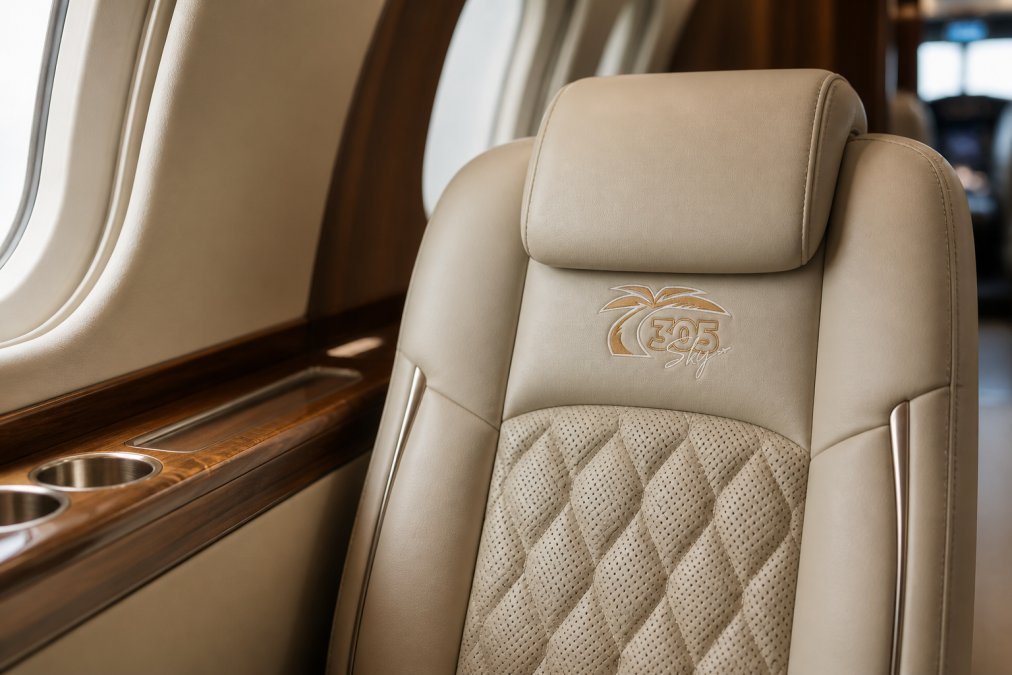
Natural wood trim, walnut, ash, or sustainably sourced alternatives, provides warmth and authenticity that veneers cannot replicate. Metal accents require equal rigor. Brushed stainless steel, titanium, or anodized aluminum finishes resist fingerprints and maintain appearance without constant polishing, unlike polished chrome or gold plating that demands maintenance and shows wear quickly.
Sustainable luxury materials have emerged as a key differentiator. Owners increasingly specify recycled or responsibly sourced materials because these options often outperform virgin alternatives in durability and aesthetics. The integration of these materials matters as much as individual selection. Bespoke finishes that coordinate leather, wood, and metal create aesthetic cohesion, the cabin reads as a unified design rather than a collection of premium components.
Bespoke Aircraft Cabin Transformations That Emphasize Restraint
Transforming an aircraft cabin toward quiet luxury requires selecting surfaces that matter most and elevating them deliberately. Start with seating. In quiet luxury interiors, seating prioritizes ergonomic support and material quality over visual drama. A seat that supports proper posture during long flights, upholstered in high-grade leather with subtle stitching details, communicates sophistication more effectively than exotic materials designed for short-haul comfort.
Flooring should be neutral and durable, natural stone, premium composite, or high-grade carpet in muted colors that recede visually while performing flawlessly. Wall treatments focus on texture and material authenticity rather than visual pattern. Wood paneling, fabric wall coverings in neutral tones, or carefully selected paint finishes create visual interest through material depth rather than color contrast.
Lighting design integrates ambient lighting that serves multiple functions: creating visual interest, supporting circadian rhythm management, and reducing harsh aircraft lighting. Fixtures should be nearly invisible, with light sources hidden or integrated into trim and surfaces.
Storage and cabinetry prioritize functionality and integration. Custom-built solutions that disappear into the cabin architecture, with subtle hardware and seamless operation, eliminate visual clutter. Every cabinet and drawer should feel like a natural extension of the cabin rather than an addition.
Private Jet Interior Design Trends Shaping Modern Cabins
Personalization within constraint has become the dominant trend. Rather than unlimited customization, owners work within carefully defined material and color palettes that create coherence. A cabin might offer three leather colors, two wood species, and two metal finishes, enough choice to feel personal, but enough constraint to ensure aesthetic harmony.
Wellness-focused design has moved from luxury amenity to baseline expectation. Circadian lighting that adjusts color temperature based on flight time, air quality systems that prioritize passenger comfort, and cabin pressurization settings that minimize fatigue have become standard specifications (peer-reviewed research). These features remain largely invisible but feel luxurious.
Acoustic engineering has evolved from a technical specification into a design priority. Rather than accepting cabin noise as inevitable, quiet luxury aircraft interiors integrate acoustic materials, vibration damping, and sound-absorbing finishes that create genuine quiet. A truly quiet cabin is among the most valuable luxury amenities available.
Minimalist technology integration represents another key trend. Rather than visible screens and controls, quiet luxury cabins hide technology behind seamless surfaces. Entertainment systems, communication tools, and climate controls operate through intuitive interfaces that don't dominate the visual environment.
Flexible cabin configuration has gained importance as ownership patterns shift. Some quiet luxury transformations incorporate modular elements that allow owners to adapt the cabin layout for different trip purposes, creating genuine utility without sacrificing design coherence.
Aircraft Cabin Refurbishment Best Practices for Quiet Luxury
Achieving quiet luxury through refurbishment requires following specific best practices that ensure material quality, design coherence, and long-term durability.
Start with a comprehensive design audit. Document the current cabin condition, identify structural or systems issues that might affect the refurbishment, and establish clear design objectives. This planning phase determines success more than any material selection.
Material sourcing demands rigor. Work exclusively with suppliers who can document material provenance, durability specifications, and performance in aircraft environments. Not all premium materials perform equally in the pressure, temperature, and humidity variations of aircraft cabins. Specification documents should include performance requirements, UV resistance, durability ratings, and flame resistance.
Installation quality determines whether a refurbishment achieves quiet luxury or merely expensive appearance. Seating installation, wood paneling alignment, and lighting integration require precision craftsmanship. Aircraft owners have access to specialized refurbishment shops that understand these technical requirements, but verification remains essential.
Color and material coordination across all cabin surfaces creates aesthetic cohesion. Develop a material palette that includes leather colors, wood species, metal finishes, lighting tones, and accent colors. Every surface should relate to this palette.
Phased refurbishment strategies often outperform complete cabin overhauls. Prioritize high-impact areas first, seating and wall treatments typically deliver the most noticeable transformation. Subsequent phases can address lighting, flooring, and custom cabinetry. This approach spreads costs and minimizes aircraft downtime.
Documentation and material specifications protect long-term value. Maintain detailed records of all materials used, installation specifications, and maintenance requirements. This documentation supports resale value and demonstrates professional execution.
Sensory Design Beyond Sight: Acoustic Engineering and Ambient Lighting
Quiet luxury aircraft interior design extends far beyond visual aesthetics into the realm of sensory experience. Acoustic engineering and ambient lighting represent the most sophisticated elements of this philosophy.
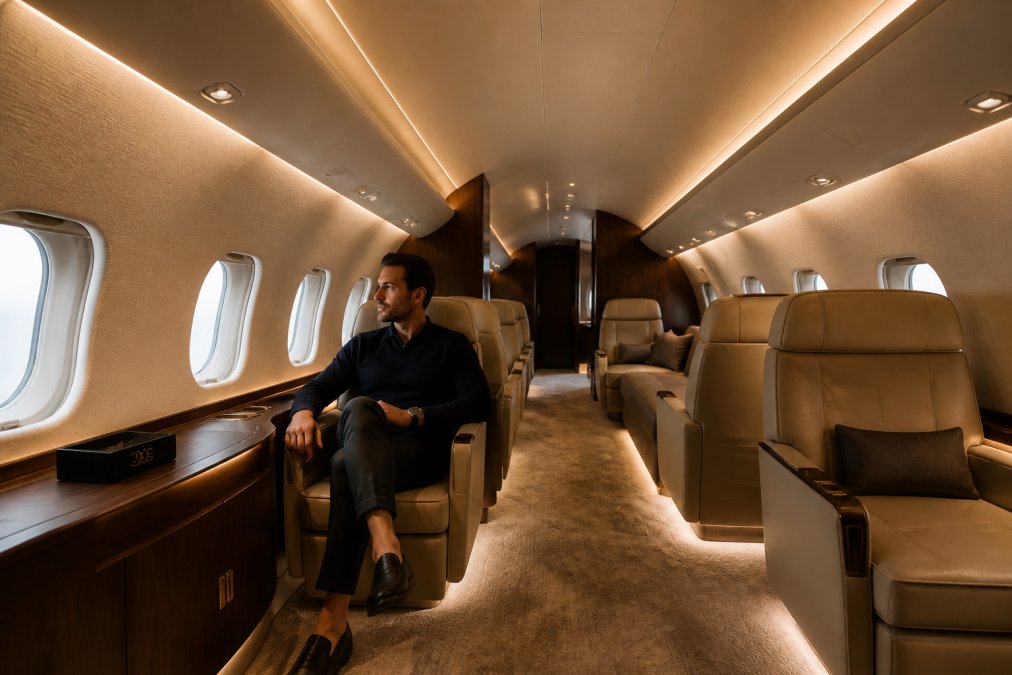
Acoustic engineering in aircraft cabins addresses the fundamental challenge of noise in flight. Traditional aircraft interiors accept cabin noise as inevitable. Quiet luxury cabins treat this differently. Through strategic material selection, vibration damping systems, and sound-absorbing finishes integrated into walls and ceiling, acoustic performance improves substantially (peer-reviewed research). The psychological impact of genuine quiet cannot be overstated.
Effective acoustic engineering requires understanding noise sources. Low-frequency engine noise requires mass and damping materials. Mid-frequency airflow noise benefits from absorption. High-frequency transmission noise responds to isolation. A comprehensive approach addresses all three, often adding acoustic layers behind wall panels and selecting sound-absorbing upholstery materials.
Ambient lighting design shapes cabin psychology in ways that visual design alone cannot achieve. The color temperature of light affects circadian rhythm, alertness, and mood (the NIH). Lighting that shifts toward warmer tones during evening flights supports sleep. Lighting that maintains cooler tones during daytime flights supports wakefulness and productivity.
Layered lighting systems allow passengers to adjust the cabin environment to their preferences. Rather than a single overhead light source, quiet luxury cabins integrate reading lights, accent lighting, and ambient systems that can be controlled independently. This flexibility respects individual preferences while maintaining overall aesthetic cohesion.
Why Quiet Luxury Preserves Resale Value and Aircraft Performance
Quiet luxury aircraft interior design preserves long-term value in ways that traditional luxury approaches often fail to achieve. Quiet luxury interiors age gracefully. A cabin designed around timeless materials, neutral palettes, and refined minimalism remains attractive to subsequent buyers regardless of current design trends. Cabins designed around specific aesthetic trends become dated quickly and require costly updates before achieving market value.
Material integrity directly impacts resale perception. Buyers evaluating aircraft interiors pay close attention to material quality and condition. A cabin featuring genuine leather, natural wood trim, and precision metalwork signals quality and care. Synthetic materials and standard finishes suggest compromise, translating directly into lower resale value.
Acoustic performance and cabin comfort features increasingly influence purchase decisions. Buyers recognize that a genuinely quiet cabin represents a substantial quality-of-life improvement. Aircraft with superior acoustic engineering command attention during sales negotiations and demonstrate that the aircraft was maintained with passenger experience in mind.
The psychological impact of quiet luxury extends to aircraft performance perception. Passengers in a calm, well-designed cabin experience flights differently. This improved experience translates into better feedback, stronger recommendations, and higher perceived value. For owners considering charter operations, this perception advantage directly impacts revenue potential.
Maintenance costs often decline in quiet luxury cabins. Interiors designed around durable, quality materials and professional installation typically require less corrective maintenance than interiors featuring lower-grade materials or poor installation.
Quiet luxury in aircraft interior design isn't about spending more, it's about spending more thoughtfully. The philosophy prioritizes material integrity, refined minimalism, and sensory design over visual spectacle. For owners of Citation, King Air, Challenger, or Gulfstream aircraft in Fort Lauderdale and South Florida, this approach transforms the cabin into a genuine luxury environment that improves with age and maintains its appeal across years of ownership.
305 Sky specializes in bespoke aircraft cabin transformations that emphasize these quiet luxury principles. Our team understands how to integrate acoustic engineering, ambient lighting, and premium materials into cohesive cabin designs that reflect your priorities. Whether you're planning a complete interior refurbishment or targeted upgrades, we can guide you through material selection, design coordination, and professional installation. Get a quote today and discover how quiet luxury can transform your aircraft experience.
Frequently Asked Questions
Q: What does quiet luxury mean in the context of aircraft interiors?
A: Quiet luxury in aircraft interior design prioritizes understated elegance and material integrity over visual spectacle. It emphasizes bespoke craftsmanship, refined minimalism, and tactile quality, supple leather, natural wood finishes, and high-end materials, rather than ornate displays. The philosophy centers on legibility as status: those who understand luxury recognize sophistication in restraint, acoustic insulation, and ergonomic comfort. This design approach creates a sophisticated cabin ambiance that appeals to discerning owners who value sensory experience and aesthetic cohesion over overt opulence.
Q: How does quiet luxury differ from traditional opulent cabin design?
A: Traditional opulent cabin design emphasizes visual spectacle, bold colors, ornate finishes, and eye-catching materials meant to impress immediately. Quiet luxury flips this approach: it uses a minimalist aesthetic, neutral color palettes, and carefully curated materials that reveal their quality through touch and proximity rather than distance. Opulent cabins announce wealth; quiet luxury cabins whisper it. The shift reflects a broader luxury trend where sophistication is measured by restraint, material authenticity, and the psychology of understated elegance rather than the volume of decoration or visible cost.
Q: What materials are commonly used in quiet luxury aircraft cabin transformations?
A: Quiet luxury aircraft cabin transformations prioritize sustainable luxury materials and bespoke finishes. Common choices include supple, hand-stitched leather for seating and wall panels, natural wood veneers (walnut, oak, or ash) for trim and cabinetry, brushed or matte-finish metals for hardware and accents, and high-performance acoustic fabrics that dampen low-frequency noise. Custom upholstery in neutral tones, charcoal, cream, soft grays, creates aesthetic cohesion. The goal is material integrity: each surface should reward close inspection and convey bespoke craftsmanship.
Q: Why is minimalist design becoming a trend for private jet owners?
A: Minimalist design appeals to modern private jet owners because it reduces visual fatigue during long flights, maximizes perceived cabin space in super-midsize and midsize aircraft, and aligns with broader luxury trends favoring restraint over excess. A calm, uncluttered cabin environment supports productivity and relaxation, key concerns for business travelers. Minimalism also simplifies maintenance and refurbishment cycles, preserving resale value by avoiding dated or trendy aesthetics. The psychology of understated elegance resonates with owners who view their aircraft as a refined extension of their personal brand rather than a showpiece. This shift reflects a maturation in private aviation, where the cabin functions as a luxury lounge and workspace, not just a status symbol.
This article was written using GrandRanker