Table of Contents
- Why Verifying a Mechanic's Credentials Is the First Step
- Step 1: Check the FAA Airman Certification
- Step 2: Understand Aircraft Maintenance Liability Insurance Requirements
- Step 3: Run an FAA Airman Certification Inquiry
- Step 4: Request and Review Insurance Documentation
- Your Aircraft Maintenance Provider Vetting Checklist
- Credential vs. Insurance: The Distinction That Protects You
- Conclusion
- Frequently Asked Questions
Last Updated: September 9, 2026
Every private jet owner eventually faces the same dilemma: your King Air or Citation needs maintenance, and the shop promising a quick turnaround has a great website but an unverified background. Learning how to verify aircraft mechanic insurance credentials protects your asset, your schedule, and your liability exposure. At 305 Sky, we have spent over 55 years of combined experience in South Florida hangars, and we have seen what happens when owners skip this step. This guide walks you through the exact process of confirming both FAA certification and insurance coverage before you authorize any work on your aircraft.
Why Verifying a Mechanic's Credentials Is the First Step
The biggest mistake aircraft owners make is assuming that a busy maintenance shop must be properly insured and certified. A hangar full of aircraft and a polished website prove nothing about the legal status of the mechanics turning wrenches on your jet. If a mechanic without valid credentials damages your aircraft, your insurance claim could be denied, and you could be held responsible for the resulting ground damage or airworthiness issues.
An aviation maintenance technician (AMT) holds credentials that are verifiable through official FAA channels. The mechanic certificate is a federal document, not a decorative wall plaque. When you know how to verify aircraft mechanic insurance credentials, you separate professional operations from fly-by-night shops that disappear when problems surface.
The verification process covers two distinct areas: the individual mechanic's FAA certificate and the business's liability insurance policy. Both must be current, and both must be checked before work begins, not after a discrepancy appears in your maintenance records.
Step 1: Check the FAA Airman Certification
Start with the individual mechanic. The FAA issues mechanic certificates with two possible ratings: Airframe and Powerplant (A&P). An A&P license means the mechanic is authorized to perform and sign off on both airframe repairs and engine work (faa.gov). Some mechanics hold only one rating, which limits what they can legally certify.
To verify a mechanic certificate, request the mechanic's full name and certificate number. A legitimate AMT will provide these without hesitation. Shops that deflect this request or claim their "corporate certification" covers individual mechanics are raising a red flag. The FAA's certification requirements are strict, and every mechanic performing work on your aircraft must hold a valid certificate with the appropriate rating.
Step 2: Understand Aircraft Maintenance Liability Insurance Requirements
Aircraft maintenance liability insurance protects the maintenance provider against claims arising from errors, omissions, or negligent work performed on your aircraft. This is separate from your hull and liability coverage as the owner. When you ask how to verify aircraft mechanic insurance credentials, you are confirming that the shop carries its own protection for the work it performs.
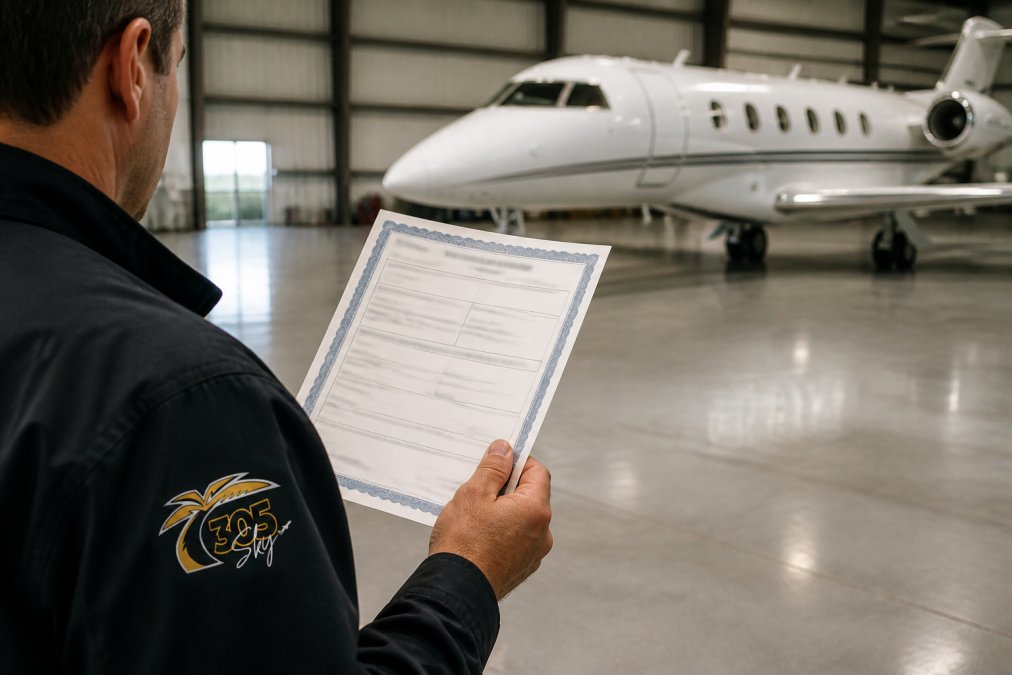
Ask the shop for a certificate of insurance naming your aircraft or your company as an additional insured. The certificate should show the policy's effective dates, the coverage limits, and the insurer's contact information. Call the insurer directly to confirm the policy is active. A certificate of insurance is a document; a phone call to the carrier confirms the policy is real and current.
Many shops carry general liability coverage, but that is not the same as aviation maintenance liability coverage. General liability policies often exclude aviation-specific risks. Confirm the policy explicitly covers aircraft maintenance operations.
Step 3: Run an FAA Airman Certification Inquiry
The FAA maintains a public database called the FAA airman inquiry system. This is the authoritative source for verifying any mechanic certificate. You can search the FAA Airman Certification database using the mechanic's name or certificate number to confirm the certificate is current and valid.
The airman inquiry will show you the mechanic's certificate type, the ratings held, and the certificate's current status. You can also check for any enforcement information or legal enforcement actions on file. This matters because a mechanic with a revoked or suspended certificate cannot legally perform work on your aircraft, regardless of what their shop claims.
The FAA airman certification inquiry is free and takes less than five minutes. There is no excuse for skipping this step. A mechanic who refuses to provide their certificate number for an inquiry should be removed from consideration immediately.
Step 4: Request and Review Insurance Documentation
Once the individual credentials check out, turn your attention to the business entity. Request a certificate of insurance directly from the maintenance provider. The certificate should be issued by their insurance carrier or broker, not printed by the shop itself. Verify the policy number and call the carrier to confirm coverage.
Review the policy for aviation maintenance liability coverage specifically. The certificate should list the coverage types, which should include premises liability, completed operations, and products liability. Hangar keepers liability is a separate policy that covers damage to your aircraft while it is in the shop's custody. Ask whether the shop carries hangar keepers coverage and request proof of that policy as well.
A reputable shop will provide these documents proactively. At 305 Sky, we maintain current certificates of insurance for all our operations and provide them to clients upon request as part of our transparent communication approach.
Your Aircraft Maintenance Provider Vetting Checklist
Use this checklist when evaluating any maintenance provider, whether for routine inspections or AOG emergency support:
- Mechanic's full name and certificate number obtained
- FAA airman certification inquiry confirms current, valid certificate
- A&P rating confirmed for the scope of work required
- No enforcement information or legal status issues found
- Certificate of insurance received from the provider
- Insurance carrier contacted to confirm policy is active
- Aviation maintenance liability coverage confirmed (not just general liability)
- Hangar keepers liability coverage confirmed for aircraft in custody
- Provider named as additional insured where appropriate
- All documentation saved to your maintenance records
| Verification Step | What to Check | Where to Check |
|---|---|---|
| Mechanic certificate | Rating and validity | FAA airman inquiry database |
| Enforcement history | Legal status and actions | FAA enforcement records |
| Liability insurance | Coverage type and limits | Certificate of insurance |
| Policy status | Active and current | Direct call to insurance carrier |
Credential vs. Insurance: The Distinction That Protects You
The distinction between a credential and insurance is the single most misunderstood aspect of this process. A mechanic certificate proves the individual passed FAA testing and meets certification requirements. It says nothing about whether the business is insured. Conversely, a shop can carry strong insurance while employing mechanics whose certificates have lapsed. Neither document substitutes for the other.
The FAA's Mechanic Certification guidance outlines the testing process and requirements for becoming a certified aviation maintenance technician. Understanding these requirements helps you ask informed questions. When you know how to verify aircraft mechanic insurance credentials properly, you protect yourself from liability that belongs to the maintenance provider.
For aircraft owners in Fort Lauderdale and across South Florida, this verification process is especially important given the density of maintenance options between Miami and Port St. Lucie. Large impersonal shops and small operations compete for your business, and not all carry the same protections. A maintenance provider vetting checklist keeps the process objective.
Conclusion
Verifying aircraft mechanic insurance credentials is a straightforward process that takes under an hour and protects your aircraft investment for years. Run the FAA airman certification inquiry, confirm the A&P rating, request and validate the certificate of insurance, and keep all documentation in your maintenance records. Skipping these steps exposes you to liability that no aircraft owner should accept.
At 305 Sky, we welcome this scrutiny. Our team of 3rd generation aviators holds current FAA certifications, and we provide certificates of insurance to every client. We operate four facilities across South Florida with 24/7 AOG emergency response, and we build our reputation on transparent communication and secure digital record keeping. Get a quote and experience maintenance from a family-oriented team that treats your aircraft like our own.
Frequently Asked Questions
Does an FAA A&P license expire?
No, an FAA A&P certificate does not expire. However, to exercise the privileges of an Inspection Authorization (IA), a mechanic must renew that IA every two years. While the certificate itself remains valid, the mechanic must complete required training or activity to keep the IA current. Always confirm the certificate is in good standing and not suspended or revoked through the FAA airman registry before hiring.
Are FAA licenses public record?
Yes, FAA certificates are public record. You can verify an aircraft mechanic's credentials through the FAA Airman Certification Inquiry tool on the FAA's official website. This searchable database allows you to confirm the status of an A&P license, view ratings, and check for any enforcement actions. This is a critical step when you verify aircraft mechanic insurance credentials.
What is the difference between an A&P license and an IA rating?
An A&P (Airframe and Powerplant) license certifies a mechanic to perform maintenance on an aircraft's structure (airframe) and engine (powerplant). An IA (Inspection Authorization) is an additional rating that allows a mechanic to perform annual inspections and approve return-to-service for aircraft. When vetting a provider, confirm their A&P is current and ask if they hold an IA if your aircraft requires annual inspection work.
How can I confirm a maintenance facility's liability insurance coverage?
To confirm a facility's liability insurance, request a Certificate of Insurance (COI) directly from the provider. Review it for adequate aircraft maintenance liability coverage and hull value protection. Verify the policy is current and contact the insurance carrier listed on the COI to confirm the policy is active and covers the specific work being performed on your aircraft. Never rely on the provider's word alone.