Table of Contents
- What Is an Aircraft C-Check
- Aircraft Maintenance Check Intervals: A, B, C, and D Checks Explained
- Scope of Inspection During a C-Check
- How Long Does a C-Check Take
- Cost of Aircraft C-Check and Budget Planning
- Pre-Check Preparation and Post-Check Documentation
- Heavy Maintenance Facility Requirements
- Conclusion
Last Updated: August 27, 2026
What Is an Aircraft C-Check
An aircraft C-check is a comprehensive scheduled maintenance inspection that occurs every 18-24 months or every 400-600 flight hours, whichever comes first (faa.gov). Technicians remove panels, inspect structural components, test avionics systems, and assess component fatigue and corrosion across the entire airframe.
Unlike routine A and B checks that focus on fluid levels and minor replacements, a C-check requires the aircraft to be out of service for several weeks. Technicians examine the fuselage skin, wing spars, control surfaces, landing gear, and all integrated flight control systems for serviceability and airworthiness compliance.
At 305 Sky, our aviation maintenance technicians understand that a C-check is both a regulatory requirement and your assurance that your aircraft is safe, compliant, and performing at peak condition. The C-check is where most structural wear patterns surface, corrosion prevention measures are applied, and fluid analysis reveals system deterioration.
Aircraft Maintenance Check Intervals: A, B, C, and D Checks Explained
Aircraft undergo four scheduled maintenance levels, each more intensive than the last.
The A-check happens every month or every 400-600 flight hours. A technician performs a walk-around inspection, checks fluid levels, reviews the logbook, and replaces consumables. The aircraft is typically out of service for just a few hours.
The B-check occurs every 4-6 months or every 4,000-8,000 flight hours. It includes A-check items plus detailed inspections of specific systems, brake wear assessment, and thorough fluid analysis. Downtime is usually 1-2 days.
The C-check happens every 18-24 months or every 400-600 flight hours. Panels come off, structural inspections intensify, avionics get comprehensive testing, and component fatigue assessment becomes critical. The aircraft is grounded for 2-4 weeks minimum.
The D-check is the most comprehensive overhaul, typically occurring every 6-10 years or every 20,000-30,000 flight hours (faa.gov). The fuselage undergoes non-destructive testing, every system gets rebuilt or replaced, and downtime can stretch to 2-3 months.
Scope of Inspection During a C-Check
During a C-check, technicians examine nearly every accessible component of the aircraft, looking for signs of wear, corrosion, fatigue, and system degradation.
Airframe and Structural Inspection
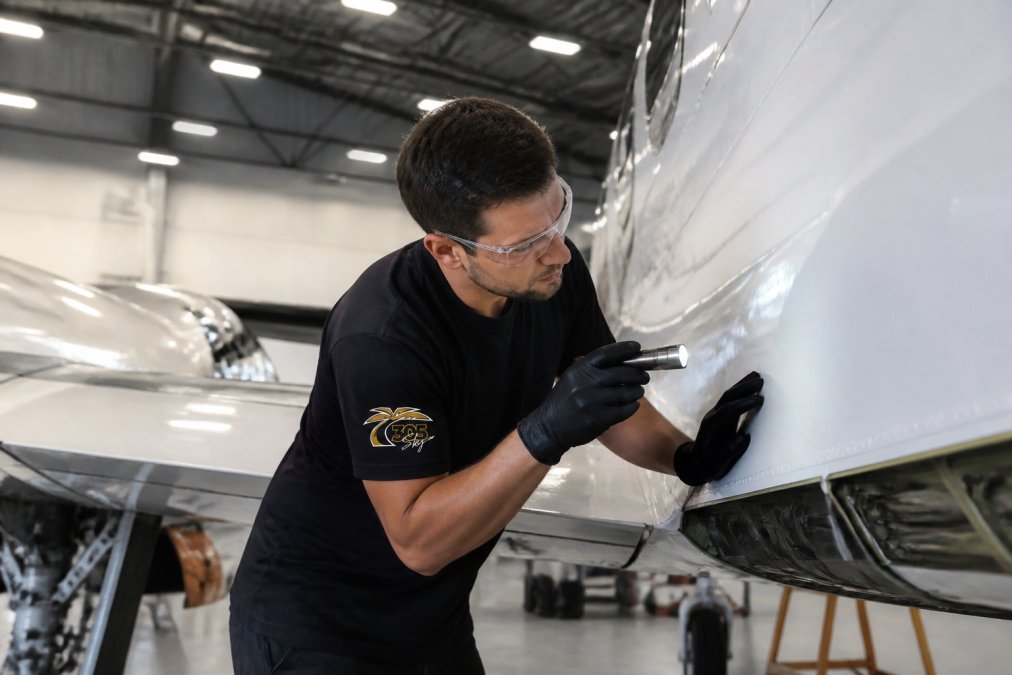
Aviation maintenance technicians remove access panels from the fuselage skin, wings, and tail sections to expose the underlying structure. They inspect wing spars for cracks, corrosion, and stress fractures, and examine the fuselage for corrosion prevention needs and structural wear patterns.
Non-destructive testing techniques are applied to high-stress areas (astm.org). Technicians assess fasteners, rivets, and bonded joints, and document any area showing signs of deterioration. Control surfaces are removed, inspected, and tested for proper movement. The landing gear is completely disassembled, with each component examined for wear and corrosion. Brake assemblies are inspected and often replaced.
Avionics and Flight Control Systems
All navigation systems, communication equipment, autopilot components, and flight management systems undergo comprehensive testing. Technicians verify that every system communicates properly and that all displays show accurate information.
Flight controls are tested through their full range of motion. Hydraulic systems are inspected, fluid analysis is performed, and leaks are identified and repaired. Electrical systems are tested under load, and backup systems are verified to function independently.
Landing Gear and Component Assessment
Each landing gear strut is inspected for leaks and proper extension/retraction. Shock absorber fluid is checked and replaced if needed. Brake assemblies are completely serviced, wheels are inspected for cracks, and tires are checked for wear. Technicians identify which parts are approaching their service life limits and schedule replacements before they become critical.
How Long Does a C-Check Take
The duration of a C-check depends on the aircraft type, age, condition, and whether unexpected issues surface during inspection. For most business jets and turboprops, expect 2-4 weeks of continuous work.
A well-maintained aircraft with no hidden corrosion might complete a C-check in 2-3 weeks. An older aircraft or one with deferred maintenance can easily stretch to 4-6 weeks. Parts availability also impacts the timeline. At 305 Sky, we maintain relationships with parts suppliers, which helps minimize delays.
A small twin-engine aircraft might require 400-600 labor hours. A larger corporate jet could demand 1,000+ hours. Weather can also impact the schedule; Fort Lauderdale's summer thunderstorm season occasionally adds a day or two to projects.
Cost of Aircraft C-Check and Budget Planning
C-check costs vary significantly based on aircraft type, age, condition, and what gets discovered during inspection.
Labor represents the largest expense, as aviation maintenance technicians earn substantial hourly rates and a C-check can require hundreds of labor hours. Parts and materials are the second major cost driver. Unexpected findings inflate costs; if technicians discover corrosion requiring structural repair or if a system fails testing, costs climb.
For specific pricing, 305 Sky recommends getting a quote tailored to your aircraft. We provide transparent, itemized estimates so you understand exactly what you're paying for. Budget conservatively and set aside 10-15% contingency for unexpected findings.
Pre-Check Preparation and Post-Check Documentation
Before your C-check begins, ensure your logbook is current and organized. Provide a list of any known issues or areas of concern. Coordinate with your insurance provider, as some policies have specific requirements for C-checks.
During the check, our team at 305 Sky maintains detailed records of every inspection finding, component tested, and repair completed. We photograph structural areas before and after work and document all fluid analysis results.
Post-check documentation includes an updated logbook entry, a detailed inspection report, and a return-to-service certification. This documentation is critical for regulatory compliance and resale value. We provide secure digital record keeping so you have copies of everything.
Heavy Maintenance Facility Requirements
Not every maintenance shop can perform a C-check. The facility must meet specific regulatory and technical requirements.
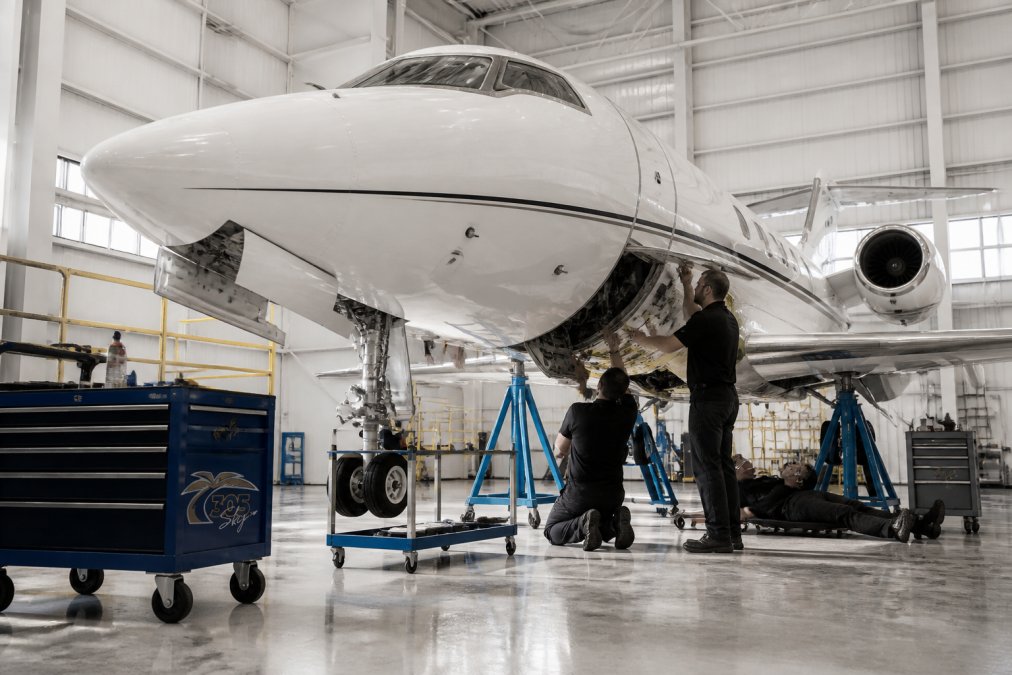
The facility needs a large hangar with sufficient space to accommodate the aircraft with panels removed. Climate control is important for corrosion prevention and avionics testing. Good lighting is essential for detailed inspection work.
The facility must employ certified aviation maintenance technicians holding appropriate ratings for the aircraft type. For complex avionics work, technicians need specialized training and certifications from avionics manufacturers. The facility should have relationships with parts suppliers to source components quickly.
Regulatory compliance is non-negotiable. The facility must maintain FAA authorization to perform maintenance work, maintain record-keeping systems that meet regulatory standards, and follow documented quality assurance processes.
305 Sky operates four strategically located facilities across South Florida, including our primary base in Fort Lauderdale. Each facility meets all FAA requirements for heavy maintenance. Our team has over 55 years of combined aviation experience, which translates into efficiency and accuracy. Our 24/7 AOG emergency response capability means we can mobilize quickly when unexpected issues arise.
Aircraft C-checks represent a significant investment in your aircraft's safety, compliance, and longevity. The inspection is thorough, the downtime is real, and the cost is substantial. But operating an aircraft without proper heavy maintenance carries risks that far outweigh the cost of doing it right.
At 305 Sky, we understand that your aircraft is critical to your operation. Our team coordinates every detail, from pre-check assessment through post-check documentation, so your aircraft returns to service airworthy, compliant, and ready to perform.
Ready to schedule your C-check or get a detailed quote? Get a Quote with 305 Sky and let our experienced team handle the heavy lifting.
Frequently Asked Questions
What is the difference between A, B, C, and D aircraft maintenance checks?
Aircraft maintenance follows a tiered inspection schedule. A-checks are routine inspections every 400-600 flight hours, covering fluid levels and visual components. B-checks occur every 4-6 months with more detailed system checks. C-checks are major inspections every 18-24 months requiring 40-200 hours in a hangar, examining airframe structural wear, corrosion prevention, and component fatigue. D-checks are comprehensive overhauls every 6-10 years involving complete airframe teardown and serviceability assessment.
How long does an aircraft C-check typically take to complete?
C-check duration varies by aircraft type and condition. Small single-engine aircraft may require 40-80 hours of work, typically completed in 1-2 weeks. Mid-size jets often need 150-250 hours, taking 3-6 weeks depending on hangar availability and whether additional maintenance is discovered. Heavy jets can require 200-400+ hours over 6-12 weeks. Downtime extends if corrosion prevention work, landing gear overhaul, or avionics integration becomes necessary during the inspection.
Is a C-check mandatory for all private aircraft?
Yes, C-checks are mandatory for all airworthy aircraft under Federal Aviation Administration (FAA) regulations. The inspection interval is set by the aircraft manufacturer in the maintenance manual and is part of the airworthiness directive compliance framework. Skipping or deferring a C-check beyond the scheduled maintenance interval grounds the aircraft until the inspection is completed and the logbook documentation certifies return to service. This applies equally to private jets, corporate aircraft, and charter operators.
What should I do to prepare my aircraft for a C-check?
Before scheduling, review your aircraft logbook to confirm the last C-check date and any outstanding maintenance items. Drain fuel tanks and perform a pre-check walk-around to document existing damage or corrosion. Schedule the inspection during low-utilization periods to minimize operational downtime. Provide maintenance records and the aircraft's technical manual to the facility. Ensure your insurance covers the heavy maintenance visit and confirm hangar space is reserved. Plan for ground support equipment needs and arrange for a qualified aviation maintenance technician to oversee the inspection.
This article was written using GrandRanker