Table of Contents
- Understanding Runtime-Based vs. Calendar-Based Maintenance for Turbine Engines
- FAA Turbine Engine Maintenance Requirements and Compliance
- Combustion Inspection Protocols and Hot Section Inspection Intervals
- Monitoring Oil Quality and Temperature for Engine Health
- Aircraft Engine Maintenance Tracking Software and Digital Records
- Managing Major Overhauls and Component Longevity
- Fuel Quality and Operational Profile Impact on Maintenance Scheduling
- Preventive Maintenance Best Practices for Turbine Reliability
Last Updated: August 24, 2026
Understanding Runtime-Based vs. Calendar-Based Maintenance for Turbine Engines
Managing routine maintenance intervals for turbine engines requires choosing between runtime-based and calendar-based approaches. Runtime-based maintenance tracks actual engine operating hours, while calendar-based maintenance follows fixed time intervals regardless of usage.
The choice depends on your operational profile. Aircraft that fly frequently benefit from runtime-based scheduling because maintenance needs correlate directly with usage. Aircraft that sit for extended periods may find calendar-based maintenance more practical, since components degrade even when the engine isn't running.
Most operators use a hybrid approach: they follow whichever interval comes first. This ensures compliance with both regulatory requirements and practical engine health. The FAA allows this flexibility, recognizing that engine degradation happens through both operational stress and environmental exposure.
Runtime-based intervals are measured in flight hours recorded in the aircraft's logbook and engine monitoring systems. Calendar-based intervals are measured in months or years from the last maintenance event. A turbine engine might require an inspection every 500 hours OR every 12 months, whichever occurs first.
The operational profile of your aircraft, how many hours per year you fly and how consistently you operate, directly influences which approach makes more sense. High-use aircraft (those flying 400+ hours annually) will hit runtime limits before calendar limits. Low-use aircraft might reach calendar limits first, requiring maintenance on schedule even if the engine hasn't accumulated many hours.
FAA Turbine Engine Maintenance Requirements and Compliance
The Federal Aviation Administration (FAA) establishes mandatory maintenance requirements for all turbine-powered aircraft in the United States, found in 14 CFR Part 43 and Part 91.
Compliance begins with understanding your aircraft's Type Certificate Data Sheet (TCDS) and the engine manufacturer's maintenance manual. These documents specify inspection intervals, component replacement schedules, and operational limitations.
All maintenance must be recorded in the aircraft's logbook and engine logbook with the date, description of work performed, technician signature, and certificate number. These records must be maintained for the life of the aircraft and are essential during pre-buy inspections or maintenance transfers.
Airworthiness directives (ADs) issued by the FAA may require additional inspections or component replacements beyond the standard schedule. Compliance with applicable ADs is mandatory by the specified deadline and must be documented.
At 305 Sky, we maintain detailed compliance tracking for all our clients' turbine engines. Our team stays current with all FAA requirements and ensures that every maintenance interval, inspection, and airworthiness directive is completed on schedule and properly documented. This commitment to regulatory compliance gives our clients peace of mind that their aircraft remains fully airworthy and audit-ready.
Combustion Inspection Protocols and Hot Section Inspection Intervals
Combustion inspections focus on the hottest, most stressed parts of your turbine engine: the combustor, turbine blades, and associated components. These parts operate at temperatures exceeding 1,500 degrees Fahrenheit and experience extreme thermal stress (peer-reviewed research).
Hot section inspection intervals are typically measured in flight hours and range from 3,000 to 8,000 hours, depending on the engine model and operational profile (faa.gov). Some modern engines extend intervals to 10,000 hours or more through advanced monitoring and design improvements.
Scheduling Hot Section Inspections
Most operators schedule hot section inspections during planned maintenance events to minimize downtime. If your aircraft is due for inspection and you're not planning other major work, coordinate the timing to coincide with annual inspections or other scheduled maintenance.
Fuel quality directly impacts hot section condition. Lower-grade fuel or contaminated fuel accelerates combustor corrosion and blade erosion. Operators who maintain strict fuel quality standards, using only Jet A or Jet A-1 from reputable suppliers, typically see longer intervals between hot section inspections and fewer unexpected findings.
During a hot section inspection, technicians borescope the combustor and turbine sections, looking for cracks, erosion, corrosion, and blade damage. Any findings above acceptable limits require component replacement. The inspection typically takes 8 to 16 hours depending on engine complexity.
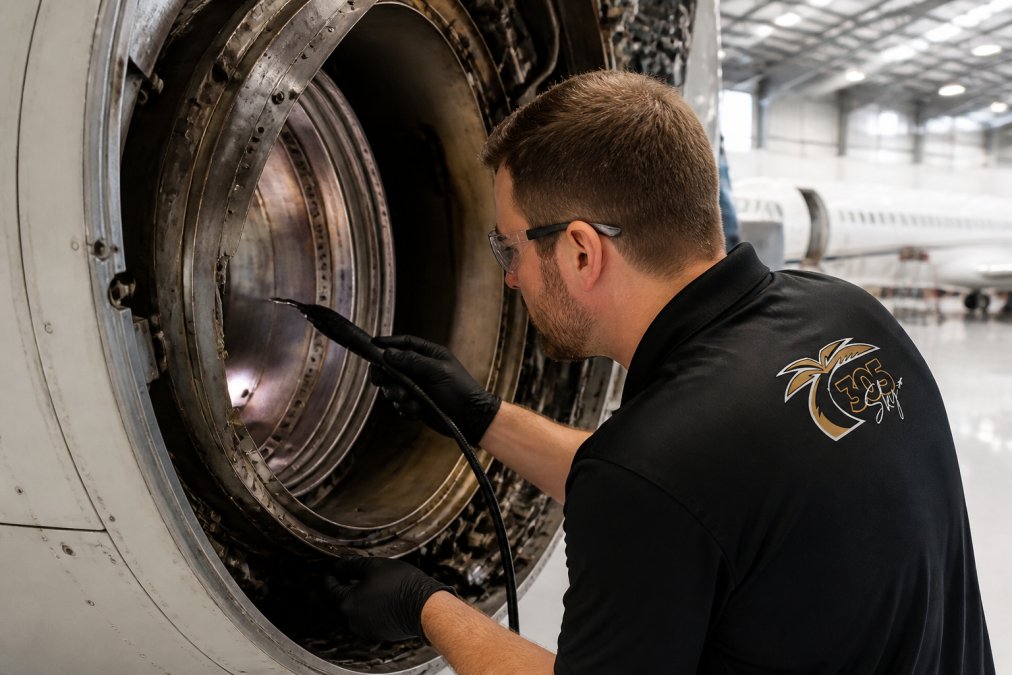
Signs Your Engine Needs Unscheduled Inspection
Excessive vibration, unusual exhaust gas temperature (EGT) trends, or a sudden increase in fuel flow can indicate hot section damage. If your engine experiences a flameout or compressor stall, a hot section inspection should be part of the investigation.
If you suspect the engine ingested debris, gravel, a bird, or other material during takeoff or landing, request an immediate inspection. FOD damage typically appears as blade erosion or impact damage visible during borescope inspection.
Monitoring Oil Quality and Temperature for Engine Health
Oil analysis is one of the most cost-effective predictive maintenance tools available. Regular oil sampling reveals early signs of internal engine wear, contamination, and degradation before problems become catastrophic. Metal particles in the oil indicate bearing wear, while high acid numbers suggest oxidation and chemical breakdown.
Engine oil temperature monitoring during flight provides real-time feedback on engine health. Abnormally high oil temperatures can indicate cooling system problems, excessive internal friction, or bearing wear. Pilots should monitor oil temperature gauges during flight and report any trends that deviate from normal operating ranges.
Oil sampling intervals typically align with 50-hour flight increments or monthly, whichever comes first. The oil sample is sent to a laboratory for spectrographic analysis, which measures metal content, viscosity, acid number, and contamination levels. Trending these results over time reveals whether wear rates are normal or accelerating.

High particulate content in oil samples can indicate excessive wear or contamination from a failed filter. If analysis shows abnormal metal content, particularly iron, chromium, or nickel, the source must be identified through borescope inspection or component teardown.
Water contamination in oil is a serious concern. Moisture promotes corrosion and acid formation, degrading the oil's protective properties. If water content exceeds acceptable limits, the oil must be changed and the source of moisture identified and eliminated.
Aircraft Engine Maintenance Tracking Software and Digital Records
Digital maintenance tracking systems have transformed how operators manage turbine engine maintenance. These platforms consolidate maintenance history, upcoming due dates, compliance requirements, and inspection findings into a single searchable database.
Modern maintenance tracking software integrates with engine monitoring systems, automatically logging flight hours and operational parameters. This real-time data feeds directly into maintenance scheduling algorithms, which calculate when the next inspection or component replacement is due. Some systems send automated alerts as intervals approach, giving operators time to schedule work before hard limits are reached.
Digital records are increasingly required during aircraft transactions. When selling or purchasing an aircraft, buyers and their inspectors expect complete maintenance history in electronic format. Digital systems also simplify insurance documentation and facilitate AOG (aircraft on ground) emergency response by providing instant access to maintenance history and configuration details.
The best maintenance tracking systems provide role-based access, allowing pilots to view flight hour logs while restricting maintenance records to authorized personnel.
Managing Major Overhauls and Component Longevity
A major overhaul involves disassembling the engine and replacing or refurbishing all major components. Overhauls are scheduled based on engine time since new, time since last overhaul, or calendar time, typically every 3,000 to 6,000 hours depending on the engine model and operational profile (faa.gov).
Planning for overhauls well in advance allows operators to budget for the expense and schedule work during periods of lower use.
Component longevity varies dramatically based on operational profile. Engines operating at high power settings continuously experience greater wear than engines used in lower-demand applications. Engines operated in dusty environments accumulate more compressor fouling and require more frequent cleaning.
Manufacturers publish component life limits for turbine blades, bearings, seals, and other critical parts. Some components have "on-condition" limits, meaning they can be inspected and reused if they meet acceptance criteria. Others have "hard-time" limits requiring replacement regardless of condition.
The decision between OEM (original equipment manufacturer) overhaul and independent shop overhaul involves trade-offs between cost, warranty, and turnaround time. OEM overhauls typically cost more but include manufacturer warranty and access to latest service bulletins. Independent shops often provide faster turnaround and competitive pricing, but warranty coverage may be more limited.
Fuel Quality and Operational Profile Impact on Maintenance Scheduling
Fuel quality is one of the most underestimated factors affecting turbine engine maintenance intervals. Jet A and Jet A-1 fuel must meet strict specifications for water content, particulate contamination, and chemical composition. Fuel that deviates from these specifications accelerates corrosion, fuel nozzle fouling, and combustor degradation.
Operators should purchase fuel only from established suppliers with quality control programs. If you suspect fuel contamination, request fuel analysis before operating the engine.
Operational profile, how the aircraft is used, directly influences maintenance scheduling. Aircraft used for short-haul flights with frequent starts and landings experience different wear patterns than those on long-distance missions. High-altitude operations produce different thermal and mechanical stresses than low-altitude operations.
Operators should track their actual operational profile and communicate it to maintenance technicians. Environmental factors matter too. Aircraft based in salt-air environments (like those near Miami and Fort Lauderdale) experience accelerated corrosion. Engines operating in dusty or sandy environments accumulate compressor fouling. These environmental stresses may justify more frequent inspections or reduced intervals between maintenance events.
Preventive Maintenance Best Practices for Turbine Reliability
Preventive maintenance is the foundation of turbine engine reliability. The goal is to catch problems before they become failures, minimizing unscheduled downtime and avoiding catastrophic damage. Effective preventive maintenance combines scheduled inspections, oil analysis, borescope examinations, and operational monitoring.
Establish a maintenance schedule that includes all manufacturer-recommended inspections and component replacements. Don't skip intervals or defer maintenance to save money in the short term. Deferred maintenance compounds; a missed inspection increases the risk that the next problem will be more severe and more expensive.
Maintain detailed records of all maintenance performed. These records are essential for troubleshooting problems, supporting insurance claims, and documenting compliance with regulations.
Invest in condition monitoring. Oil analysis, vibration monitoring, and borescope inspections provide early warning of developing problems. Many operators find that the cost of condition monitoring is recovered through extended component life and reduced unscheduled maintenance.
Establish relationships with qualified maintenance providers who understand your aircraft and operational profile. Consistent maintenance from the same shop builds institutional knowledge about your aircraft's unique characteristics and maintenance history.
At 305 Sky, our 24/7 AOG support means that when maintenance issues arise, whether scheduled or unexpected, you have immediate access to experienced technicians. Our team in Fort Lauderdale and across South Florida understands the operational demands of private aviation and the regulatory environment. We combine preventive maintenance discipline with rapid emergency response, ensuring your aircraft stays airworthy and operational.
Turbine engine maintenance is an ongoing commitment to airworthiness and reliability. The right maintenance partner understands this and treats every interval, inspection, and record as critical to your aircraft's safety and performance. Whether you're managing a single aircraft or a small fleet, 305 Sky provides the expertise, transparency, and responsive support you need. Get a quote today to learn how we can simplify your maintenance program and give you the peace of mind that comes from working with professionals who care about your aircraft as much as you do.
Frequently Asked Questions
What is the difference between calendar-based and flight-hour-based maintenance for turbine engines?
Calendar-based maintenance schedules inspections at fixed time intervals regardless of engine use, while flight-hour-based scheduling ties maintenance to actual running hours. Most turbine engines use a combination of both. Flight-hour-based intervals ensure maintenance occurs when thermal stress and component wear actually warrant it. Calendar-based checks catch corrosion and fluid degradation that occur even during storage. Your operational profile determines which interval type drives your maintenance plan.
What are the FAA turbine engine maintenance requirements for private aircraft?
The FAA requires compliance with manufacturer OEM specifications and airworthiness directives for all turbine engines. Maintenance intervals vary by engine model, but typically include scheduled tasks at specific running-hour thresholds and calendar intervals. Documentation in your aircraft's maintenance logs is mandatory. Hot section inspections, filter replacements, and oil analysis follow FAA-approved schedules. Your aircraft must pass inspection before each flight to maintain airworthiness. Consult your engine's Type Certificate Data Sheet and the manufacturer's maintenance manual for exact requirements.
How does South Florida's coastal climate affect turbine engine maintenance intervals?
Salt air, high humidity, and temperature extremes accelerate corrosion on engine components and shorten intervals for certain inspections. Thermal stress from rapid altitude changes and frequent short flights increases wear on hot section parts. Filter replacement intervals may shorten due to salt ingestion. Oil analysis becomes more critical in humid conditions to detect water contamination. Calendar-based maintenance intervals may need adjustment to account for environmental degradation. Working with a maintenance team familiar with regional challenges helps you adapt your schedule to local conditions.
What signs indicate a turbine engine needs unscheduled maintenance beyond routine intervals?
Watch for abnormal vibration, unusual engine noise, higher-than-normal exhaust temperatures, or changes in fuel consumption. Metal particles in oil samples signal internal wear requiring immediate inspection. Visible corrosion, fluid leaks, or discoloration of engine cowling suggest component failure. Performance degradation, slower climb rates or reduced power, indicates thermal stress or combustion issues. Any deviation from normal operational profile warrants immediate attention from a qualified technician. Don't wait for the next scheduled interval if you notice these warning signs.
This article was written using GrandRanker