Table of Contents
- Understanding Airworthiness Certification for Jet Engines
- 14 CFR Part 33 Requirements and Airworthiness Standards
- The FAA Certification Workflow: From Design to Type Certificate
- FAA Engine Airworthiness Directive Compliance
- FAA Form 8130-3 Explained: The Airworthiness Certificate
- Maintaining Compliance: Instructions for Continued Airworthiness
- Common Certification Challenges and How to Avoid Them
- Conclusion
Last Updated: August 22, 2026
Understanding Airworthiness Certification for Jet Engines
Airworthiness certification for jet engines ensures every engine meets rigorous federal safety standards before powering an aircraft. The Federal Aviation Administration (FAA) oversees this process, establishing the regulatory framework that governs engine design, testing, maintenance, and approval. Whether managing a single corporate jet or a fleet, understanding certification requirements is essential to maintaining compliance and operational readiness.
This guide covers the regulatory standards, certification workflow, and documentation required to keep engines airworthy and compliant.
14 CFR Part 33 Requirements and Airworthiness Standards
14 CFR Part 33 is the regulatory foundation for all jet engine airworthiness in the United States. These standards define minimum performance, safety, and reliability requirements that every turbine engine must meet before receiving FAA approval.
The regulations cover design specifications, endurance testing protocols, and performance across various altitudes and temperatures. Engines must complete rigorous endurance testing to prove they can sustain repeated flight cycles without premature component failure (faa.gov). 14 CFR Part 33 also establishes design approval requirements, mandating that manufacturers submit detailed technical data, including materials specifications, manufacturing processes, and quality control procedures, before the FAA issues a Type Certificate.
An engine is airworthy because it has been designed, tested, and approved to meet 14 CFR Part 33 requirements. For operators, this means any maintenance or repair work must preserve this compliance status.
The FAA Certification Workflow: From Design to Type Certificate
The path from engine concept to operational aircraft involves multiple FAA approval stages. Understanding this workflow and working with your local Flight Standards District Office (FSDO) is essential to avoiding delays and compliance gaps.
Design Approval and Production Approval
Design Approval begins when the manufacturer submits comprehensive technical data to the FAA demonstrating that the engine design meets 14 CFR Part 33 standards. This includes aerodynamic analysis, structural calculations, materials data, manufacturing specifications, and test plans. The FAA's Aviation Safety Inspectors review this data in detail before granting approval.
Once design receives approval, the manufacturer proceeds to Production Approval, where the FAA verifies that production facilities have adequate quality control systems, testing equipment, and trained personnel to build engines consistently to the approved design. The FAA conducts ongoing surveillance of manufacturing facilities, inspecting production records and testing sample engines to ensure quality standards are maintained.
Type Certificate Data Sheet (TCDS) and Supplemental Type Certificates
The Type Certificate Data Sheet (TCDS) is the official document defining exactly what the certified engine is. It specifies performance limits, operating restrictions, approved modifications, and technical specifications. You can access the TCDS for any certified engine through the FAA's online Type Certificate database.
A Supplemental Type Certificate (STC) allows modifications to an already-certified engine. If you want to upgrade avionics, modify cooling systems, or install aftermarket components, you typically need an STC. The STC process involves submitting engineering data proving the modification doesn't compromise airworthiness.
Working with Your Local FSDO
For operators in South Florida, the Miami Flight Standards District Office (FSDO) is your primary contact for certification questions, STC approvals, and compliance clarification. Contact your local FSDO before beginning engineering work on any certification project. FSDO inspectors can clarify documentation requirements, identify potential compliance issues early, and sometimes provide guidance on the most efficient approval pathway.
Practical Certification Workflow Checklist
- Define the scope: Clearly document what you're certifying or modifying.
- Gather technical data: Compile engineering drawings, materials specifications, test data, and performance calculations proving compliance with 14 CFR Part 33.
- Contact your FSDO: Discuss your project with your local FSDO inspector before submitting formal applications.
- Submit formal application: File the appropriate FAA form (Form 8110-1 for Type Certificates, Form 8110-7 for STCs) with supporting technical data.
- Respond to FAA requests: Expect the FAA to request clarifications, additional testing, or revised documentation.
- Conduct required testing: Coordinate with FAA inspectors on test protocols and witness requirements.
- Receive approval: Once all requirements are met, the FAA issues the Type Certificate or STC.
- Document compliance: Maintain records showing the certified engine or modification meets all approved specifications.
Timeline varies significantly. A straightforward STC for a minor modification might take 6-12 months. A new engine type certification can take 3-5 years or longer.
FAA Engine Airworthiness Directive Compliance
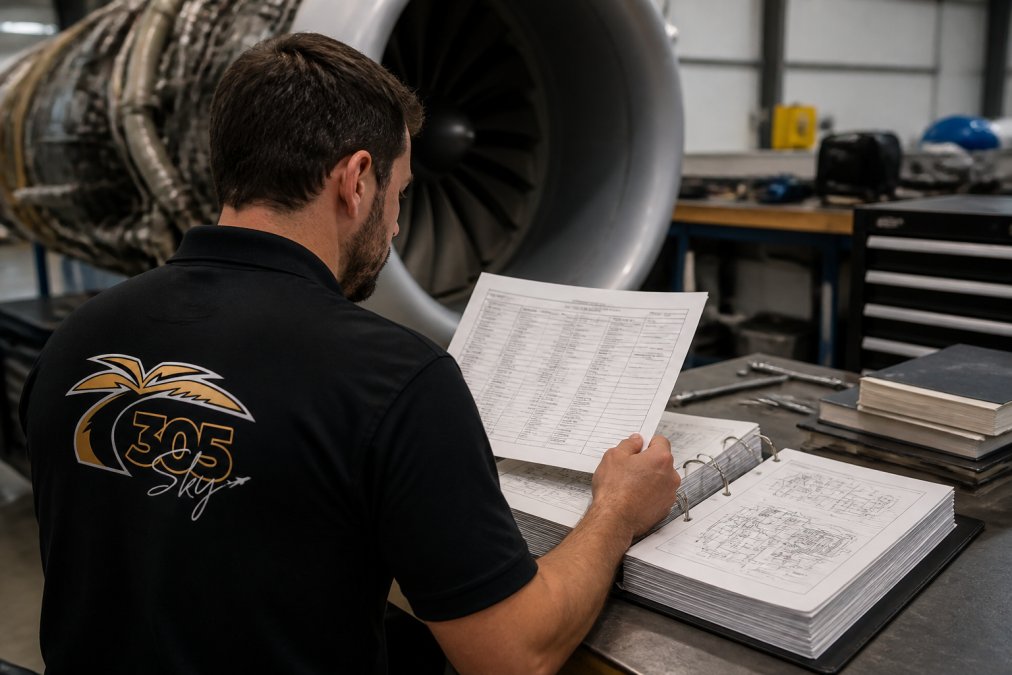
An Airworthiness Directive (AD) is a mandatory FAA order requiring specific corrective action on aircraft or engines. ADs are issued when the FAA identifies a safety issue affecting multiple engines in service. They're legally binding requirements, not optional guidance.
ADs can mandate inspections, modifications, repairs, or component replacement. Your aircraft cannot legally operate if an applicable AD hasn't been complied with by the deadline. Tracking ADs is critical; missing one can ground your aircraft and expose you to regulatory violations. Many operators work with maintenance facilities that monitor AD releases and ensure compliance is completed on schedule.
FAA Form 8130-3 Explained: The Airworthiness Certificate
The FAA Form 8130-3 is the official Airworthiness Certificate, authorizing an aircraft to fly. This form must be displayed in the aircraft. Without a valid 8130-3, your aircraft cannot legally operate.
The 8130-3 certifies that the aircraft meets all applicable airworthiness standards and includes the aircraft's registration number, serial number, and category of airworthiness. Maintaining your 8130-3 requires staying current with maintenance requirements, AD compliance, and inspection schedules. If you miss a required inspection or fail to comply with an AD, the FAA can revoke your airworthiness certificate, grounding the aircraft until issues are resolved.
Maintaining Compliance: Instructions for Continued Airworthiness
Instructions for Continued Airworthiness (ICA) are the manufacturer's guidance documents defining how an engine must be maintained to remain airworthy. These instructions specify inspection intervals, maintenance procedures, component replacement schedules, and troubleshooting guidelines.
The ICA is not optional guidance; it's the regulatory baseline for how your engine must be maintained. The FAA requires that maintenance be performed according to the ICA or an FAA-approved alternative program. Following ICA requirements protects your investment and ensures your aircraft remains compliant.
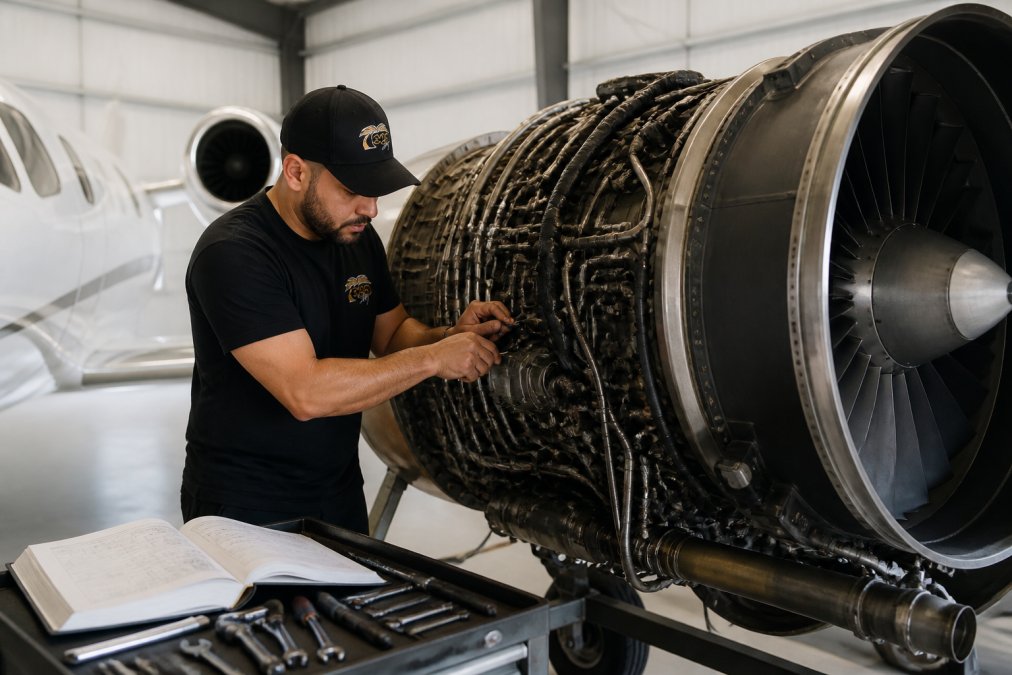
The ICA also specifies which maintenance tasks require FAA-licensed mechanics and which can be performed by appropriately trained technicians.
Common Certification Challenges and How to Avoid Them
Several recurring issues create compliance problems for aircraft operators. Understanding these pitfalls helps you avoid costly delays and make informed decisions about certification pathways.
The Cost-Benefit Trade-Off: Repair vs. Modification vs. Replacement
When an engine develops a defect or an AD requires corrective action, operators face three certification pathways.
Repair to Original Configuration is the simplest path. You fix the defect using manufacturer-approved repair procedures. No STC is required. Timeline: 2-8 weeks. Cost: moderate. Regulatory risk: minimal.
Modification via Supplemental Type Certificate (STC) is required when upgrading or changing the engine beyond its original design. Timeline: 6-18 months for FAA review and approval. Cost: $50,000-$500,000+ depending on complexity. Regulatory risk: moderate.
Engine Replacement becomes preferred when repair costs approach 60-70% of a new or overhauled engine's cost. Timeline: 4-12 weeks for sourcing and installation. Cost: $2-$10 million+ for new engines, or $500,000-$2 million for overhauled units. Regulatory risk: low, provided the replacement engine is already Type Certified for your aircraft.
Missing or Delayed AD Compliance
Operators sometimes miss AD releases or underestimate compliance deadlines. Missing a deadline can result in the aircraft being grounded and potential enforcement action. Establish a process to monitor AD releases and build compliance into your maintenance schedule immediately upon publication. Services that track ADs on your behalf eliminate this risk entirely.
Inadequate Maintenance Documentation
The FAA expects detailed records showing what maintenance was performed, when, and by whom. Vague entries don't meet regulatory standards. Detailed records showing specific inspection results, component measurements, and corrective actions are required. Invest in a maintenance tracking system that captures specific findings, component serial numbers, technician credentials, and cross-references to applicable maintenance manual sections.
Attempting Modifications Without STC Approval
Operators sometimes install aftermarket components thinking they're minor, only to discover FAA approval was required. Once discovered, the aircraft becomes non-airworthy until the modification is either approved via STC or removed. The rule is simple: if the modification changes the engine's performance, structure, or operating characteristics beyond what the Type Certificate allows, an STC is required. Before installing any aftermarket component, verify whether an STC is required.
Choosing Maintenance Providers Without Verifying Qualifications
Not all maintenance facilities are equally equipped to handle complex certification requirements. Before selecting a provider, verify:
- FAA Certification: Confirm the facility holds the appropriate FAA certificate for the work needed.
- Engine-Specific Qualifications: Verify experience with your specific engine model and manufacturer approvals.
- Technical Documentation: Confirm they maintain current Instructions for Continued Airworthiness and access to service bulletins and ADs.
- Personnel: Ask about A&P licenses held by technicians and manufacturer-specific training.
- Quality System: Review quality control procedures and request references.
Neglecting Pre-Buy Inspections
When purchasing an aircraft, a thorough pre-buy inspection identifies outstanding ADs, maintenance backlogs, or airworthiness issues before commitment. A comprehensive pre-buy should include AD compliance verification, maintenance history review, engine condition assessment, airworthiness certificate status verification, damage history, and environmental factor assessment. The cost of a thorough pre-buy inspection ($10,000-$30,000) is minimal compared to discovering compliance issues after purchase.
The Common Thread: Proactive Compliance
These challenges are all preventable. Establishing clear processes, working with qualified maintenance providers, and staying proactive about compliance eliminates most certification issues before they become problems.
Conclusion
Navigating airworthiness certification for jet engines requires understanding federal regulations, following manufacturer guidance, and maintaining detailed compliance documentation. 305 Sky provides comprehensive aircraft maintenance and management services across South Florida to help aircraft operators stay compliant and keep their jets mission-ready. Our team monitors AD releases, maintains current ICA documentation, performs comprehensive inspections, and handles the full scope of certification-related maintenance.
Get a Quote with 305 Sky today and let our certified team handle your certification requirements. Your aircraft deserves professional oversight from people who understand every detail of airworthiness compliance.
Frequently Asked Questions
Q: What is 14 CFR Part 33 and why does it matter for jet engines?
A: 14 CFR Part 33 establishes the airworthiness standards that all aircraft engines must meet for FAA certification. These standards cover design, performance, durability, reliability, and safety requirements. Compliance with Part 33 ensures your jet engine meets federal safety benchmarks and maintains its airworthiness certification throughout its operational life.
Q: How does the FAA certify aircraft engines for airworthiness?
A: The FAA certification process follows a structured workflow: manufacturers submit a design for approval, undergo production approval, complete endurance testing protocols, and receive a Type Certificate. Throughout operation, engines must comply with airworthiness directives and maintain Instructions for Continued Airworthiness (ICA). This multi-stage approach ensures engines are safe for flight from manufacture through retirement.
Q: What is the difference between a Type Certificate and a Supplemental Type Certificate?
A: A Type Certificate (TC) certifies the original design of an engine meets all airworthiness standards. A Supplemental Type Certificate (STC) approves modifications or alterations to an already-certified engine. If you're upgrading avionics, modifying fuel systems, or making other changes to your jet engine, an STC ensures the modification maintains airworthiness compliance and doesn't compromise engine integrity.
Q: What does FAA Form 8130-3 tell me about my engine's airworthiness?
A: FAA Form 8130-3 is the Airworthiness Certificate that documents your engine meets all applicable airworthiness standards. It confirms the engine has passed required testing, inspections, and compliance verification. This form is essential proof that your jet engine is legally airworthy and compliant with all FAA regulations. It should be maintained as part of your aircraft's permanent records.
Supporting Resources
For more information on airworthiness standards and certification requirements, refer to these authoritative sources:
- [EXTERNAL_LINK: FAA 14 CFR Part 33 Airworthiness Standards for Aircraft Engines | faa.gov]
- [EXTERNAL_LINK: FAA Form 8130-3 Airworthiness Certificate Requirements | faa.gov]
- [EXTERNAL_LINK: Federal Aviation Regulations on Continued Airworthiness and Maintenance | faa.gov]
This article was written using GrandRanker