
Table of Contents
- What Makes an Avionics Upgrade Provider Trustworthy
- FAA Part 145 Repair Station Requirements and Certifications
- Evaluating Avionics Shop Capabilities for Your Aircraft
- Avionics Upgrade Installation Timeline and Scheduling
- Aircraft Avionics Retrofit Cost Factors and Transparency
- Post-Installation Support, Warranty, and AOG Response
- How to Verify Provider Experience and Track Record
- Conclusion
Last Updated: August 21, 2026
What Makes an Avionics Upgrade Provider Trustworthy
Choosing the right avionics upgrade provider means finding a partner who understands your aircraft, respects your timeline, and delivers transparent communication. The difference between a trustworthy provider and a frustrating one comes down to certifications, communication, and accountability.
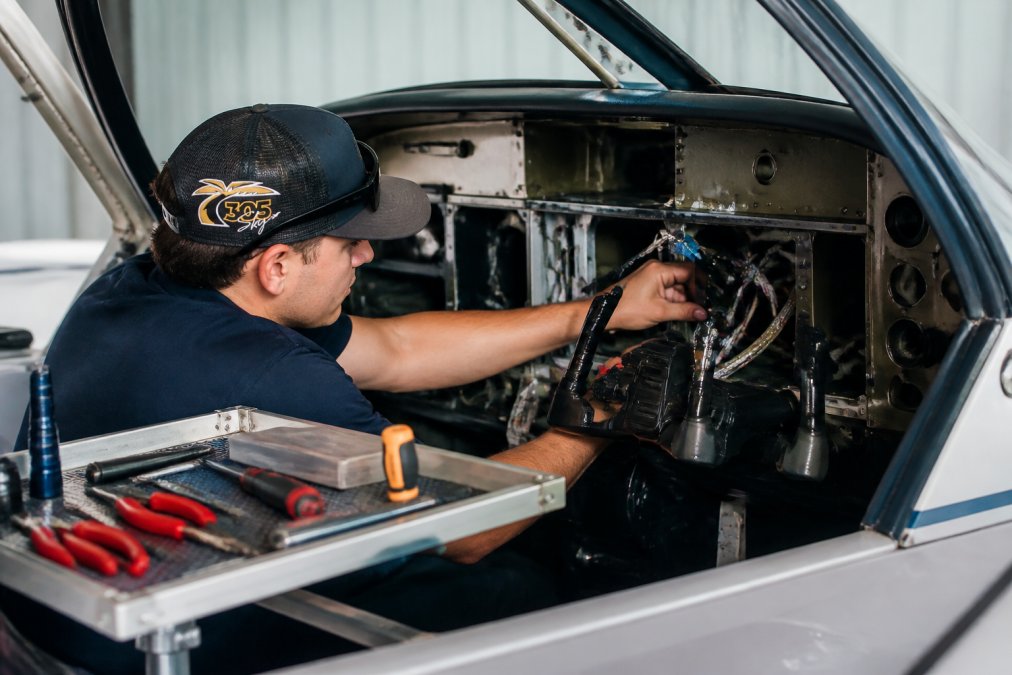
A trustworthy provider demonstrates expertise through verifiable credentials, clear pricing, and a proven track record. They understand aviation regulations, respect avionics complexity, and treat your aircraft with genuine care. At 305 Sky, we've built our reputation on transparent communication, regulatory compliance, and minimizing aircraft downtime through comprehensive aircraft maintenance and aircraft inspections.
Poor installations compromise glass cockpit performance, create compatibility issues, and leave warranty gaps that expose you to liability. The right provider eliminates these risks through rigorous quality control, proper documentation, and genuine accountability.
FAA Part 145 Repair Station Requirements and Certifications
An FAA-certified repair station operates under strict regulatory oversight, with technicians, processes, and facilities inspected and approved by the Federal Aviation Administration.
FAA Part 145 certification requires:
- Certified technicians with appropriate ratings and experience
- Documented maintenance procedures and quality control processes
- Proper facilities, tools, and equipment for the work being performed
- Compliance with all applicable airworthiness directives and service bulletins
- Detailed record-keeping of all work performed on your aircraft
This certification is the baseline for legitimacy. Any provider handling avionics upgrades should hold this credential. Ask directly: "Are you FAA Part 145 certified?" If they hesitate, that's a red flag.
Beyond Part 145, some providers hold manufacturer certifications from Garmin, Collins, or Rockwell Collins that demonstrate specialized expertise. Ask for proof of these credentials. Legitimate shops keep them current and display them proudly.
Evaluating Avionics Shop Capabilities for Your Aircraft
Not every FAA-certified repair station is equipped to handle every avionics upgrade. The difference comes down to specific capabilities and experience with your aircraft type.
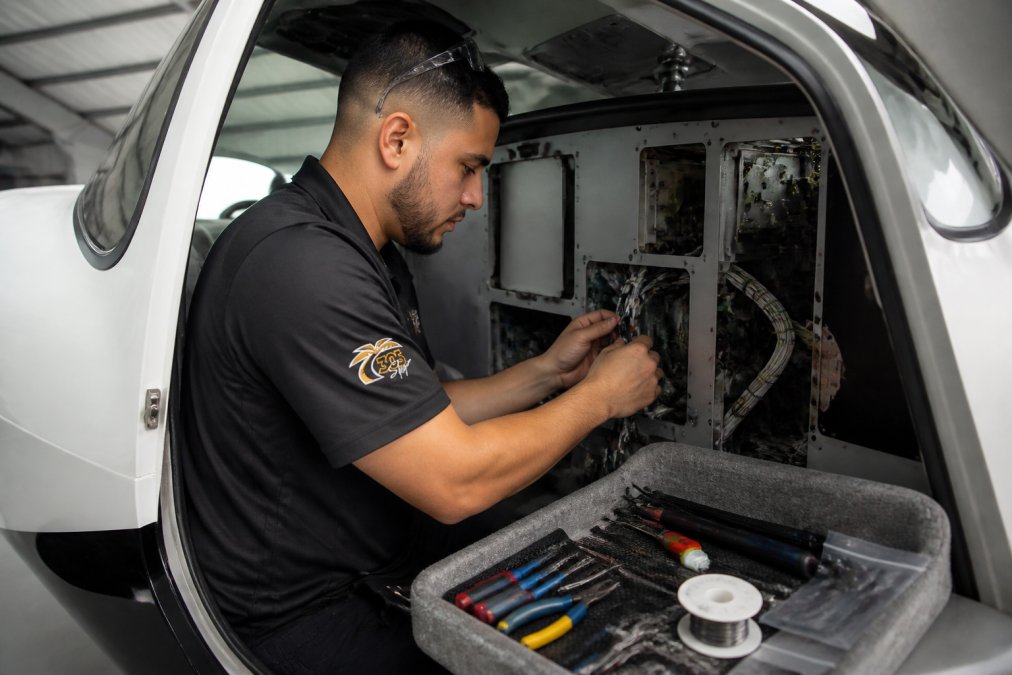
Glass Cockpit and Avionics Suite Expertise
Glass cockpit systems integrate multiple avionics components into a unified flight deck. Integration is where most problems occur. A shop might install individual components, but integrating them into a cohesive system requires specialized knowledge of system architecture, power distribution, and data networking.
Ask about experience with your specific aircraft model and avionics package. Have they installed the same configuration before? Can they explain how your autopilot integrates with GPS navigation, how your flight management system coordinates with engine monitoring, and how all systems work together?
Request references from aircraft owners who've had similar work done. A provider with genuine glass cockpit expertise will have completed installations on your aircraft type and should connect you with satisfied customers.
Equipment Compatibility and STC Documentation
Avionics upgrades often require Supplemental Type Certificate (STC) approval from the FAA, which ensures the new equipment is compatible with your aircraft and doesn't compromise airworthiness.
A competent provider will have researched which STCs apply to your aircraft and upgrade path. They should provide complete STC documentation before work begins. This documentation is critical for resale value, insurance, and regulatory compliance.
Ask: "What STCs will this upgrade require?" If they don't have a clear answer, they haven't done their homework.
Avionics Upgrade Installation Timeline and Scheduling
Aircraft downtime is expensive. A professional provider will give you a realistic timeline upfront and stick to it.
Installation timeline depends on upgrade complexity, your aircraft's current wiring and panel layout, parts availability, and the provider's workload. A simple glass cockpit upgrade might take 40-80 hours; a comprehensive retrofit could take 200+ hours. An honest provider breaks this down in writing.
Factor in testing, calibration, and FAA sign-off. A reputable provider builds this into their timeline estimate. Ask about scheduling practices: Do they batch similar work? Do they have backup equipment if something fails? What happens if unexpected issues arise? A provider who has thought through contingencies will have fewer surprises.
Aircraft Avionics Retrofit Cost Factors and Transparency
Pricing varies dramatically based on what you're upgrading and installation complexity. Focus on understanding the full financial picture, installation costs, how the upgrade affects your aircraft's value, insurance, and financing options.
Breaking Down Installation Costs
A trustworthy provider breaks down costs clearly: equipment, labor (quoted as a range based on actual hours), STC documentation, testing, and incidental repairs. They explain what's included and what might trigger additional charges.
Red flags include vague quotes, refusal to itemize costs, or pressure to commit before inspection. Legitimate providers do a pre-installation inspection to identify complications and inform final pricing.
Ask about billing approach. Do they bill hourly, by the job, or by milestone? If hourly, what's their rate range and how do they track time? If by the job, what happens if work takes longer due to unforeseen issues? Transparent providers won't surprise you with unexpected invoices.
How Avionics Upgrades Affect Hull Value and Resale
Modern glass cockpit systems, particularly Garmin G1000 NXi or Collins Aerospace Pro Line Fusion installations, typically increase hull value by 8-15% depending on aircraft type and market (peer-reviewed research). This value increase only materializes if the upgrade is properly documented with FAA Form 337, complete STC paperwork, and clean maintenance logbook entries.
A poorly documented upgrade or one performed by an uncertified shop can actually reduce resale value because future buyers will question installation quality and face airworthiness concerns. Ask: "Will you provide complete FAA Form 337 documentation and STC records?" This is non-negotiable for protecting your investment.
Before committing, research comparable aircraft sales in your market. Aircraft with modern avionics command higher prices. Your provider should discuss realistic value recovery timelines, typically 3-5 years for a mid-range glass cockpit upgrade to fully recoup installation costs through improved resale value.
Insurance Implications and Premium Changes
Avionics upgrades significantly affect aircraft insurance premiums.
Positive impacts: Modern glass cockpit systems with integrated autopilots, terrain awareness and warning systems (TAWS), and traffic collision avoidance systems (TCAS) typically reduce premiums by 5-15% because they reduce accident risk (faa.gov). Ask your insurance broker which avionics packages qualify for reductions.
Negative or neutral impacts: Basic glass cockpit upgrades without advanced safety features may not reduce premiums. If your upgrade requires new pilot type ratings or recurrent training, you may face temporary premium increases until you complete training and log experience.
Critical step: Before finalizing an upgrade, contact your aircraft insurance broker and ask them to model the premium impact. Coordinate with your insurance company on the upgrade timeline. Some insurers require notification before major modifications, and delays can affect your coverage status during installation.
Financing Options and Total Cost of Ownership
Several financing pathways exist beyond paying cash.
Manufacturer financing: Garmin and other manufacturers partner with lenders to offer equipment financing with 24-60 month terms and competitive rates. Your provider should connect you with these programs.
Aviation-specific lenders: Banks and credit unions specializing in aviation often offer better terms than general-purpose lenders. AOPA maintains lists of aviation lenders.
Conditional approval: Some providers offer conditional pricing contingent on your ability to secure financing.
When evaluating total cost of ownership, factor in equipment, installation labor, STC documentation and FAA approval fees, required pilot training, insurance premium changes, and maintenance costs.
A comprehensive upgrade might cost $40,000-$80,000 installed, but if it increases hull value by $50,000 and reduces insurance premiums by $2,000 annually, the true cost of ownership becomes much more favorable over 5-7 years. Your provider should help you model this financial picture.
Post-Installation Support, Warranty, and AOG Response
The real measure of a provider's commitment shows up after work is done. What happens if something goes wrong? What warranty covers the installation work? How quickly can they respond if your aircraft goes down?
A solid warranty on installation work typically covers 12-24 months and addresses defects in the installation itself (not equipment failures, covered by the manufacturer). Read warranty terms carefully. Does it cover labor for repairs, or just parts?
For Fort Lauderdale-based operators, AOG service response capability is critical. Ask: "What's your AOG response time?" Some providers offer 24/7 emergency support with mobile service units that can dispatch to your location. 305 Sky maintains 24/7 AOG response capability across South Florida, including Fort Lauderdale and surrounding areas.
How to Verify Provider Experience and Track Record
Experience claims are easy to make. Verification separates legitimate providers from mediocre ones. You also need to understand how a provider approaches future technology, since avionics standards are evolving rapidly and your upgrade decision today will affect your aircraft's capabilities for the next decade.
Verifying Credentials and Installation History
Ask for verifiable credentials: How many years in business? How many certified technicians? How many avionics installations completed in the past year?
Request references from customers who've had similar work on similar aircraft. A provider with genuine experience will have completed multiple installations on your aircraft type and should connect you with satisfied customers. Ask specific questions: "Did work stay on schedule?" "Were there unexpected issues?" "How responsive was the provider if problems came up after installation?"
Check for industry affiliations beyond basic FAA Part 145. AOPA or NBAA membership suggests commitment to industry standards. Manufacturer certifications demonstrate specialized expertise.
NextGen Compliance and Future-Proofing Strategy
One overlooked aspect is understanding how your upgrade aligns with NextGen requirements, not just for today, but for the next 10-15 years.
What is NextGen: NextGen replaces ground-based radar navigation with satellite-based ADS-B (Automatic Dependent Surveillance-Broadcast) technology. The FAA mandated ADS-B Out capability by January 1, 2020 (faa.gov). NextGen also includes Performance-Based Navigation (PBN), enabling more precise, efficient flight paths. Modern glass cockpits support these; older avionics cannot.
Ask: "How does this upgrade path support NextGen operations?" A knowledgeable provider will explain ADS-B Out compliance, PBN capability, and software-defined radio readiness.
Software-Defined Radio and Over-the-Air Updates
A critical differentiator is understanding software-defined avionics architecture. Traditional avionics required hardware replacement to upgrade capabilities. Modern platforms, particularly Garmin G1000 NXi and Collins Aerospace systems, use software-defined radio architecture, meaning many capability upgrades happen through software updates.
Ask: "Does this avionics suite support over-the-air updates?" A provider committed to long-term support will have a documented update strategy and won't leave you with obsolete equipment in five years.
Ongoing Training and Technician Development
Avionics technology evolves rapidly. A committed provider will have documented training programs and regularly updated certifications. Ask about technician development strategy: How often do technicians complete manufacturer recurrent training? Do they maintain current certifications? Are technicians required to complete FAA-approved training on new platforms before working on customer aircraft? Does the provider invest in diagnostic equipment for emerging technologies?
A provider who can't answer these questions clearly is likely falling behind on technical currency.
Industry Reputation and Regulatory History
Research a provider's regulatory history. The FAA maintains records of Part 145 repair stations, including inspection results and corrective actions. A clean inspection record with no outstanding corrective actions is a positive sign.
Check online reviews and industry forums. Pilot communities on Beechtalk, Cessna Owner Organization forums, and AOPA's community boards often discuss local avionics shops. Patterns of feedback, especially regarding communication, timeline adherence, and post-installation support, are valuable signals.
Local Expertise and Fort Lauderdale Market Knowledge
If based in Fort Lauderdale, prioritize providers with deep local knowledge. They should understand FXE (Fort Lauderdale Executive Airport) hangar availability and logistics, local pilot resources and training facilities for glass cockpit transitions, regional insurance broker relationships, and South Florida's unique operational environment.
A provider with local roots will have established relationships with FXE maintenance facilities, understand the airport's scheduling constraints, and know which training centers offer the best glass cockpit transition courses. This translates to smoother installations and faster problem resolution.
Frequently Asked Questions
What FAA certifications should an avionics upgrade provider hold?
Your provider must hold FAA Part 145 repair station certification, which requires compliance with strict maintenance standards, qualified personnel, and proper documentation. Verify they hold current approval for your specific aircraft type and avionics systems. Ask for their certificate number and confirm it on the FAA database. Additionally, check if they employ avionics technicians with appropriate ratings and if they maintain insurance coverage for liability during installation work.
How long does a typical avionics upgrade installation take?
Avionics upgrade installation timeline depends on system complexity, aircraft downtime tolerance, and whether an STC (Supplemental Type Certificate) is required. Simple upgrades may take 5-10 business days, while comprehensive glass cockpit installations can span 3-6 weeks. Ask your provider for a detailed project timeline upfront, including pre-installation testing, wiring harness work, panel layout modifications, and post-installation system verification. Understanding turnaround time helps you plan aircraft availability.
Does my avionics upgrade require a Supplemental Type Certificate?
An STC (Supplemental Type Certificate) is required when your upgrade significantly modifies aircraft systems or performance. Factory-approved avionics packages typically include STC documentation, but aftermarket installations may not. Your provider should clarify STC requirements during the evaluation phase. If an STC is needed, your provider must handle all FAA coordination and paperwork. This affects both cost and installation timeline, so confirm STC status before committing to an upgrade.
How do I verify an avionics provider's experience with my aircraft model?
Request references from owners of your specific aircraft type who have completed similar upgrades. Ask about their experience with your avionics suite, glass cockpit system, and any unique panel layout challenges. Request documentation of completed installations, including pre- and post-upgrade flight test data. Verify their technician certifications match your aircraft's systems. A reputable provider will have case studies or testimonials demonstrating successful upgrades on your model.
What should I ask about post-installation support and warranty?
Confirm warranty coverage on all installed equipment, labor, and integration work. Ask about their AOG (Aircraft on Ground) emergency response availability, 24/7 support is critical for minimizing downtime. Understand how they handle troubleshooting if issues arise after installation. Request details on training provided to your pilots on the new avionics systems. A strong provider offers ongoing technical support, system updates, and readily available replacement parts.
This article was written using GrandRanker