Table of Contents
- Understanding FAA Part 145 Certification and What It Means for Your Aircraft
- Verify Repair Station Ratings and Limitations Before Committing
- Create Your FAA Repair Station Audit Checklist
- Evaluate AOG Emergency Response Services in Your Region
- Review the FAA Part 145 Repair Station Capabilities List
- Assess Quality Control Systems and Maintenance Documentation
- Make Your Final Decision: Questions to Ask Before Signing
- Conclusion
Last Updated: August 20, 2026
Understanding FAA Part 145 Certification and What It Means for Your Aircraft
An FAA Part 145 repair station is a facility certified by the Federal Aviation Administration to perform maintenance, preventive maintenance, alterations, and inspections on aircraft and aircraft components according to 14 CFR Part 145 regulations. This certification means the facility has met strict regulatory standards for quality control systems, technical personnel, facility requirements, and maintenance documentation. A Part 145 facility has demonstrated compliance with airworthiness standards and quality assurance protocols that protect your aircraft's safety and value, with operations subject to ongoing FAA oversight and compliance audits.
Understanding what Part 145 certification means helps you evaluate whether a repair station meets your needs. The certification guarantees that a third party (the FAA) has verified the facility's systems, training, and documentation standards. For aircraft owners in Fort Lauderdale and across South Florida, this regulatory foundation becomes essential when entrusting your aircraft to a maintenance provider.
Verify Repair Station Ratings and Limitations Before Committing
Every FAA Part 145 repair station holds specific ratings that define exactly what work it's authorized to perform. The repair station certificate lists these ratings and any limitations, which might restrict the facility to certain aircraft types, components, or work categories. Before committing to a provider, confirm that its ratings align with your aircraft's maintenance requirements.
Ratings typically fall into categories like airframe, powerplant, or component work. An airframe rating authorizes work on the aircraft structure. A powerplant rating covers engine maintenance and overhaul. Component ratings allow the facility to service specific systems like avionics, landing gear, or hydraulics. A facility claiming to handle everything might be farming specialized work out to other shops, delaying turnaround and complicating liability.
The FAA publishes the repair station certificate for every certified facility. You can request a copy directly from the facility or search the FAA's database. The certificate shows what the facility is rated to do and any limitations imposed during certification.
For aircraft owners in the Miami to Port St. Lucie corridor, verifying ratings becomes critical when you need specialized work like avionics upgrades or cabin interior transformations. A facility rated for general maintenance might not be authorized to perform those upgrades, or it might have limitations requiring additional paperwork and approval timelines.
Create Your FAA Repair Station Audit Checklist
A systematic audit checklist helps you evaluate repair stations objectively and compare multiple facilities on consistent criteria. The checklist should cover regulatory compliance, operational capability, quality systems, and responsiveness.
Regulatory Compliance Section: Confirm the facility holds current FAA Part 145 certification. Request the repair station certificate and verify it hasn't expired. Check that the facility's ratings match your aircraft's maintenance needs. Ask whether the facility has ever received an FAA enforcement action or citation.
Personnel and Qualifications: Request information about the facility's technical staff. How many mechanics and inspectors does it employ? What certifications do they hold? Are they Airframe and Powerplant (A&P) licensed? Do they have type-specific training for your aircraft? For Fort Lauderdale-based operators, asking whether staff has experience with aircraft commonly flown in South Florida (King Air, Citation, Beechcraft, Cessna) helps gauge whether the facility understands your specific needs.
Facility and Equipment Assessment: Visit the facility if possible. Modern tooling, organized work bays, and clean storage areas signal operational discipline. Ask about equipment maintenance schedules and calibration records. A facility that invests in modern diagnostic tools and maintains them properly is more likely to catch problems your aircraft might develop.
Quality Control Documentation: Request samples of the facility's work order process, inspection checklists, and maintenance records. How does the facility track work in progress? What happens if an inspector finds a discrepancy? A strong quality control system includes written procedures, signed-off inspections, and traceability from initial work request through final sign-off.
AOG and Emergency Response Capability: Ask specifically about the facility's 24/7 availability and emergency response procedures. How quickly can the facility respond to an aircraft on the ground (AOG) situation? Does it maintain a mobile maintenance unit for field repairs? What's the process for after-hours contact?
| Audit Checklist Item | What to Verify | Red Flags |
|---|---|---|
| FAA Certification | Current Part 145 certificate with matching ratings | Expired cert, missing ratings for your aircraft |
| Personnel | A&P licenses, type training, years of experience | Minimal staff, no specialized training |
| Facility Condition | Modern tools, organized workspace, equipment maintenance logs | Outdated equipment, disorganized work areas |
| Quality Control | Written procedures, inspection checklists, defect tracking | No documented procedures, informal processes |
| AOG Response | 24/7 availability, mobile unit capability, response time commitment | No after-hours support, slow response times |
Evaluate AOG Emergency Response Services in Your Region
Aircraft downtime is expensive. A mechanical issue that grounds your aircraft costs money every day it's not flying. When evaluating repair stations in Fort Lauderdale and South Florida, AOG emergency response capability should be a primary selection criterion.

True 24/7 AOG response means the facility can dispatch a technician to your aircraft location at any time to diagnose and repair the problem on-site if possible. A mobile maintenance capability, a fully equipped service van that travels to your aircraft, eliminates the need to tow or ferry your aircraft to the shop, saving time and reducing risk.
Ask potential repair stations how they staff emergency response. Do they maintain a dedicated on-call technician, or is emergency support rotated among general staff? What's the actual response time commitment? For aircraft based at busy South Florida airports like Fort Lauderdale Executive, response time directly affects whether you can get back in the air the same day.
Verify the facility's emergency contact process. Is there a single phone number connecting you directly to an on-call technician, or do you leave a message and wait for a callback? What happens on weekends and holidays?
Ask about the facility's equipment and capabilities for field repairs. A mobile maintenance unit should carry common replacement parts, diagnostic equipment, and tools for the aircraft types you operate. The facility should be able to perform routine emergency repairs, fuel system issues, electrical problems, hydraulic leaks, engine start issues, without towing your aircraft.
Review the FAA Part 145 Repair Station Capabilities List
The repair station capabilities list defines exactly what the facility is equipped and authorized to perform. This document goes beyond the basic ratings listed on the FAA certificate, specifying aircraft models, components, and procedures the facility can handle, along with any limitations.
Request the capabilities list from any facility you're seriously considering. A detailed list that specifies "Beechcraft King Air 90, 200, and 350 series airframe and powerplant maintenance; Continental and Lycoming engine overhaul; avionics installation per POH specifications" gives you confidence the facility has invested in type-specific training and equipment. A vague statement claiming to service "all general aviation aircraft" is a red flag.
Review the capabilities list for any gaps relevant to your aircraft. If you operate a King Air and need regular engine overhaul capability, confirm the facility lists King Air engines. If you're planning avionics upgrades, verify the facility lists avionics installation and certification work.
The capabilities list also reveals the facility's specialization level. A facility with a long, detailed capabilities list covering multiple aircraft types has invested in diverse expertise and equipment. Match the facility's capabilities to your maintenance needs rather than assuming it can handle work outside its documented capabilities.
For aircraft owners in Fort Lauderdale considering facilities across South Florida, comparing capabilities lists helps you identify which facility is best suited for each type of work. One facility might excel at airframe work, another at avionics, another at interior restoration.
Assess Quality Control Systems and Maintenance Documentation
The quality control system is the backbone of a reliable repair station. It's the documented process that ensures every job is done correctly, every defect is caught and corrected, and every aircraft leaves the facility in airworthy condition.
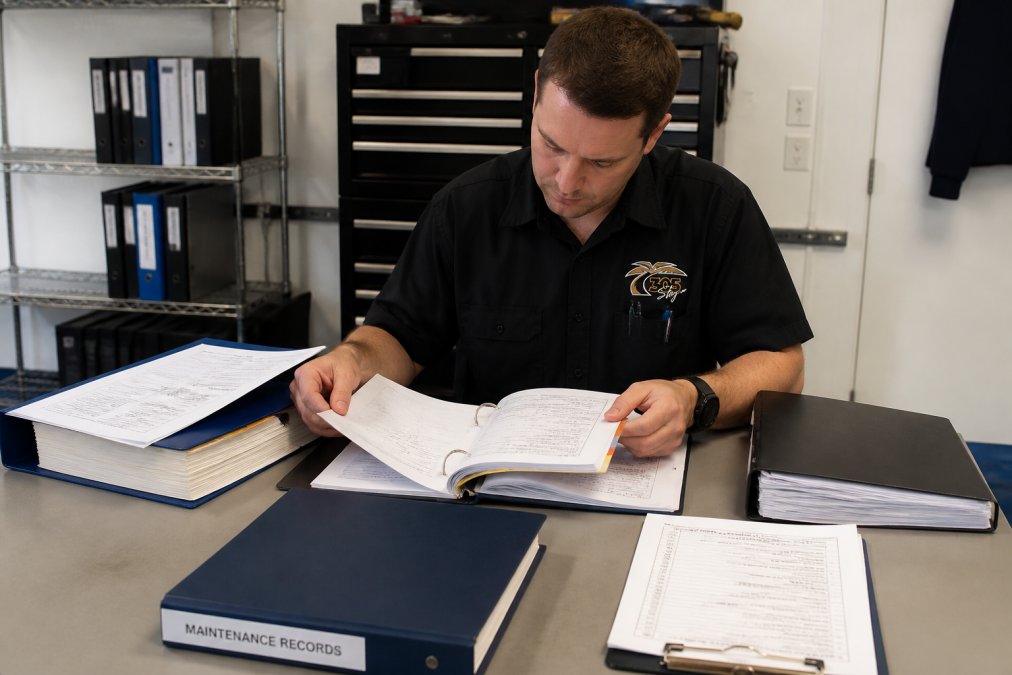
A strong quality control system includes written procedures defining how work is performed, inspected, and documented. Work orders track every job from start to finish with signed-off inspections at each stage. Maintenance manuals provide standards for acceptable work. Defect tracking systems capture problems found during inspection and document corrections. Records retention policies ensure documentation is preserved and accessible for regulatory audits.
Ask the repair station to walk you through its quality control process using a recent job as an example. How does a work order move through the facility? When does inspection occur? Who performs inspections, and what qualifications do they have? A facility that can clearly explain its process demonstrates that quality control is embedded in daily operations.
Digital record-keeping systems offer advantages over paper-based filing. A digital system allows you to request work records electronically, provides searchable access to historical maintenance, and reduces the risk of lost documentation. Ask whether the facility maintains digital records and whether you can access them remotely.
Verify that the facility maintains FAA-required maintenance documentation. Every repair station must keep records of work performed, parts used, and inspections completed for at least two years. A facility that takes record-keeping seriously demonstrates respect for regulatory compliance and your aircraft's airworthiness.
Make Your Final Decision: Questions to Ask Before Signing
Before committing to a repair station, ask these questions directly.
Communication and Transparency: How does the facility keep you informed during work? What's the process if the technician discovers additional issues beyond the original scope? A transparent facility explains problems clearly and gets your approval before proceeding with additional work. Ask about billing practices. Will you receive an estimate before work begins? How are labor charges calculated? Are parts marked up?
Warranty and Liability: What warranty does the facility provide on completed work? If a problem arises within 30 days, will the facility re-do the work at no charge? What happens if the facility's work causes damage to other aircraft systems? Is the facility insured for liability?
Scheduling and Turnaround: How far in advance do you need to schedule maintenance? What's the typical turnaround time for routine work and complex projects? Can the facility accommodate rush requests?
Experience with Your Aircraft Type: Has the facility performed maintenance on your specific aircraft model? How many similar aircraft has it serviced? Can it provide references from other owners of the same aircraft type?
After-Sale Support: If you encounter an issue after work is complete, how does the facility handle it? Is there a warranty period during which you can contact the facility with questions? For complex work like avionics upgrades or interior restoration, ongoing support matters.
For aircraft owners in Fort Lauderdale and across South Florida, asking these questions also reveals whether a facility understands the local operating environment. South Florida's salt air, high humidity, and intense sun create unique maintenance challenges.
Choosing an FAA Part 145 repair station requires careful evaluation of regulatory compliance, capabilities, quality systems, and responsiveness. The facility you select will have direct responsibility for your aircraft's airworthiness and safety.
At 305 Sky, we understand the critical importance of choosing the right maintenance partner. Our FAA Part 145 certification, combined with over 55 years of combined aviation experience across our South Florida team, means your aircraft receives expert care backed by rigorous quality control and 24/7 emergency response capability. We maintain transparent pricing, detailed digital maintenance records, and a family-oriented approach that treats every aircraft with the same professional dedication. Whether you need routine maintenance, AOG emergency support, or specialized work like avionics upgrades, we're equipped to deliver reliable service with the accountability that comes from FAA oversight. Get a quote today and experience the difference that genuine expertise and transparent communication make.
Frequently Asked Questions
How do I verify the current ratings and limitations of an FAA Part 145 repair station?
The FAA maintains a searchable database of all certified repair stations on its website. Search by facility name or location to confirm current certification status, approved ratings, and specific limitations. Request the facility's Certificate of Airworthiness and review their FAA Form 8310-3, which documents all approved work scopes. Contact the local FAA Flight Standards District Office if you need historical records or want to confirm a facility's compliance history.
What's the difference between an MRO and an FAA Part 145 repair station?
An MRO (Maintenance, Repair, and Overhaul) is a general industry term for any maintenance facility. An FAA Part 145 repair station is a specific designation meaning the facility holds FAA certification under 14 CFR Part 145 and meets rigorous regulatory standards. Not all MROs are certified repair stations. Choosing a certified Part 145 facility guarantees compliance with airworthiness standards, quality control systems, and technical personnel requirements.
What should I look for in a repair station's quality control manual?
Request their Quality Control System documentation and verify it covers inspection procedures, defect tracking, corrective actions, and personnel training records. The manual should detail how they manage maintenance manuals, control aircraft parts, and document all work performed. Ask how they handle non-conforming parts and what their audit process looks like. A transparent facility will provide clear answers and show you their compliance audit trails without hesitation.
Can an FAA Part 145 repair station handle all my aircraft maintenance needs?
Capabilities vary by facility. Each certified repair station receives specific ratings and limitations that define what work they're approved to perform. Some handle routine maintenance and inspections; others specialize in overhauls, avionics, or interior work. Review their capabilities list to confirm they cover your needs, routine maintenance, AOG emergency response, pre-buy inspections, or specialized upgrades. Many facilities work with partner shops for services outside their ratings, so ask how they manage work they cannot perform in-house.
This article was written using GrandRanker