Table of Contents
- What AOG Services Actually Mean for Your Aircraft
- Aircraft Maintenance in Fort Lauderdale: Finding the Right Provider
- AOG Response Time Expectations: What You Should Demand
- Emergency Aircraft Repair in South Florida: The First Hours Matter
- How to Verify Your AOG Provider's Real Capabilities
- Transparent Pricing and Billing: Avoiding Hidden Costs
- Choosing an AOG Partner You Can Trust
Last Updated: August 18, 2026
What AOG Services Actually Mean for Your Aircraft
AOG services are emergency aircraft maintenance and repair operations that mobilize immediately when your plane is grounded. AOG stands for "Aircraft on Ground," and every hour your aircraft sits idle costs money, disrupts schedules, and creates operational chaos.
When your aircraft experiences an unexpected mechanical failure or system malfunction, AOG services dispatch technicians, parts, and diagnostic equipment to get you back in the air as fast as possible. This is emergency response, typically available 24/7, with technicians arriving at your location within hours rather than days.
What separates real AOG services from regular maintenance shops is speed, availability, and the willingness to drop everything when you call. A standard maintenance facility works during business hours and schedules work weeks in advance. An AOG provider has technicians on call at 2 AM on Sunday, parts in stock or accessible through emergency channels, and the infrastructure to mobilize a mobile maintenance van to your location within the service area.
305 Sky operates 24/7 AOG response across South Florida with a dedicated mobile van and on-call technicians. The difference between calling a shop that's closed and calling an AOG provider that answers immediately is the difference between getting your aircraft back in service today versus waiting until Monday morning.
Aircraft Maintenance in Fort Lauderdale: Finding the Right Provider
Fort Lauderdale is home to some of the busiest general aviation traffic in Florida. Executive Airport (FXE) handles thousands of operations annually, from corporate jets to charter flights to private owners. That concentration of aircraft means you have options, but not all of them are equal when you need emergency response.
Finding the right maintenance provider requires understanding what you're looking for. Are you seeking routine maintenance and annual inspections? Are you building a long-term relationship with a shop that knows your aircraft? Or are you specifically looking for AOG capability?
The best providers combine routine maintenance expertise with genuine 24/7 AOG response. That means they have technicians who work scheduled shifts during normal hours but also maintain on-call teams for emergencies. It means they stock common parts and have relationships with suppliers who can deliver specialized components quickly.
305 Sky maintains four strategically located facilities across South Florida, with Fort Lauderdale as a primary hub. The multi-location approach matters for AOG response, it means faster dispatch times and broader coverage across the Miami to Port St. Lucie corridor.
When evaluating providers, ask directly: How many technicians do you have available for AOG calls at 2 AM? What's your typical response time? Do you have parts in stock, or are you waiting for overnight delivery? Can you handle the full scope of what we need, or are you farming some of it out? The answers separate shops that dabble in AOG from providers built around it.
AOG Response Time Expectations: What You Should Demand
Response time is the metric that matters most in an AOG situation. Every hour costs money and credibility.
The industry standard for AOG response is typically 2-4 hours from the time you call. Some providers promise faster response, 1-2 hours, but that's only realistic if they have technicians already positioned near your location.
What "response time" actually means matters. Some shops measure it from when they receive your call to when they start driving. Others measure it from when a technician physically arrives at your aircraft. Ask for clarity.
The second metric is resolution time, how long until your aircraft is actually flying again. A technician arriving quickly doesn't help if they lack the parts or expertise to fix the problem. The best AOG providers combine fast arrival with the ability to diagnose and resolve issues on-site. That requires extensive parts inventory, factory-trained technicians across multiple aircraft types, and the authority to make decisions without checking with a manager first.
305 Sky's 24/7 AOG response includes mobile van dispatch and on-call technicians positioned to reach aircraft across the South Florida service area. The mobile van carries common tools, diagnostic equipment, and parts for typical emergency repairs.
When evaluating AOG providers, ask about their actual response times on recent calls. How many AOG calls did they handle in the last month? What was the average response time? How many were resolved on-site versus requiring towing? A provider with real experience will have data to back up their claims.

Emergency Aircraft Repair in South Florida: The First Hours Matter
The first few hours after your aircraft goes down determine whether you're back in the air today or sitting in a hangar for days.
When you call an AOG provider, the initial assessment happens over the phone. You describe the problem, engine issue, avionics failure, landing gear malfunction, hydraulic problem. The technician asks specific questions to determine whether they dispatch immediately or ask you to get the aircraft to a maintenance facility.
For issues that require on-site assessment, the technician arrives with diagnostic equipment and begins troubleshooting. Some problems are straightforward and can be fixed in place. Others require parts that need to be sourced, which triggers a second phase: locating the part, arranging emergency delivery, and installing it once it arrives.
The critical difference between mediocre and excellent AOG response is parts availability. A shop that has to order parts overnight loses you a full day. A provider with extensive inventory or relationships with suppliers who can deliver within hours keeps your aircraft in the air.
South Florida's concentration of aircraft operations means competition for emergency parts. The best providers have built redundancy into their supply chain, multiple suppliers, parts warehouses, and relationships with other shops who will loan critical components in emergencies.
305 Sky's approach combines on-call technician availability with parts inventory and supplier relationships built over 55 years of aviation experience. When you call at 3 AM with a problem, you're dealing with technicians who've handled thousands of similar situations.
How to Verify Your AOG Provider's Real Capabilities
Asking a shop if they offer 24/7 AOG response requires verification beyond their claims.
Start with certifications. An FAA Part 145 repair station certification means the facility has met federal standards for maintenance, parts handling, record-keeping, and personnel qualifications. If a shop isn't Part 145 certified, they can't legally perform certain repairs or work on some aircraft types.
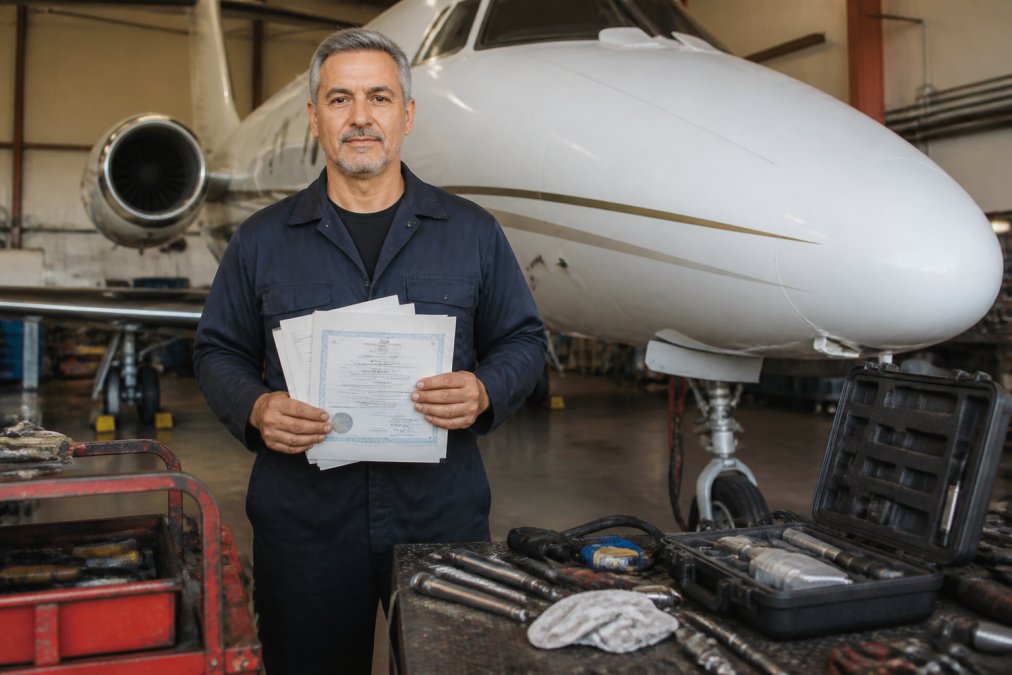
Ask about technician qualifications. Are they factory-trained? Do they hold Airframe and Powerplant (A&P) certifications? For avionics work, are they trained on the specific systems your aircraft uses? A technician trained specifically on your aircraft's systems brings expertise that matters in emergencies.
Request references from current clients, actual contact information for aircraft owners or operators they work with regularly. Call those references and ask: Have you used them for AOG response? How quickly did they arrive? Did they resolve the issue on-site or require towing?
Verify their parts sourcing. Ask how they handle emergency parts procurement. Do they stock parts in-house? Do they have relationships with specific distributors? Can they access parts at night or on weekends?
Check their insurance. A reputable provider carries comprehensive liability insurance and can provide proof of coverage.
Ask about their AOG call volume. A shop that handles multiple calls per week has more experience than one handling one call per month.
305 Sky's credentials include 55 years of combined aviation experience and three generations of aviators.
Transparent Pricing and Billing: Avoiding Hidden Costs
AOG emergencies create pressure that makes you vulnerable to billing surprises. The best providers build trust through transparent pricing and honest communication about costs.
Ask upfront what you'll be charged for. Some shops charge a flat rate for AOG response, regardless of how long the technician is on-site. Others charge hourly labor rates with a minimum billable time. Understand the structure before you have an emergency.
The most transparent approach is clear communication about what's included and what isn't. If you call at 3 AM and the technician arrives within 90 minutes, you should know whether that's included in a flat rate or billed as travel time. If parts are needed, you should know the markup on those parts. If the repair takes longer than expected, is there a cap on labor charges?
Avoid shops that quote low upfront prices and then surprise you with hidden fees. A provider that quotes higher but includes everything in that quote is often cheaper in the long run and definitely less stressful.
305 Sky emphasizes transparent pricing and communication as core principles. That means no surprises, no hidden fees, and honest assessment of what a repair will cost before you authorize it.
Ask about payment terms. Can you be billed after the fact, or do they require payment before releasing your aircraft? What payment methods do they accept? Do they work with your insurance if the repair is covered?
Choosing an AOG Partner You Can Trust
Selecting an AOG provider is a relationship, not a transaction. You're choosing someone you'll call at 2 AM when your aircraft is down, someone you'll trust with your safety and your operation.
The best providers combine technical expertise with genuine commitment to customer service. That means they answer the phone when you call, communicate clearly about what's happening, and prioritize your timeline without cutting corners on safety or quality.
Start by talking to multiple providers. Do they answer directly, or give vague assurances? Do they ask detailed questions about your aircraft and operation? Do they seem interested in building a relationship?
Ask about their approach to emergencies. How do they prioritize calls when multiple aircraft are grounded? What happens if they can't resolve your issue, do they have relationships with other shops they can bring in?
Verify their service area. If you operate in South Florida, you need a provider positioned to reach you quickly. 305 Sky's four strategically located facilities across South Florida address this, positioned to cover the Miami to Port St. Lucie corridor efficiently.
Build a relationship before you need it. Call them with routine maintenance questions. Get an annual inspection done with them. When an emergency happens, you'll already know them, they'll already know your aircraft, and the response will be faster and more effective.
Trust is earned through consistency. A provider that delivers on their promises, communicates clearly, and handles problems without excuses builds the kind of trust you want in an emergency. That's the foundation of a good AOG partnership.
Frequently Asked Questions
What does AOG mean in aviation?
AOG stands for Aircraft on Ground. It means your aircraft is unable to fly due to a mechanical, structural, or system failure. When your plane is AOG, every hour of downtime costs money and disrupts schedules. AOG services provide emergency response to get your aircraft back in the air as quickly as possible, often with technicians arriving within hours of your call.
How quickly can AOG maintenance teams respond in South Florida?
Response time depends on the provider and the complexity of the repair. Most established AOG services in South Florida aim for 2-4 hour response times for emergency calls, with mobile technicians dispatching from multiple locations. However, actual time depends on your aircraft location, the specific issue, and parts availability. Ask your provider exactly what their 24/7 response commitment includes and verify they have mobile units stationed nearby.
What should I look for in an aircraft maintenance Fort Lauderdale provider?
Find a provider with FAA certification, proven experience with your specific aircraft type, transparent pricing, and genuinely available 24/7 support. Verify they have mobile capabilities, multiple technicians on call, and parts inventory or rapid access to parts. Ask for references from operators you know, check how long they've been in business, and confirm their team's certifications. A family-oriented shop that treats small operators seriously is worth more than a large impersonal facility.
How do I know a provider can actually respond 24/7 when I need them?
Don't just take their word for it. Ask specific questions: Who answers the phone at 2 AM on Sunday? Where are their technicians stationed? Do they have a mobile van? What's their average response time, and is it guaranteed? Request contact information for recent AOG customers and call them directly. Ask about their on-call rotation and whether they've actually handled emergencies outside business hours. Real providers can answer these questions with specifics, not vague promises.
When your aircraft goes down, you don't have time to research options or hope for the best. You need an AOG provider you've already vetted, who knows your aircraft, and who answers the phone immediately. 305 Sky's 24/7 emergency response, mobile van dispatch, and transparent approach across South Florida facilities means your aircraft gets the fastest possible attention. Get a quote and establish your AOG partnership before you need it, that's the smart move for any serious aircraft operator.
This article was written using GrandRanker