Table of Contents
- Why Aircraft Maintenance Matters for Safe Operations
- Routine Inspections and Scheduled Maintenance
- AOG Aircraft Maintenance Support: 24/7 Emergency Response
- Aircraft Pre-Buy Inspection Checklist: What to Expect
- Aircraft Logbook Digitalization Benefits and Implementation
- Avionics Upgrade Installation and Custom Modifications
- Why Professional Aircraft Management Protects Your Investment
- Conclusion
Last Updated: August 15, 2026
Why Aircraft Maintenance Matters for Safe Operations
Aircraft maintenance is the backbone of aviation safety and regulatory compliance. At 305 Sky, we understand that proper upkeep isn't optional, it's the difference between a reliable aircraft and one that becomes a liability. When you own or operate a private aircraft, every flight depends on systems that have been inspected, tested, and certified to perform under demanding conditions.
The Federal Aviation Administration (FAA) mandates strict maintenance schedules for all aircraft. These aren't suggestions; they're regulatory requirements that ensure your aircraft remains airworthy and that you maintain legal authority to operate. Aircraft maintenance covers everything from routine inspections that catch wear before it becomes dangerous to emergency response when your aircraft experiences unexpected failure. The goal is singular: keep your aircraft safe, compliant, and ready to fly.
FAA regulations on aircraft maintenance requirements
Routine Inspections and Scheduled Maintenance
Routine inspections and scheduled maintenance form the preventative backbone of aircraft operations. These planned interventions catch problems before they become serious, but specific requirements, intervals, and complexity vary dramatically depending on your aircraft type.
FAA Inspection Requirements by Aircraft Category
The FAA mandates different inspection intervals and scopes depending on aircraft type and usage patterns.
General Aviation Piston Aircraft (Cessna 172, Piper Cherokee, Beechcraft Bonanza): These aircraft require an annual inspection every 12 calendar months or every 100 hours of flight time, whichever comes first. During these inspections, technicians examine the airframe for corrosion or structural damage, test all flight controls, inspect engines for wear, verify avionics functionality, and review maintenance logs. Piston aircraft also require engine oil analysis to monitor internal engine wear, spark plug replacement every 500 flight hours, and annual cylinder compression testing.
Turboprop Aircraft (King Air, Cessna Caravan Turboprop, Beechcraft King Air 350): Turboprops operate under more stringent inspection protocols due to higher complexity. These aircraft typically require progressive inspections that spread maintenance tasks across multiple intervals, allowing the aircraft to remain in service while components are systematically inspected. Turboprops require hot-section inspections of engine turbine components at manufacturer-specified intervals, detailed propeller inspections including blade tracking checks, mandatory pressurization system inspections, and rigorous hydraulic system checks.
Jet Aircraft (Citation, Learjet, Gulfstream): Jet aircraft operate under the most rigorous maintenance protocols, requiring continuous airworthiness maintenance programs (CAMP) or alternative FAA-approved inspection programs. Major inspections occur every 400 to 800 flight hours depending on aircraft type. Jets require detailed engine condition monitoring, specialized avionics testing, rigorous environmental control system inspection, and more frequent landing gear and brake system servicing due to higher operational stresses.
What Happens During a Routine Inspection
During a routine inspection, certified technicians examine the airframe for corrosion or structural damage, test all flight controls, inspect engines and powerplants for wear, verify avionics functionality, and review maintenance logs. For piston aircraft, this includes checking magneto timing, testing vacuum or pressure systems, inspecting fuel system components for contamination, and verifying control cable tension. Brake fluid is tested for water content, and tire condition is assessed.
For turboprops, the inspection scope expands to include detailed examination of the propeller governor system, air intake inspection for foreign object damage, and rigorous fuel system testing. For jets, inspections include thermal imaging of engine components, comprehensive avionics system testing with specialized ground support equipment, and structural inspections using ultrasonic thickness gauges.
Scheduled Maintenance Tasks and Intervals
Scheduled maintenance includes oil changes, filter replacements, brake inspections, and component overhauls at manufacturer-specified intervals. Piston aircraft require oil changes typically every 50 flight hours and engine air filter replacement annually or every 500 hours. Turboprop aircraft require more frequent filter changes due to higher engine power output. Jet aircraft operate on condition-based maintenance programs where components are inspected based on actual condition rather than fixed intervals.
Transparency and Documentation
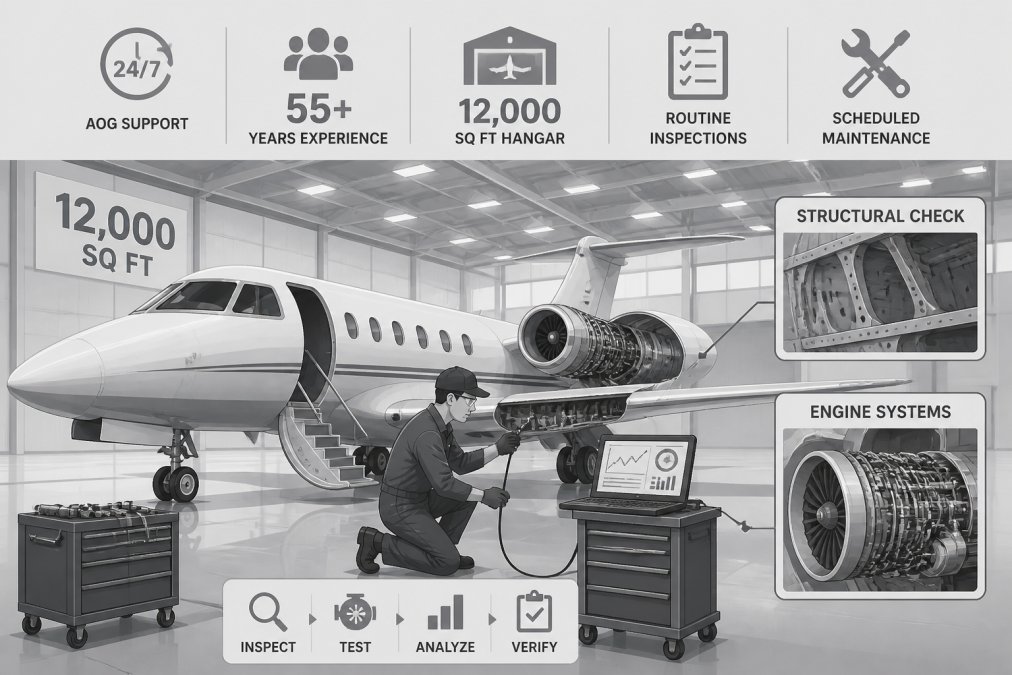
At 305 Sky, our team performs these inspections with precision and transparency, regardless of aircraft type. We document every finding, explain what we discover, and provide clear recommendations tailored to your specific aircraft's requirements. You'll know exactly what work is necessary and why. Owners who stay on top of scheduled maintenance see fewer unexpected issues and maintain higher aircraft values.
AOG Aircraft Maintenance Support: 24/7 Emergency Response
Aircraft on Ground (AOG) situations are the nightmare scenario for operators. Your aircraft is grounded, your schedule is disrupted, and every hour of downtime costs money. You need rapid response, not a callback in three business days.
305 Sky provides 24/7 AOG support because we understand that aircraft emergencies don't follow business hours. When your aircraft experiences a mechanical failure, our team answers the phone and mobilizes immediately. Our mobile maintenance van carries essential diagnostic and repair equipment, allowing us to respond to your location across South Florida.
Real AOG support means trained technicians who can diagnose the problem on-site, often completing repairs without requiring towing to a facility. For issues requiring hangar work, we coordinate rapid transport and begin work immediately upon arrival. Our 55+ years of combined aviation experience means our team has encountered and solved nearly every emergency scenario, translating directly to minimized downtime for you.
Aviation Safety reporting on aircraft emergency response protocols
Aircraft Pre-Buy Inspection Checklist: What to Expect
An aircraft pre-buy inspection is one of the most important investments you can make before purchasing a plane. This comprehensive technical evaluation reveals the true condition of the aircraft and identifies hidden problems that could cost you tens of thousands after purchase.
A thorough pre-buy inspection typically includes:
- Airframe examination: Complete visual inspection for corrosion, cracks, dents, and structural damage. Inspectors check rivet integrity, skin thickness, and signs of previous repairs.
- Engine inspection: Borescope examination of cylinder walls, compression testing, and assessment of engine condition.
- Systems testing: Verification that all flight control systems, hydraulics, electrical systems, and avionics function properly.
- Logbook review: Complete examination of maintenance records to verify compliance with all required inspections and identify any deferred maintenance.
- Propeller and landing gear inspection: Detailed assessment of these critical systems.
- Interior condition: Evaluation of seats, panels, and cabin systems.
The inspection produces a written report detailing findings, estimated repair costs for any deficiencies, and an overall assessment of the aircraft's condition relative to its age and usage. This report becomes your negotiating tool and your protection against purchasing an aircraft with hidden problems.
At 305 Sky, we approach each pre-buy inspection as if we're advising a family member, honest, thorough, and focused on protecting your investment.
Aircraft Logbook Digitalization Benefits and Implementation
Aircraft logbooks are legal records of every maintenance action, inspection, and repair performed on an aircraft. Traditionally, these exist as physical books with handwritten entries accumulated over decades. This system creates problems: logbooks get lost, entries become illegible, searching for specific maintenance history is time-consuming, and there's no backup if the physical book is damaged.
Aircraft logbook digitalization converts these paper records into secure digital databases. Each maintenance entry, inspection result, and repair action is recorded in a searchable, backed-up system. Digital logbooks enable rapid compliance verification, when an inspector asks whether a specific system was serviced according to schedule, you can pull up the exact date and technician name in seconds. For aircraft operators managing multiple aircraft, digital logs provide fleet-wide visibility into maintenance status.
Digital systems also improve safety. When maintenance is recorded in a standardized format, nothing gets missed in translation. Technicians can see the complete history of a component, how many times it's been repaired, when it was last overhauled, and what issues have recurred. Implementation typically involves scanning existing logbook pages and entering key data into a database, then transitioning to digital recording for all future maintenance.
FAA guidance on aircraft maintenance record keeping
Avionics Upgrade Installation and Custom Modifications
Modern avionics transform how you fly and navigate. Upgrading from legacy glass to modern glass cockpit systems, adding autopilot capabilities, installing advanced weather radar, or integrating terrain awareness and warning systems (TAWS) dramatically improves situational awareness and safety.
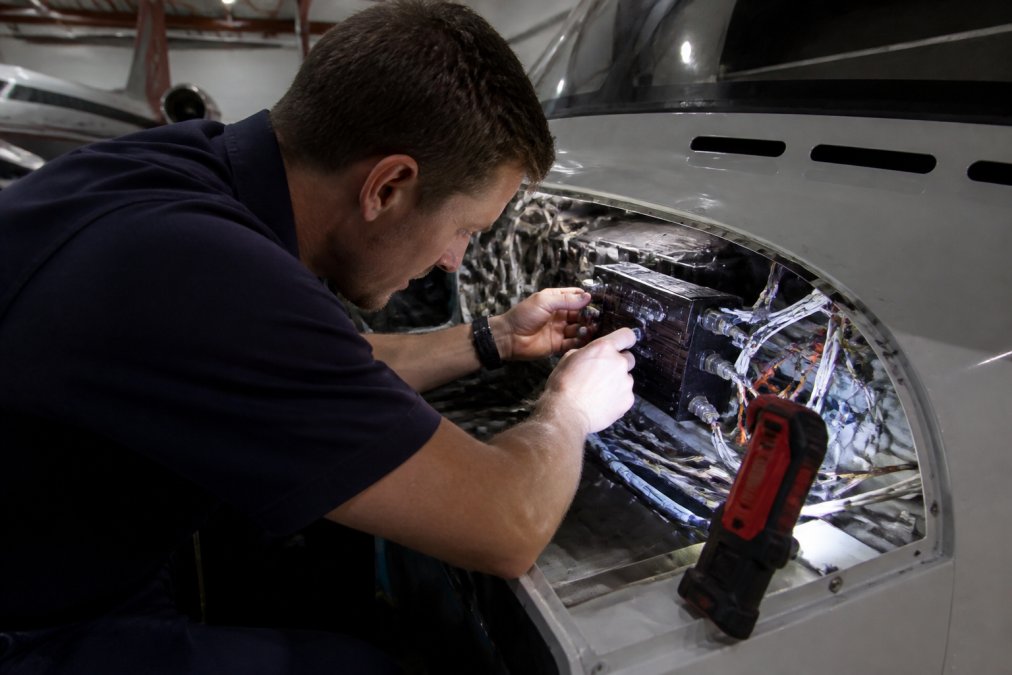
Avionics upgrades require precision installation and careful integration with existing aircraft systems. The work demands certified technicians who understand both the avionics themselves and how they interface with your aircraft's electrical and structural systems. Poor installation can create electrical problems, structural damage, or system conflicts that compromise safety.
Custom modifications extend beyond avionics. Many aircraft owners want cabin interior upgrades, new leather seating, updated panel designs, improved lighting, or modified galley configurations. These modifications require balancing aesthetic preferences with weight and balance requirements, electrical capacity, and structural integrity.
At 305 Sky, we handle both avionics installation and interior modifications with precision and transparency. We work with you to understand your goals, provide honest assessments of what's feasible, and execute the work to specification. Our team has experience with the full range of aircraft types operating across South Florida.
Why Professional Aircraft Management Protects Your Investment
Aircraft ownership involves far more than flying. There's regulatory compliance tracking, maintenance scheduling coordination, logbook management, insurance verification, airworthiness directive (AD) compliance, weight and balance documentation, and operational oversight. For many owners, managing these details becomes overwhelming, and missing a single deadline can ground your aircraft or create liability exposure.
The Compliance and Documentation Burden
The FAA requires aircraft owners to maintain detailed records of every maintenance action, inspection, and repair performed on their aircraft. Airworthiness directives (ADs) are mandatory FAA requirements that address safety issues discovered in aircraft or components. An AD might require inspection of a specific component, replacement of a part, or modification to the aircraft structure. Missing an AD deadline means your aircraft becomes unairworthy and cannot legally operate.
Service bulletins are manufacturer recommendations that address improvements, modifications, or maintenance procedures. Keeping track of which service bulletins apply to your aircraft and which ones you've completed requires organized documentation.
Weight and balance documentation must be updated whenever the aircraft is modified, when equipment is added or removed, or when interior configurations change. The FAA requires that weight and balance records be current and available before every flight.
Maintenance Scheduling and Coordination
Professional aircraft management coordinates all maintenance activities with your maintenance provider. This includes scheduling routine inspections well in advance, coordinating major inspections that may require the aircraft to be out of service for weeks, and ensuring that all required components are available before work begins. For owners operating multiple aircraft, management coordination becomes exponentially more complex, tracking compliance deadlines across all aircraft and ensuring no inspection or AD deadline is missed.
Logbook Management and Digital Record Keeping
Professional aircraft management typically includes digital logbook systems that record all maintenance in a searchable, backed-up database. Digital logbooks enable rapid compliance verification and provide fleet-wide visibility into maintenance status. Digital systems also improve safety by ensuring that maintenance is recorded in a standardized format, preventing transcription errors that could mask important maintenance history.
Insurance Coordination and Compliance Documentation
Aircraft insurance policies often include maintenance requirements. An insurer might require that annual inspections be completed by a specific date, that certain components be overhauled at manufacturer-recommended intervals, or that the aircraft be stored in a hangar. Professional management ensures that your aircraft remains in compliance with insurance requirements, preventing coverage gaps or claim denials. Management also coordinates with your insurance provider to ensure that coverage stays current and that any modifications are reported promptly.
Operational Oversight and Readiness
Professional aircraft management provides oversight of your aircraft's operational readiness. This includes ensuring that fuel is appropriate for your aircraft's engine type, that the aircraft is properly secured when not in use, that weather minimums are observed, and that crew qualifications are current if you employ pilots.
305 Sky Aircraft Management Services
305 Sky provides aircraft management services that give you peace of mind. We coordinate with your maintenance providers, track compliance deadlines, manage your digital logbooks, monitor airworthiness directives, and keep you informed about your aircraft's status. We understand the local regulatory environment across South Florida, know the key facilities and service providers, and can coordinate rapidly when issues arise. Our 55+ years of combined aviation experience means we've encountered and solved the full range of management challenges that aircraft owners face. With our 12,000 square foot hangar on the field in Vero Beach, FL, we're positioned to provide comprehensive aircraft maintenance, emergency AOG support, pre-buy inspections, logbook digitalization, interior installation, and avionics upgrades, all the services you need to keep your aircraft safe, compliant, and ready to fly.
Frequently Asked Questions
What should be included in a pre-buy aircraft inspection?
A thorough aircraft pre-buy inspection checklist covers airframe condition, engine logs, propeller service records, avionics functionality, interior structural integrity, and complete maintenance history. The inspection verifies airworthiness, identifies any hidden damage, and confirms regulatory compliance. Professional inspectors examine corrosion, fatigue cracks, fluid leaks, and operational systems to protect your investment before purchase.
How do you handle emergency aircraft on ground (AOG) situations?
AOG aircraft maintenance support requires immediate response. Our 24/7 mobile van deploys rapidly to minimize your downtime, with experienced technicians ready to diagnose and repair critical systems on-site or in the hangar. We prioritize emergency calls to get your aircraft back in service as quickly as possible, understanding that every hour grounded impacts your operation.
What are the benefits of digitalizing aircraft logbooks?
Aircraft logbook digitalization benefits include instant access to maintenance records, reduced paperwork, faster pre-buy inspections, simplified regulatory compliance reporting, and secure cloud backup. Digital records make it easier to track service schedules, identify maintenance trends, and demonstrate airworthiness to potential buyers or regulators.
How often should routine aircraft inspections be performed?
Routine aircraft inspections depend on your specific model and operating hours. Annual inspections are standard regulatory requirements, but many operators schedule additional inspections every 100 flight hours or before major trips. Your maintenance schedule should reflect manufacturer recommendations and your flight profile to ensure continuous airworthiness and safety.
This article was written using GrandRanker