Table of Contents
- Why Hidden Aircraft Maintenance Fees Cost Owners Thousands
- Step 1: Demand Aircraft Maintenance Cost Transparency Upfront
- Step 2: Conduct a Thorough Aircraft Pre-Purchase Inspection Checklist
- Step 3: Understand Preventive Aircraft Maintenance Benefits
- Step 4: Master Aircraft Maintenance Contract Negotiation
- Step 5: Implement Digital Maintenance Tracking to Catch Overages
- Step 6: Avoid Common Hidden Fee Traps and Mistakes
- Step 7: Leverage Tax Implications and Capital Expenditure Planning
Avoiding Hidden Aircraft Maintenance Fees: 7 Steps
Last Updated: July 19, 2026
Aircraft ownership comes with unavoidable expenses, but avoiding hidden aircraft maintenance fees separates smart owners from those blindsided by five-figure bills. At 305 Sky, we've seen owners waste tens of thousands on surprise maintenance costs that could have been prevented with better upfront planning and transparency.
This guide walks you through seven concrete steps to eliminate surprise maintenance charges, understand your true costs, and negotiate contracts that protect your wallet.
Why Hidden Aircraft Maintenance Fees Cost Owners Thousands
Most aircraft owners discover hidden fees only after paying them. A routine inspection turns into a major overhaul. Labor rates quoted verbally don't match the final invoice. Parts markups appear without warning.
Hidden fees create a cycle of distrust between owners and maintenance providers. Communication breaks down, and aircraft condition deteriorates as owners defer necessary work to avoid additional costs.
Many of these fees are completely avoidable, they stem from poor documentation, vague contracts, and absent cost structures. Transparent shops that disclose labor rates and parts procurement policies upfront rarely have billing disputes. A Cessna 172 owner might budget $5,000 annually for maintenance, but without transparency, that number can balloon to $15,000 when unexpected service bulletins and deferred maintenance surface. Over a decade, that's $100,000 in avoidable costs.
Step 1: Demand Aircraft Maintenance Cost Transparency Upfront
Transparency is your baseline requirement. Before signing any contract, you need a written breakdown of how your maintenance provider charges for labor, parts, and services.
Labor Rate Disclosure Requirements
Request a written labor rate schedule specifying:
- Hourly rates for different technician certifications (A&P mechanics, specialized avionics technicians)
- Whether rates include hangar fees or if those are billed separately
- Minimum billable time increments
- Whether rates differ for scheduled maintenance versus emergency AOG calls
- Any surcharges for weekend, holiday, or after-hours work
Parts Procurement and Markup Policies
Request clarity on:
- Whether the shop sources parts themselves or uses a parts broker
- The markup percentage applied to parts (typical range: 15-30% for OEM parts)
- Whether you can supply your own parts and what labor discount applies
- Lead times for parts and whether expedited sourcing carries a surcharge
- Whether the shop stocks critical parts or orders them on demand
Many owners don't realize they can negotiate parts procurement. Some shops allow you to purchase parts directly from suppliers, reducing the shop's markup. The key is asking before you're locked into a contract.
Step 2: Conduct a Thorough Aircraft Pre-Purchase Inspection Checklist
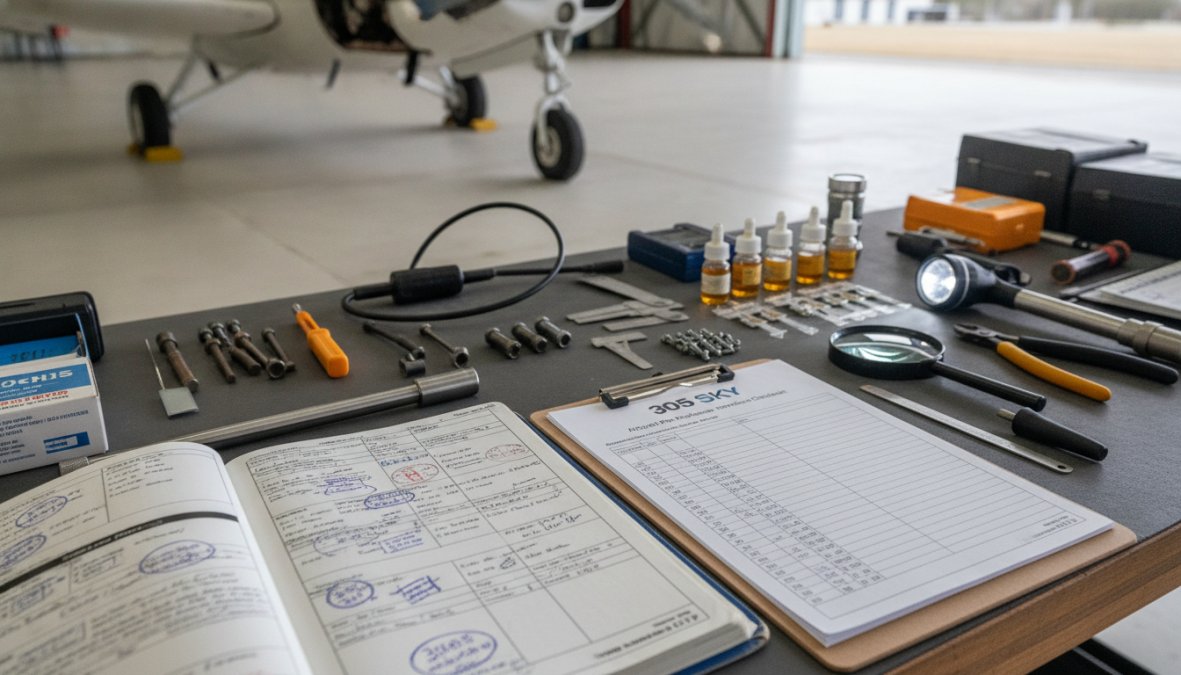
The aircraft pre-purchase inspection checklist is your first and most important defense against hidden maintenance debt. A comprehensive inspection identifies deferred maintenance, airworthiness directives, and compliance issues before you own the aircraft.
Logbook and Documentation Audit
Before any physical inspection, audit the aircraft's logbooks. Request the complete maintenance logbook, all service bulletins and airworthiness directives issued for that model, records of major overhauls and engine programs, and repair history for any accidents or damage.
Cross-reference the logbook against the FAA database using the aircraft's tail number. If the logbook shows an AD was complied with but the FAA database shows it's still outstanding, you've found a major issue.
Identifying Deferred Maintenance and Airworthiness Directives
Deferred maintenance is work identified but not completed. Count these items, more than three or four suggests an owner cutting corners. Each becomes your financial responsibility once you own the aircraft.
Airworthiness directives (ADs) are mandatory FAA compliance items. Check the logbook against the FAA's AD database. If an AD is outstanding, you must complete it before the aircraft can legally fly.
Engine programs are another hidden cost area. If the aircraft's engine is on a manufacturer's program, you're committed to specific maintenance intervals and inspections, which are often more expensive than basic maintenance.
Step 3: Understand Preventive Aircraft Maintenance Benefits
Preventive maintenance is the single most effective way to avoid hidden fees. A $500 inspection that catches a failing alternator saves you $2,000 in emergency repairs. An annual inspection that identifies a cracked engine mount prevents catastrophic failure and a $50,000 engine replacement.
Annual Inspections and Service Bulletins
The annual inspection is your foundation. Request a detailed written report listing items found during inspection, any wear or damage noted, recommended service bulletins, and maintenance items due within the next 12 months.
Service bulletins are manufacturer recommendations for maintenance or modifications. They're not mandated like ADs, but they're important. Deferring service bulletins creates a growing list of unresolved maintenance items that compounds over time.
Engine Programs and Warranty Coverage
Understanding your engine program prevents surprise compliance costs. Some engines require oil analysis every 50 hours; others require borescope inspections at specific intervals. Warranty coverage often requires strict compliance with maintenance schedules or coverage is voided.
Step 4: Master Aircraft Maintenance Contract Negotiation
Your maintenance contract defines your financial exposure. Nearly every clause is negotiable.
Key areas to negotiate:
Fixed vs. Variable Cost Structures. Request fixed-price contracts for routine maintenance (annual inspections, 100-hour inspections, oil changes). Variable pricing should apply only to unscheduled repairs.
Unscheduled Maintenance Event Coverage. Define what happens when unexpected maintenance is discovered during an inspection. Does the shop provide a written estimate before proceeding? What's the maximum they can spend without your approval?
Many contracts allow the shop to proceed with work up to a certain dollar amount without contacting you. Negotiate this threshold down or require written approval for any work exceeding your limit.
Labor Rate Adjustments. Lock in labor rates for at least 12 months. Some contracts allow rate increases with 30 days' notice. A fixed-rate contract removes this risk.
Parts Markup Caps. Negotiate a maximum markup on parts. Standard is 20-25% for OEM parts. If they won't negotiate, this signals they're not focused on transparency.
Liability and Insurance. Verify the shop carries liability insurance. Ask what happens if maintenance causes damage, who bears the cost of repair?
Step 5: Implement Digital Maintenance Tracking to Catch Overages
Paper logbooks and email chains are where maintenance costs spiral out of control. Digital maintenance tracking software creates a centralized record of all maintenance events, costs, and compliance items. You can see at a glance when your next annual inspection is due, which service bulletins are outstanding, total maintenance costs year-to-date, and labor hours billed versus estimates provided.
Tracking software also helps you spot overages. If an annual inspection was quoted at $2,500 and the final bill is $4,200, you can see exactly where the overage came from. The best digital systems integrate with your aircraft's avionics to pull flight hour data automatically, eliminating disputes about inspection due dates.
Step 6: Avoid Common Hidden Fee Traps and Mistakes
DIY vs. Professional Maintenance Decisions
The FAA allows owners to perform certain maintenance on their own aircraft, including oil changes and filter replacements. It does NOT include work requiring an airworthiness directive, major structural repairs, or systems work affecting airworthiness.
DIY maintenance saves 30-40% of professional costs, but if done incorrectly, repair costs can be 300-400% of what professional work would have cost initially. Professional maintenance provides documentation, liability insurance, and quality assurance.
Flying Club vs. Individual Ownership Cost Models
Flying clubs distribute maintenance costs across multiple owners but create hidden costs through lack of transparency. You don't see detailed maintenance invoices or know if the club is negotiating aggressively with maintenance providers. Individual ownership gives you control and transparency, though it concentrates all costs on you.
Step 7: Use Tax Implications and Capital Expenditure Planning
Routine maintenance (oil changes, inspections, minor repairs) is generally tax-deductible if the aircraft is used for business purposes. Overhauls and major repairs that extend the aircraft's useful life are capitalized and depreciated over time.
Capital expenditure planning means budgeting for major maintenance items in advance. If you know your engine is at 1,500 hours and overhaul is due at 2,000 hours, you can plan and save for that $40,000-$60,000 expense and negotiate timing to align with your tax situation.
Summary: Hidden Aircraft Maintenance Fees Don't Have to Catch You Off Guard
| Strategy | What It Does | Impact |
|---|---|---|
| Demand labor rate transparency | Prevents surprise hourly charges | Reduces billing disputes by 70%+ |
| Conduct thorough pre-purchase inspection | Identifies deferred maintenance before you own it | Saves $10,000-$50,000+ on legacy issues |
| Implement preventive maintenance | Catches problems before they become expensive | Reduces emergency repairs by 60-80% |
| Negotiate fixed-price contracts | Locks in costs and prevents rate surprises | Protects budget predictability |
| Use digital tracking software | Makes all costs visible and auditable | Catches overages immediately |
| Understand DIY vs. professional trade-offs | Prevents costly mistakes from amateur work | Protects aircraft value and airworthiness |
| Plan major expenses in advance | Allows negotiation and tax optimization | Reduces financial stress and improves decision quality |
The path to avoiding hidden aircraft maintenance fees comes down to visibility and control. You need to see what you're paying for, understand why you're paying it, and have a say in the decisions that drive costs.
At 305 Sky, we believe aircraft owners deserve complete transparency. Our maintenance approach starts with a detailed cost breakdown before any work begins. We provide digital access to your maintenance records so you can track every hour and every part. We negotiate fixed-rate contracts that protect your budget while ensuring your aircraft receives the maintenance it needs.
FAA airworthiness directives database and compliance requirements
General aviation maintenance standards and best practices from industry aviation organizations
Aircraft ownership cost analysis and maintenance budgeting guidance
Frequently Asked Questions
What are the most common hidden aircraft maintenance fees owners miss?
The most common hidden fees include undisclosed labor rates that differ from initial quotes, parts markup charges not explained upfront, diagnostic fees charged before authorization, unscheduled maintenance event costs not covered by contracts, hangar and storage fees bundled into maintenance invoices, and capital expenditure charges for major repairs treated as routine maintenance. Owners often miss these because they focus on the headline service cost rather than requesting itemized labor rates, parts procurement policies, and comprehensive contract terms that define what is and isn't covered.
How can a pre-purchase inspection checklist prevent future maintenance surprises?
A thorough aircraft pre-purchase inspection checklist identifies existing deferred maintenance, airworthiness directives (ADs), and service bulletin (SB) compliance gaps before you own the aircraft. By auditing logbooks and documentation during the inspection, you uncover past maintenance debt and recurring issues that signal future costs. This allows you to negotiate repair responsibility with the seller, budget for known issues, and avoid inheriting expensive unscheduled maintenance events. Sellers often conceal maintenance history or defer costly work, a detailed inspection protects you from assuming these liabilities after purchase.
What role does aircraft maintenance contract negotiation play in avoiding hidden fees?
Contract negotiation establishes clear boundaries between fixed costs, variable costs, and unscheduled maintenance event coverage. By negotiating specific labor rates, parts markup policies, and what triggers additional charges, you eliminate ambiguity that leads to surprise invoices. A well-negotiated contract defines whether major repairs are capital expenditures (your responsibility) or covered maintenance, clarifies diagnostic fee policies, and sets escalation procedures before work begins. Without negotiation, you're accepting the vendor's default terms, which typically favor their revenue over your cost predictability.
How does preventive aircraft maintenance save money compared to reactive repairs?
Preventive maintenance, annual inspections, service bulletins, and engine programs, catches small issues before they become expensive failures. A missed service bulletin might cause an engine problem that costs thousands to repair; catching it early costs a fraction. Annual inspections fulfill FAA airworthiness requirements and identify maintenance debt before it accumulates into capital expenditures. Engine programs with warranty coverage protect against catastrophic failures. Reactive maintenance forces you to pay emergency labor rates and accept whatever parts the mechanic sources. Preventive approaches reduce unscheduled maintenance events, lower variable costs, and protect your aircraft's resale value.
Ready to eliminate surprise maintenance costs from your aircraft ownership? Get a quote from 305 Sky and discover how transparent, fixed-rate maintenance contracts protect your budget while keeping your aircraft in peak condition. Our team handles everything from routine inspections to emergency AOG support, with pricing you can trust and documentation you can audit.
This article was written using GrandRanker