
Table of Contents
- What Causes Jet Engine Performance Degradation
- Jet Engine Compressor Fouling and Its Impact
- Blade Erosion, Thermal Fatigue, and Rubbing Wear
- Aircraft Engine Performance Monitoring Systems
- Lubrication Failures and Seal Damage
- AOG Engine Maintenance Services for Emergency Response
- Environmental Impact on Engine Degradation
- Preventing Unscheduled Maintenance Through Operational Awareness
Last Updated: August 21, 2026
What Causes Jet Engine Performance Degradation
Jet engine performance degradation is the gradual decline in an aircraft engine's efficiency, power output, and operational reliability over time. This manifests as reduced thrust, higher fuel consumption, increased exhaust gas temperatures, and compromised aerodynamic performance. For aircraft operators in Fort Lauderdale and across South Florida, understanding the root causes is essential to maintaining airworthiness and avoiding costly unscheduled maintenance.
The degradation process is the cumulative effect of multiple mechanical and environmental stressors that erode engine components, disrupt fuel combustion, and compromise precision engineering. Early-stage degradation often goes unnoticed until performance metrics deteriorate significantly, at which point damage compounds. At 305 Sky, we've worked with aircraft operators who discovered that subtle performance declines indicated deeper component wear, the difference between catching degradation early and letting it progress is often the difference between a scheduled inspection and an emergency AOG situation.
Jet Engine Compressor Fouling and Its Impact
Compressor fouling occurs when contaminants accumulate on compressor blade surfaces, disrupting airflow and reducing compression efficiency. This is one of the most common and preventable causes of jet engine performance degradation and a leading reason for unscheduled maintenance in aviation.
The compressor is the engine's first stage of power generation. Air enters at atmospheric pressure and is compressed to extremely high pressures, sometimes exceeding 40:1 pressure ratios in modern turbofan engines (peer-reviewed research). Any obstruction or surface degradation directly impacts the entire engine's ability to function. When fouling occurs, smooth aerodynamic surfaces become rough and irregular, forcing the engine to work harder to achieve the same compression levels.
Particulate Ingestion and Salt-Air Corrosion
Operating aircraft in coastal South Florida exposes engines to salt-laden air, which accelerates compressor degradation. Salt particles combined with moisture and airborne contaminants create a corrosive environment that attacks blade surfaces.
Particulate ingestion occurs when foreign objects, sand, dust, salt crystals, and organic debris, enter the engine intake during ground operations or flight. Even tiny particles measured in microns cause measurable blade erosion when multiplied across thousands of compressor stages. Salt-air corrosion compounds this by chemically attacking blade surfaces, creating pitting and stress concentration points where cracks initiate.
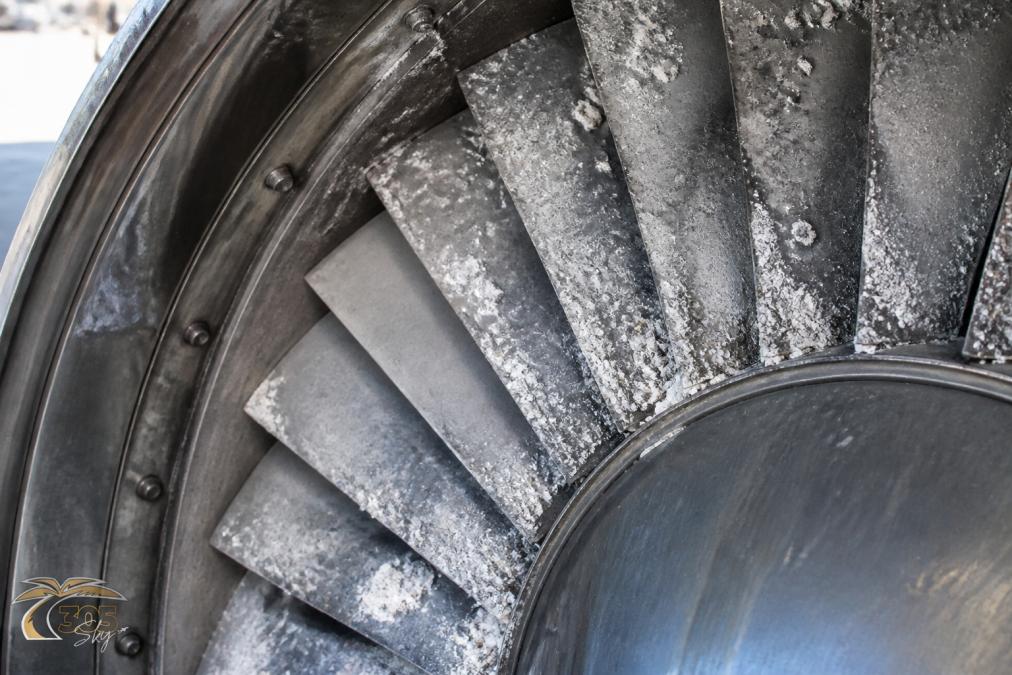
For operators based in Fort Lauderdale, West Palm Beach, and other coastal areas, salt-air exposure is a year-round reality. The combination of high humidity, salt spray, and frequent flight operations accelerates degradation significantly. Aircraft hangars near the coast require more aggressive maintenance schedules to counteract environmental assault on engine components.
Carbon Buildup and Combustion Instability
Carbon deposits form in the combustion chamber and on fuel injectors when fuel doesn't burn completely or when operating conditions promote incomplete combustion. This buildup reduces combustion efficiency, creating uneven flame patterns and reducing heat energy available to drive turbine rotation.
Carbon accumulation also increases combustion instability, where flame patterns fluctuate erratically rather than burning in a controlled, symmetric pattern. This instability creates pressure oscillations that stress compressor blades, fuel injectors, and combustor liners. Thermal cycling exacerbates carbon buildup, when an engine alternates between high-power climb and cruise conditions, temperature swings cause carbon deposits to expand and contract at different rates than underlying metal, creating micro-fractures that break free and circulate through the hot section, causing additional damage.
Blade Erosion, Thermal Fatigue, and Rubbing Wear
Blade erosion represents progressive loss of blade material through mechanical and thermal attack. Thermal fatigue occurs when blade materials are repeatedly heated and cooled, causing stress cycling that eventually initiates cracks.
Compressor blades experience inlet temperatures ranging from ambient to over 400 degrees Fahrenheit at the compressor exit. Turbine blades face even more extreme conditions, with some materials operating at temperatures approaching 1,800 degrees Fahrenheit. These temperature swings, repeated thousands of times per flight hour, cause cyclic stress that eventually exceeds the material's fatigue limit.
Rubbing wear occurs when blade tip clearances decrease due to compressor housing wear, thermal expansion mismatches, or rotor eccentricity. When blades contact the compressor casing, friction generates heat and removes material from both blade and casing, creating a feedback loop that increases further rubbing. A clearance loss of just 0.010 inches can measurably reduce compressor efficiency, directly translating to reduced thrust and increased fuel consumption (faa.gov).
Aircraft Engine Performance Monitoring Systems
Modern aircraft rely on sophisticated engine health monitoring systems to track real-time performance parameters and predict when degradation will exceed acceptable limits. These systems continuously measure compressor inlet and exit pressures, turbine inlet and exit temperatures, fuel flow, vibration, and dozens of other variables.

Engine performance monitoring establishes a baseline of normal operating parameters for that specific engine under various flight conditions. As the engine ages and components wear, actual performance gradually deviates from baseline. The monitoring system flags these deviations, allowing maintenance teams to schedule inspections before performance drops below minimum safe limits.
Engine Health Diagnostics and Predictive Maintenance
Engine health diagnostics analyze performance trends over time rather than relying on single-point measurements. A trend showing exhaust gas temperature climbing by 10 degrees Celsius every 50 flight hours indicates compressor fouling or turbine blade damage requiring investigation (faa.gov).
Predictive maintenance uses historical performance data and known degradation patterns to forecast when components will likely fail. Instead of waiting for failure or replacing components on a fixed schedule, predictive maintenance targets actual component condition. This approach minimizes unscheduled maintenance events and the operational nightmare of unexpected groundings.
For Fort Lauderdale-based operators, predictive maintenance systems are particularly valuable because they reduce AOG situations. When an aircraft is grounded unexpectedly, charter operations lose revenue, scheduled flights are cancelled, and passengers are stranded. Predictive systems catch degradation early, allowing maintenance during planned downtime.
Lubrication Failures and Seal Damage
Lubrication system failures accelerate nearly every degradation mechanism. Engine oil reduces friction between moving parts, removes heat from high-temperature zones, provides hydraulic pressure for engine control systems, and protects metal surfaces from oxidation and corrosion.
When lubrication fails due to oil degradation, filter clogging, or seal leakage, friction increases dramatically. Bearing wear accelerates, compressor rotor eccentricity develops, and thermal stress concentrations emerge. A single lubrication failure can trigger a cascade of secondary failures throughout the engine.
Seal damage allows oil to escape from bearing cavities and pressurized sections. Beyond immediate lubrication loss, leaking oil can contaminate compressor and turbine sections, creating carbon deposits and thermal damage. Oil seals also prevent compressor bleed air from entering bearing cavities, if seals fail, high-pressure air disrupts the bearing film, increasing friction and wear.
Operators who maintain strict oil change intervals and monitor oil condition reports catch lubrication problems before they cascade into expensive component failures. Those who skip oil analysis or extend change intervals beyond manufacturer recommendations often discover seal damage and bearing wear only after significant performance degradation.
AOG Engine Maintenance Services for Emergency Response
AOG (Aircraft on Ground) situations represent the most disruptive and expensive form of unscheduled maintenance. An aircraft that cannot fly generates zero revenue while maintenance costs accumulate. For charter operators and private aircraft owners, an AOG event can mean thousands of dollars in lost revenue per day plus stranded passengers and disrupted schedules.
When jet engine performance degradation progresses to failure, AOG response becomes critical. The difference between a 2-hour repair and a 24-hour repair often depends on whether the maintenance facility has the right parts, expertise, and mobile equipment available immediately.
305 Sky provides 24/7 AOG response with mobile service vans strategically positioned across South Florida. Our team can mobilize to your aircraft location, whether Fort Lauderdale, Boca Raton, Vero Beach, or anywhere in the region, to diagnose and repair engine issues without requiring aircraft towing. For time-critical situations, this mobile capability often means getting back in the air within hours versus days.
Effective AOG response depends on technicians who understand jet engine degradation patterns and can quickly diagnose whether the issue is a simple compressor wash, seal replacement, or something requiring component removal. Misdiagnosis during emergencies extends downtime because the wrong repair is attempted first.
Environmental Impact on Engine Degradation
The South Florida environment creates specific challenges for jet engine longevity that operators in drier or less corrosive climates don't face. High humidity, salt-air exposure, seasonal temperature extremes, and occasional severe weather all accelerate engine degradation beyond manufacturer baseline maintenance schedules.
Salt-air corrosion is the most obvious environmental factor, but humidity deserves equal attention. High moisture content in intake air causes compressor corrosion, particularly during ground operations when the engine isn't producing heat that normally evaporates moisture. Extended parking in humid conditions allows moisture to condense on compressor blade surfaces, initiating corrosion.
Seasonal temperature swings in Florida create thermal cycling stress. An aircraft parked in the sun can see engine components reach 140-150 degrees Fahrenheit, then cool to 70 degrees overnight. This 70-degree temperature swing, repeated daily, contributes to thermal fatigue in blade materials.
Sand and dust ingestion is another environmental factor. South Florida's coastal environment presents less visible but equally damaging particulate challenges. Organic debris, salt crystals, and fine sand can be ingested during takeoff and landing, particularly on unprepared surfaces or during windy conditions.
Preventing Unscheduled Maintenance Through Operational Awareness
The most effective strategy for minimizing jet engine performance degradation is preventing the conditions that cause it. This requires operational discipline across maintenance scheduling, environmental controls, flight operations, and monitoring practices.
Fuel quality directly impacts combustion efficiency and carbon buildup. Using fuel from reputable suppliers, maintaining proper fuel storage temperature and humidity, and draining fuel sumps regularly prevent water contamination and sediment ingestion. Poor fuel quality is a common but easily preventable cause of combustion instability.
Compressor washing, periodic flushing of compressor stages with specialized cleaning solutions, removes salt deposits, carbon, and other contaminants before they cause measurable performance loss. Regular compressor washing in coastal environments prevents fouling that leads to more expensive repairs.
Engine inlet protection during ground operations prevents particulate ingestion. Using inlet covers during parking, avoiding unprepared surfaces for taxi and takeoff, and inspecting intake systems before flight reduce contamination that accelerates compressor erosion.
Monitoring trends in engine performance parameters, exhaust gas temperature, compressor discharge pressure, fuel flow, and vibration, allows you to spot degradation patterns before they become critical. An operator who reviews performance data after every flight catches trends invisible to traditional pre-flight inspections.
For operators in Fort Lauderdale and across South Florida, the environmental reality means standard manufacturer maintenance intervals are often insufficient. Aircraft operating in coastal environments benefit from more frequent inspections, more aggressive compressor cleaning schedules, and closer performance monitoring. This prevents the expensive emergency repairs that come when degradation goes unchecked.
Jet engine performance degradation isn't inevitable. It's the result of preventable stressors that accumulate when maintenance is delayed or environmental factors are ignored. For aircraft operators in Fort Lauderdale and South Florida, the coastal environment demands a proactive approach to engine health.
305 Sky has spent over 55 years helping South Florida aircraft operators maintain peak engine performance through routine inspections, predictive maintenance monitoring, and rapid AOG response. Our team understands the specific environmental challenges your aircraft faces in this region and can help you develop a maintenance strategy that keeps your engine running efficiently while minimizing unexpected downtime. Get a Quote from our team to discuss how we can protect your aircraft's engine health with transparent, expert maintenance tailored to your operation.
Frequently Asked Questions
Q: What are the primary indicators of jet engine performance degradation?
A: Key signs include reduced fuel efficiency, increased exhaust gas temperature, loss of thrust during takeoff, compressor stall events, and abnormal vibration readings. Blade surface roughness and carbon deposits visible during inspections also signal degradation. Modern aircraft engine performance monitoring systems flag these metrics automatically, allowing operators to schedule maintenance before critical failure occurs.
Q: How does jet engine compressor fouling reduce efficiency?
A: Compressor fouling occurs when salt particles, sand, and carbon deposits accumulate on blade surfaces, disrupting aerodynamic performance and increasing pressure ratio requirements. This forces the engine to work harder, burning more fuel while producing less thrust. In coastal environments, salt-air corrosion accelerates fouling, making regular compressor cleaning and inspection essential for maintaining fuel efficiency and mechanical integrity.
Q: What role does aircraft engine performance monitoring play in preventing failure?
A: Continuous engine health monitoring tracks exhaust gas temperature, pressure ratios, vibration, and component wear patterns in real-time. Predictive maintenance technologies use this data to identify degradation trends before they become critical, allowing operators to schedule maintenance proactively rather than facing unscheduled downtime. This approach extends operational life cycle and reduces emergency AOG situations.
Q: How can environmental conditions in coastal areas accelerate engine degradation?
A: Coastal regions expose engines to salt-air corrosion, moisture, and higher particulate concentrations. These environmental factors accelerate material degradation of compressor blades, promote fouling, and increase corrosion risk in the hot section. Regular engine diagnostics and preventative maintenance schedules become even more critical for aircraft operating near saltwater environments to maintain aerodynamic performance and mechanical reliability.
This article was written using GrandRanker