Table of Contents
- Why Traditional AOG Logistics Fall Short
- AOG Emergency Response Services: Rapid Local Support
- Expedited Shipping Methods for Time-Critical Parts
- 3PL vs Traditional Freight Forwarder Aviation Services
- Private Jet AOG Downtime Reduction Through Preventative Logistics
- Technology-Driven Supply Chain Visibility and Real-Time Tracking
- Local Maintenance Partnerships vs National Freight Networks
- Conclusion
Last Updated: August 29, 2026
Why Traditional AOG Logistics Fall Short
When an aircraft sits on the ground unexpectedly, every hour costs money. Traditional AOG logistics, calling a national freight forwarder and waiting for parts through conventional supply chains, can't match the speed that time-critical situations demand. The problem is structural: national networks prioritize volume over urgency, parts sourcing happens through layers of intermediaries, and coordination between multiple vendors introduces delays at every handoff.
For operators in Fort Lauderdale and across South Florida, the stakes are higher. Aircraft downtime cascades through schedules, crew assignments, and revenue. A 24-hour delay on a charter operation can cost thousands (nbaa.org). Traditional logistics assumes you have time to optimize. AOG situations assume you don't.
At 305 Sky, we've seen operators lose days waiting for parts that should have arrived in hours. The alternatives we cover below represent a fundamental shift in how aircraft operators think about emergency response: work with providers designed specifically for AOG speed, access inventory positioned for same-day delivery, and coordinate with specialists who understand aviation's unique demands.
AOG Emergency Response Services: Rapid Local Support
AOG emergency response services are specialized operations designed to get aircraft back in service as quickly as possible by combining local inventory, rapid dispatch, and dedicated support teams. These services exist to solve AOG situations, not treat them as one task among thousands.
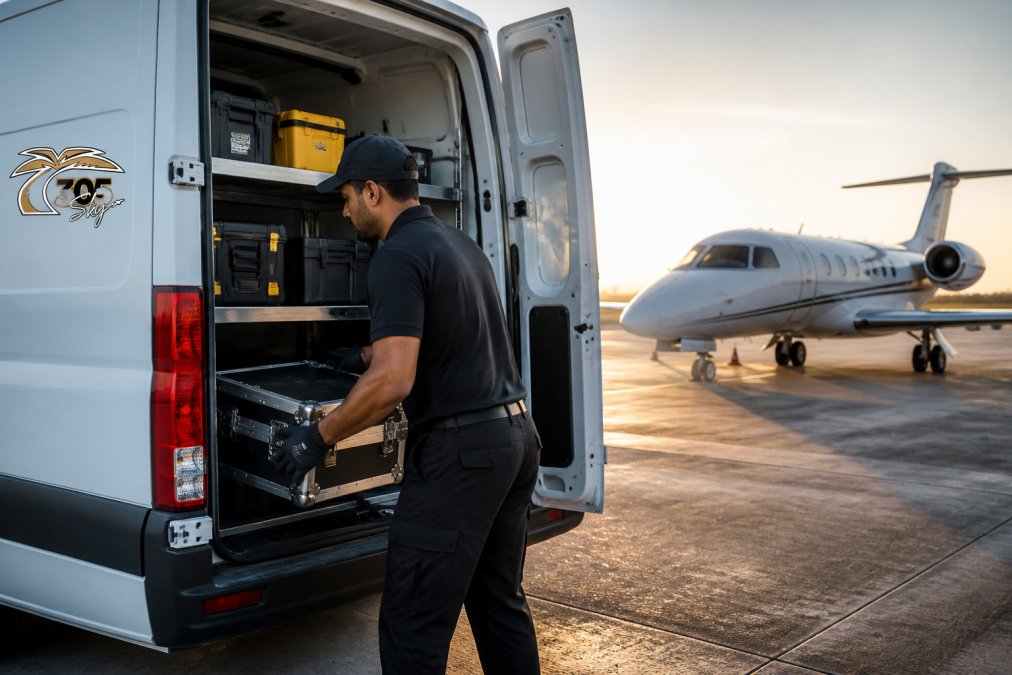
Local AOG providers maintain positioned inventory specifically for aircraft emergencies. When you call with a parts need, the answer isn't "we'll source it", it's "we have it and can ship today." The FAA-certified Part 145 repair station designation means parts meet compliance requirements without additional verification delays (faa.gov).
The 24/7 availability model is non-negotiable for AOG. Unlike traditional freight operations that follow business hours, dedicated AOG services answer calls at 2 AM on Sunday with technicians ready to troubleshoot, parts ready to dispatch, and coordination happening in real time.
When you call 305 Sky for AOG support, you're connecting with a team that has 55 years of combined aviation experience positioned across four South Florida facilities. We maintain a mobile van equipped for emergency dispatch, meaning response happens on-site, not after parts arrive. The investment in rapid response usually costs less than the revenue lost during extended downtime.
Expedited Shipping Methods for Time-Critical Parts
When local inventory doesn't have what you need, expedited shipping bridges the gap between AOG and resolution. The difference between standard freight and expedited options can mean 48 hours versus 24 hours.
Next Flight Out (NFO) and Hot Shot Expediting
Next Flight Out (NFO) and hot shot expediting guarantee parts departure on the next available flight to minimize aircraft downtime. (iata.org) Hot shot expediting uses dedicated courier networks with direct access to cargo flights. When you need a part in Miami by morning, hot shot expediting books the next available cargo flight and coordinates ground transport on both ends, eliminating coordination delays.
NFO services guarantee your parts leave on the next scheduled flight out of the departure airport. For critical components where missing a flight means missing a revenue event, the premium is worthwhile.
Multimodal Transportation: Combining Air and Ground
Multimodal transportation combines air freight for long distances with ground transport for local delivery, optimizing both speed and cost. A critical component from the Midwest can move via overnight air freight to a major hub, then dedicated ground courier for final delivery to your aircraft. The air leg moves the part across distance quickly. The ground leg handles the last 20 miles efficiently. Combined, multimodal often costs less than pure air freight while delivering nearly the same speed.
Expedited trucking plays a key role: a part arriving at Miami International Airport on a morning flight can reach your aircraft by afternoon through same-day local delivery. Providers manage the handoffs, so you communicate with one contact while they orchestrate the air carrier, ground transport, and timing across modes.
3PL vs Traditional Freight Forwarder Aviation Services
A 3PL is a company that manages logistics operations for other businesses, typically offering warehousing, inventory management, and transportation coordination as integrated services. Traditional freight forwarders focus primarily on arranging transportation and consolidating shipments to reduce cost.
For AOG, the distinction matters. A 3PL specializing in aviation maintains positioned inventory, understands aircraft-specific handling, and coordinates across multiple transportation modes. Traditional freight forwarders excel at cost optimization for planned shipments but their strength becomes a liability in emergencies where you need departure now, not when the next consolidation fills.
The practical choice depends on your operation's profile. If you operate aircraft regularly with predictable maintenance patterns, a 3PL relationship makes sense. If you operate sporadically or manage fleet diversity, traditional forwarders work fine for routine needs but shouldn't be your first call for AOG.
305 Sky operates as an integrated provider across both models. For routine maintenance, we coordinate with traditional suppliers and manage cost-effective sourcing. For AOG situations, our 24/7 response with positioned inventory and mobile dispatch capability mirrors the 3PL advantage.
| Logistics Model | Best For | Response Time | Cost Structure |
|---|---|---|---|
| 3PL (dedicated) | Regular operations with predictable maintenance | Same-day or next-day | Retainer + usage fees |
| Traditional Forwarder | Planned shipments and cost optimization | 2-3 days standard | Per-shipment rates |
| Local AOG Service | Emergency response and critical downtime | 4-24 hours | Premium for urgency |
| Multimodal Expedited | Long-distance AOG with time pressure | 24-48 hours | Higher than standard |
Private Jet AOG Downtime Reduction Through Preventative Logistics
The most effective AOG strategy isn't managing the emergency, it's preventing it. Preventative logistics uses data about aircraft maintenance patterns, component failure rates, and operational history to anticipate problems before they ground aircraft.
When a component has a known service life, you schedule replacement before failure. When operational patterns suggest higher stress on certain systems, you increase inspection frequency. If a particular hydraulic component shows degradation patterns, pre-send replacement units for installation during scheduled maintenance, shifting AOG from reactive crisis to managed risk.
For private jet operators in Fort Lauderdale, preventative logistics means building relationships with providers who understand your specific aircraft type and operational profile. 305 Sky combines detailed maintenance records with 55 years of combined aviation experience to identify which components deserve preventative attention. Prevention costs less than the disruption of unexpected AOG and eliminates the schedule uncertainty that AOG creates.
Technology-Driven Supply Chain Visibility and Real-Time Tracking
Modern AOG logistics depends on visibility. When a part is in transit, you need to know exactly where it is, when it arrives, and what happens at each handoff.
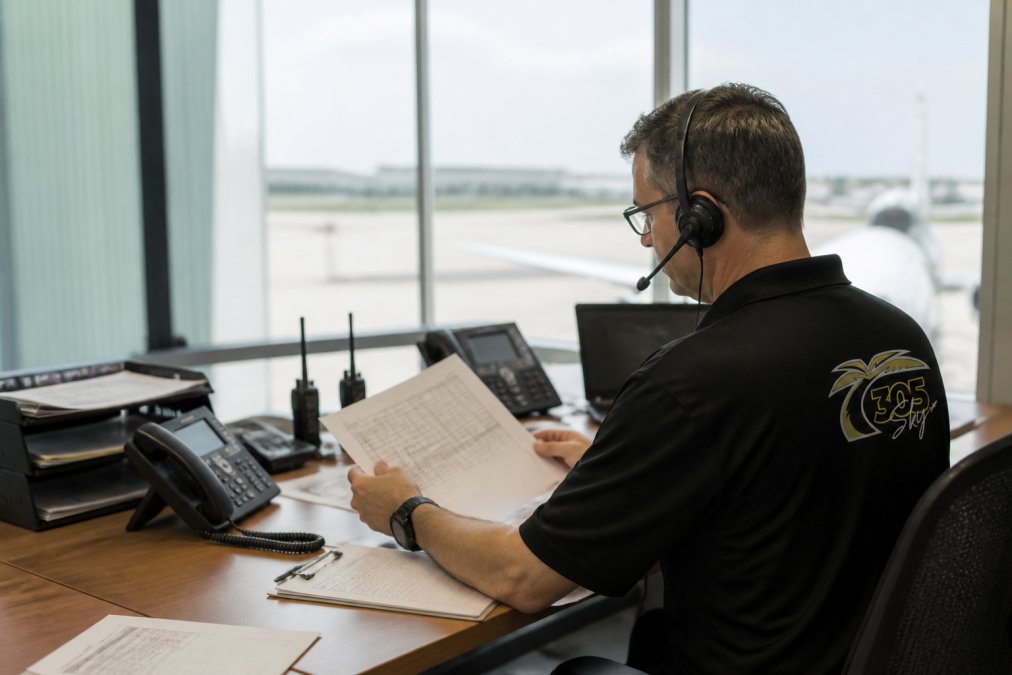
Real-time tracking systems integrate with transportation networks to show part location, estimated arrival, and any delays. Digital integration extends beyond tracking: when your maintenance records, inventory systems, and logistics platforms communicate, coordination happens faster. A technician identifying a needed part can check real-time inventory across your provider's network and automatically route to the nearest available unit.
Specialized AOG providers build these capabilities because visibility directly reduces downtime. Implementing technology-driven visibility means selecting providers who offer digital tools and integrating those tools into your maintenance workflow.
Local Maintenance Partnerships vs National Freight Networks
National freight networks offer breadth and reach everywhere. For planned shipments where cost matters more than speed, national networks excel. But AOG situations expose their weakness: your emergency is one of thousands, routed through the standard system where the network optimizes for average performance, not your specific urgency.
Local maintenance partnerships in Fort Lauderdale operate under different economics. A local provider's reputation depends on how well they serve the specific community they operate in. When you call a local AOG service, you're calling someone whose business depends on solving your problem quickly. Local providers also understand regional context: South Florida's weather patterns, local regulatory environment, relationships with local suppliers, and which components fail most often in this climate.
The trade-off is reach. A local provider can't match the geographic breadth of national networks. For truly global AOG situations, hybrid approaches work best: local providers for domestic speed, national networks for international reach.
For most South Florida operators, local partnerships reduce AOG frequency and response time significantly. 305 Sky's four strategically located facilities across South Florida ensure that emergency response reaches your aircraft quickly, with relationships with local suppliers and deep knowledge of regional operations.
Conclusion
Traditional AOG logistics assumes you have time to optimize. Modern alternatives assume you don't. They're built for speed, positioned for urgency, and staffed for 24/7 response.
The most effective approach combines multiple alternatives based on your operation's profile: local emergency response for immediate crises, preventative logistics to reduce how often emergencies happen, multimodal expedited shipping to bridge gaps when local inventory falls short, and technology-driven visibility to keep you informed throughout.
For aircraft operators across South Florida, 305 Sky delivers 24/7 AOG emergency response with mobile van dispatch, preventative logistics based on 55 years of combined aviation experience, and transparent communication throughout. When your aircraft is on the ground, every hour counts. Get a quote from 305 Sky and discover how rapid local support eliminates the delays that traditional logistics can't overcome.
Frequently Asked Questions
Q: What does AOG mean in logistics, and why does it require different handling than standard freight?
A: AOG stands for Aircraft on Ground, a situation where an aircraft is grounded due to a missing or failed component. Unlike standard freight, AOG shipments are time-critical and demand immediate action. A single missing part can idle an aircraft worth millions, costing operators thousands per hour in lost revenue. This urgency requires dedicated AOG logistics providers with 24/7 availability, expedited routing, and direct access to certified aircraft spares inventory.
Q: How do 3PL services differ from traditional AOG freight forwarders?
A: Third-party logistics (3PL) providers manage end-to-end supply chain operations, including warehousing, inventory management, and multimodal transportation. Traditional freight forwarders focus primarily on moving goods from point A to point B. For AOG situations, 3PLs offer proactive inventory positioning and supply chain visibility, while forwarders excel at rapid point-to-point delivery. Many modern AOG specialists now blend both approaches, maintaining local parts inventory while offering expedited shipping networks.
Q: Can expedited trucking replace air freight for AOG situations?
A: Expedited trucking works well for parts shipped within 8-12 hours of the grounded aircraft's location, but it cannot replace air freight for truly critical, long-distance AOG events. Next Flight Out (NFO) and hot shot air courier services guarantee delivery within hours regardless of distance. The choice depends on geography: a part needed in Miami may arrive faster by truck from Jacksonville, while a component for a Miami-based aircraft grounded in Denver requires air freight. Multimodal solutions combining ground and air often offer the best balance of speed and cost.
Q: What should private jet owners look for in an AOG recovery partner?
A: Prioritize 24/7 availability with documented response times, local presence in your operating region, FAA certification (Part 145 repair station status), and direct access to certified aircraft spares inventory. Verify they offer real-time tracking and transparent communication, you need to know exactly where your part is and when it will arrive. Ask about their supply chain technology: do they use preventative analytics to anticipate failures, or only react after an AOG event? Local partnerships often outperform national networks for South Florida operations due to proximity and familiarity with regional infrastructure.
Q: How can proactive maintenance reduce the need for emergency AOG logistics?
A: Preventative maintenance identifies worn components before they fail, allowing planned replacement during scheduled downtime rather than emergency AOG response. Advanced AOG logistics providers now offer predictive analytics that flag components likely to fail soon, enabling operators to pre-position spares or schedule repairs. Regular inspections, timely component overhauls, and digital record-keeping create a buffer against unexpected groundings.
This article was written using GrandRanker