Table of Contents
- What Drives the Avionics Upgrade Cost for Single Engine Piston Aircraft?
- Entry-Level vs. Premium Packages: A Cost Comparison
- Aircraft Avionics Installation Labor Rates and Regional Variations
- Understanding Avionics Upgrade Downtime and Planning
- Glass Cockpit Conversion Cost: What Changes and Why
- Best Avionics for Cessna 172 and Similar Aircraft
- Does an Upgrade Increase Resale Value?
- Conclusion
- Frequently Asked Questions
Last Updated: September 8, 2026
Avionics upgrade cost for single engine piston aircraft is one of the most misunderstood figures in general aviation, usually because owners compare catalog parts prices without accounting for labor, downtime, and integration work. An avionics upgrade cost for single engine piston aircraft is the total expense of replacing legacy flight instrumentation with modern digital equipment, including certified installation labor and time out of service. The gap between a GPS navigator's sticker price and the final invoice is where most budgeting mistakes happen.
The most common error is planning backward: picking a primary flight display first, then discovering the wiring harness, autopilot, and panel layout need substantial rework. Below, we break down what drives the total figure, how to compare entry-level and premium packages, and hidden costs like regional labor rates and downtime.
What Drives the Avionics Upgrade Cost for Single Engine Piston Aircraft?
Several factors determine the final number, but hardware is rarely the largest line item. The avionics suite sets the baseline, yet certified installation labor, the regulatory approval pathway for your airframe, and the condition of your existing panel often exceed the cost of the boxes.
The age and configuration of your aircraft matter more than most owners expect. A piston single with a clean, modern panel and recent wiring will take far fewer labor hours than one with decades-old bundles that fail during testing. According to FAA guidance on avionics installations, any change to flight instrumentation requires proper certification and documentation, which adds engineering review time to every project. Owners also need to consider whether their transponder meets current ADS-B requirements, since an upgrade often pulls that equipment into scope.
The Hidden Cost of Certification and Compliance
The regulatory path is where the sticker price diverges from the final invoice. Every new avionics installation on a certificated aircraft must be approved through one of two mechanisms:
-
Supplemental Type Certificate (STC): For major changes like a full glass cockpit conversion, the manufacturer holds an STC that defines the exact approved configuration for your specific airframe model. If your aircraft is covered, the engineering work is already done, but you pay for that approval through higher hardware prices and a mandatory installation kit. If your airframe is not on the STC, you are looking at a much more expensive path.
-
FAA Form 337 (Field Approval): For minor changes or installations not covered by an STC, a certified repair station can use a Form 337 to document the alteration. This requires a designated engineering representative (DER) or the local FAA Flight Standards District Office (FSDO) to approve the installation. This process adds significant labor hours for documentation, conformity inspections, and potential back-and-forth with the FAA. A common pattern is that a 'simple' radio swap that requires a field approval can double the labor cost compared to an identical unit that has an STC for your aircraft.
Airframe-Specific Quirks and Wiring Condition
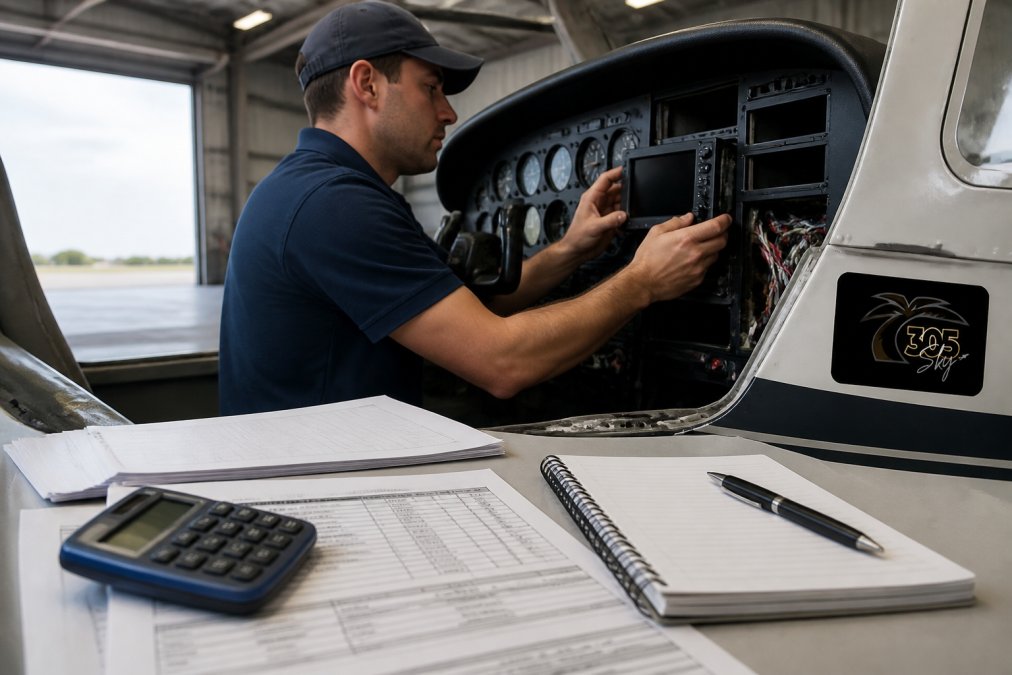
The physical condition of your aircraft is the second major variable. A 1970s-era airframe with original wiring will almost certainly require full panel rewiring, consuming 20-40 labor hours before a single new display is mounted (aopa.org). Aging antennas, static system condition, and legacy vacuum-driven instruments that must be removed and capped all add to the bill.
Pitot-Static and Transponder Certification
A frequently overlooked cost driver is certifying the pitot-static system and transponder after installation. Replacing any pitot-static-reliant instrument requires leak-testing and certification per 14 CFR Part 91, using specialized equipment and a certified technician (ecfr.gov). A new transponder must also be checked for proper encoding and response. These certifications are mandatory yet rarely quoted in the initial hardware estimate. A thorough pre-buy inspection before starting can identify these hidden issues early, while routine maintenance during the project ensures the rest of the aircraft is ready for the new equipment.
Entry-Level vs. Premium Packages: A Cost Comparison
The range between a practical, IFR-capable setup and a full glass conversion is substantial, and the right tier depends on how you fly. An entry-level package might replace a failing GPS navigator and transponder while keeping analog instruments, addressing reliability without changing the panel's character. A premium package replaces the entire panel with a glass cockpit, integrating displays and autopilot into a single digital ecosystem.
| Package Level | Typical Scope | Best For |
|---|---|---|
| Entry-Level | GPS navigator, transponder, basic audio panel | VFR pilots and budget-focused owners |
| Mid-Range | GPS navigator, ADS-B, digital autopilot, upgraded audio | IFR pilots flying regularly |
| Premium / Glass | Full glass cockpit, dual displays, full autopilot integration | Owners maximizing capability and resale value |
The entry-level route suits owners who fly primarily in good weather and want to keep the aircraft useful without a major investment. The premium route makes more sense for those who fly hard IFR, operate at night, or plan to keep the aircraft for a decade or more.
Aircraft Avionics Installation Labor Rates and Regional Variations
Labor is where cost surprises hide, and rates depend heavily on location. Aircraft avionics installation labor rates vary by region, with high-demand metropolitan shops charging more than rural ones. Owners in the Fort Lauderdale and South Florida corridor should expect rates on the higher end, reflecting the concentration of corporate and charter traffic.
The quoted labor rate is only half the story; the number of labor hours is where projects balloon. A clean, well-documented installation takes a fraction of the hours of a complex retrofit requiring custom harness fabrication and panel redesign. When requesting a quote, insist on a breakdown of estimated labor hours versus parts, not a lump sum.
Understanding Avionics Upgrade Downtime and Planning
Avionics upgrade downtime is often the most disruptive part of the project, yet it rarely appears in the quoted price. Most owners overlook the weeks their aircraft will sit in a hangar, unavailable for flying or revenue. In South Florida, the concentration of aircraft in the Fort Lauderdale corridor means certified shops often have a 4-6 week backlog just to get on the schedule.
Realistic Timeline Benchmarks
A realistic timeline for a typical single-engine piston retrofit runs one to three weeks. An entry-level swap with good access might take a few days; a full glass conversion with autopilot integration, new wiring, and panel fabrication can stretch well beyond. The bottleneck is rarely bench work but the certification and testing phase, where every system must be verified before return to service.
The Scheduling Bottleneck: Parts and Shop Capacity
The two variables most owners fail to plan for are parts lead time and shop capacity. High-demand units are not always on a shelf in Fort Lauderdale; a typical lead time for a popular GPS navigator or digital autopilot is 2-4 weeks, while a full glass suite built to order can push to 6-8 weeks. A common pattern is scheduling the installation, then discovering parts haven't arrived, leaving the aircraft in the hangar an extra week.
How to Plan the Downtime
Plan the upgrade around your flying schedule, scheduling work for your slow season with a built-in buffer. Owners needing the aircraft for a specific trip or inspection should communicate that deadline early, since a good shop will sequence work to hit it.
Ask the shop to commit to a written schedule with three dates: parts ordered, aircraft pulled into the hangar, and target return-to-service. This forces upfront confirmation of parts availability and gives you a concrete planning tool.
The AOG Cost of Downtime
For business or charter use, downtime is a direct financial loss. If your aircraft generates revenue, calculate the daily revenue loss and add it to the upgrade cost for the true total. For personal flyers, the cost is missed trips, airline tickets, and lost flexibility. This opportunity cost never appears on the invoice. When downtime threatens to stretch beyond the plan, an AOG service can help get critical support and parts moving faster to minimize the disruption.
Glass Cockpit Conversion Cost: What Changes and Why
A glass cockpit conversion is the most expensive single upgrade most piston owners will undertake, reflecting far more than the displays. The glass cockpit conversion cost includes new primary flight displays, a multifunction display, a digital autopilot, removal of the legacy panel, and the engineering and certification work to make it legal.
The price jump between a mid-range upgrade and full glass is significant, but so is the capability change. Glass gives you weather on the multifunction display, traffic and terrain awareness, and precision navigation for safer hard-IFR flying. The trade-off is essentially rebuilding the front half of the panel, meaning substantially higher labor hours and downtime.
Best Avionics for Cessna 172 and Similar Aircraft
The best avionics for Cessna 172 and similar piston singles balance capability, reliability, and installation practicality. While specific models depend on your mission, the most popular setups pair a modern GPS navigator with a digital autopilot and solid audio panel, keeping analog instruments for backup.
For future-proofing, a glass cockpit from a major manufacturer is the gold standard, offering IFR certification, ADS-B compliance, and cockpit weather. For reliable, legal navigation without major panel rework, a modern GPS navigator with a built-in transponder and basic autopilot delivers the most value per dollar. Both approaches can work; the right answer depends on how you use the aircraft.
Does an Upgrade Increase Resale Value?
An upgrade can increase resale value, but the return is rarely dollar-for-dollar, depending on the aircraft's class and installation quality. Buyers expect modern, reliable avionics, and a clean glass cockpit or well-chosen mid-range setup makes an aircraft easier to sell. A dated panel, by contrast, is a negotiation point that pushes the price down.
The key is matching the upgrade to the aircraft. A premium glass cockpit in a basic trainer may not return its full cost, since that buyer pool is price-sensitive. The same installation in a well-equipped cross-country machine can be the deciding factor that moves it quickly. Proper documentation, with all STC paperwork and logbook entries in order, is what turns an upgrade into resale value.
Conclusion
Budgeting for an avionics upgrade means looking past hardware price to the labor hours, downtime, and integration work that determine the real cost. Start with a clear picture of how you fly, get a detailed parts-and-labor breakdown from a qualified shop, and plan downtime around your schedule. For owners in Fort Lauderdale and across South Florida, 305 Sky offers transparent, certified avionics installation backed by 55 years of combined aviation experience, with 24/7 AOG support. Get a quote and see how a modern panel can transform your aircraft.
Frequently Asked Questions
How much does a G1000 upgrade cost for a single-engine piston aircraft?
The final cost of a G1000 upgrade depends on your specific airframe, the condition of existing wiring, and the chosen configuration. A full glass cockpit conversion is a major investment, often representing a significant portion of the aircraft's total value. For an accurate estimate tailored to your plane, discuss your goals with an avionics shop. They can provide a detailed quote after reviewing your aircraft's needs.
Is a full avionics suite upgrade worth the investment for a legacy piston aircraft?
A modern avionics suite can improve safety, reduce pilot workload, and increase resale value. However, the return on investment depends on the aircraft's overall condition and market value. An upgrade can make your plane more competitive when selling, but you may not recoup 100% of the cost. The primary benefits are often enhanced capability, reliability, and mission flexibility during your ownership period.
How long does a typical avionics panel upgrade take to complete?
Avionics upgrade downtime varies greatly by project scope. A simple GPS navigator swap might take a week, while a full glass cockpit conversion can take several weeks or more. The timeline depends on parts availability, the complexity of the wiring harness, and the shop's current workload. Discuss the estimated downtime with your avionics shop before work begins to plan your schedule.
What is the difference between a primary flight display and a multifunction display?
A primary flight display (PFD) replaces traditional attitude, airspeed, and altitude instruments, showing critical flight data on a single screen. A multifunction display (MFD) is a second screen typically used for navigation maps, weather, traffic, and engine monitoring. Together, they form the core of a modern glass cockpit, improving situational awareness and reducing panel clutter.