Table of Contents
- Why ROI Matters for Business Aircraft Upgrades
- The Standard ROI Formula for Aircraft Investments
- Defining Capital Expenditure and Upgrade Costs
- Avionics Upgrade Cost Benefit Analysis
- Aircraft Downtime Impact on Operational Budget
- Aircraft Resale Value Factors and Upgrade Impact
- Calculating Your Break-Even Point and Net Profit
- Conclusion: Making Data-Driven Upgrade Decisions
- Frequently Asked Questions
Last Updated: September 19, 2026
Why ROI Matters for Business Aircraft Upgrades
Calculating ROI for business aircraft upgrades isn't just accounting. It's the difference between a smart capital decision and money wasted on features that don't move the needle.
Many aircraft owners approach upgrades emotionally, a new avionics suite sounds impressive, a cabin refresh feels necessary. But without clear financial analysis, you're flying blind.
The real question isn't "Can I afford this upgrade?" It's "Will this upgrade pay for itself through improved operations, reduced downtime, or higher resale value?" That's where ROI analysis becomes critical. At 305 Sky, we help Fort Lauderdale-based operators and aircraft brokers understand exactly how much value an upgrade delivers before they commit capital.
This guide walks you through how to calculate ROI aircraft upgrades: measuring costs, quantifying benefits, and determining whether an upgrade makes financial sense for your operation.
The Standard ROI Formula for Aircraft Investments
The ROI formula is straightforward: ROI = (Net Profit / Total Investment Cost) × 100. Net Profit is gains minus costs. Total Investment Cost includes equipment, installation, testing, and downtime.
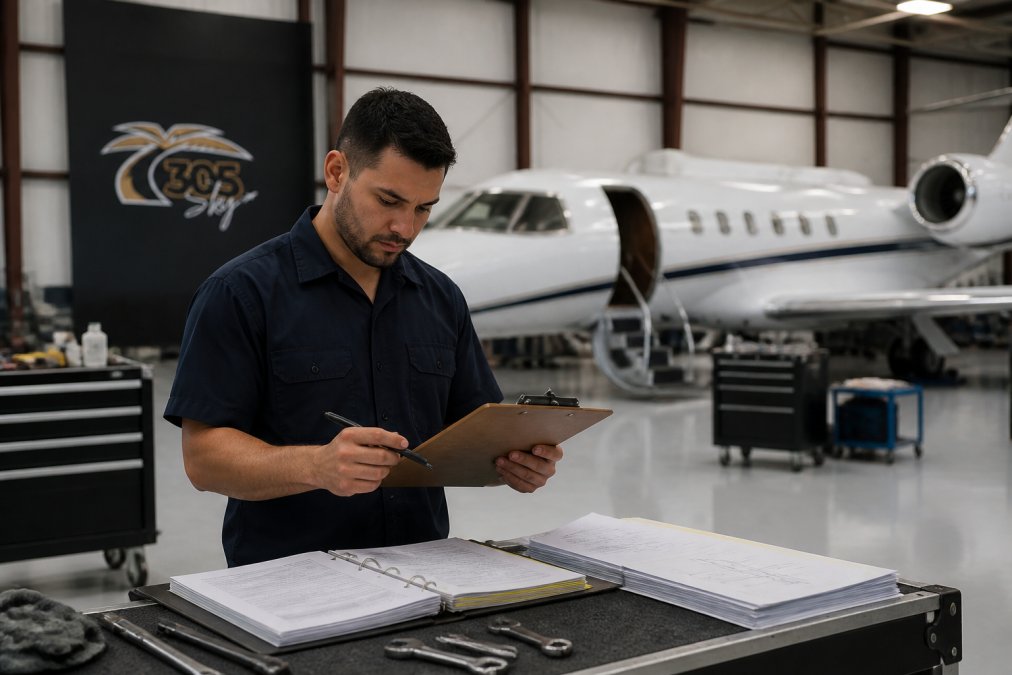
Here's what makes this work for aircraft:
- Net Profit = Annual operational savings + resale value increase - annual operating costs of the upgrade
- Total Investment Cost = Equipment cost + installation labor + certification costs + lost revenue during downtime
An avionics upgrade might reduce fuel consumption, eliminate charter restrictions, or increase resale value, gains that offset initial expense. Some upgrades pay back in 2-3 years; others deliver steady benefits over the aircraft's remaining service life.
Defining Capital Expenditure and Upgrade Costs
Capital expenditure (CapEx) is money spent on assets that improve aircraft value or capability, distinct from operational expenses like routine maintenance. This distinction changes how you calculate ROI.
Aircraft upgrade costs include layers that generic business ROI models miss:
Direct Equipment and Installation Costs
- Equipment and parts
- Labor for installation and testing
- Integration with existing systems
- Training for crew or maintenance staff
Aviation-Specific Regulatory Compliance Costs
The FAA requires certification, testing, and documentation for nearly every upgrade. These mandatory costs are often underestimated:
- STC or Field Approval costs, Engineering review, testing, and certification for avionics or structural upgrades on King Air, Citation, or Challenger aircraft.
- Airworthiness Directive (AD) compliance, All outstanding ADs must be addressed before sale or operation; some upgrades trigger new ADs.
- Inspection and testing fees, FAA or Designated Airworthiness Representative (DAR) inspections required for major upgrades.
- Documentation, Maintenance records, logbook entries, and certification paperwork must be prepared and filed.
- Recurring inspection costs, Some upgrades require new inspection intervals or additional maintenance checks.
For aircraft brokers buying distressed or off-market aircraft, regulatory compliance costs can represent a significant portion of the total upgrade budget.
Downtime Revenue Loss During Upgrades
Downtime costs are often underestimated. Calculate daily downtime cost: Daily Downtime Cost = (Annual Revenue / 365) × Use Rate. For charter operators flying 60% of available days, downtime is expensive; for corporate departments flying 20%, the impact is lower but real. Typical timelines: avionics 1-3 weeks, cabin interior 4-8 weeks, engine work 6-12 weeks, structural repairs 8+ weeks. Schedule upgrades during slow seasons to minimize revenue impact.
Total Investment Cost = Equipment + Installation Labor + Regulatory Compliance + Downtime Revenue Loss + Training
Missing any layer, especially regulatory compliance or downtime, understates true cost and inflates ROI projections.
Avionics Upgrade Cost Benefit Analysis
Avionics upgrades are among the most common and easiest to justify financially. New glass cockpit systems, weather radar, and autopilot upgrades deliver measurable benefits:
- Reduced fuel burn through optimized flight planning and navigation
- Expanded operational capability (ability to fly in weather, lower minimums)
- Charter eligibility (some operators require modern avionics)
- Insurance rate reductions (newer systems often qualify for premium discounts)
- Crew efficiency (less workload, fewer errors, faster flight planning)
- Resale value impact (newer avionics add significant value at sale time)
Start with a baseline: annual operating costs and operational restrictions. A King Air, Citation, or Challenger with outdated avionics may be restricted from certain airports or unable to fly in weather. An upgrade removes those restrictions and has real value in charter revenue or operational flexibility. Modern avionics can add significant value to aircraft market value, making resale value a primary ROI driver for brokers buying and flipping distressed aircraft.
Aircraft Downtime Impact on Operational Budget
Downtime is the silent cost that kills ROI calculations.
When your aircraft is in the hangar for upgrades, it's not generating revenue. It's not fulfilling charter commitments. It's not supporting your business operations. Every day matters.
Calculate downtime cost this way:
Daily Downtime Cost = (Annual Revenue / 365) × Use Rate
If your aircraft generates revenue, divide annual revenue by 365 to get daily value. Multiply by your use rate (the percentage of days the aircraft actually flies).
For a charter operator flying 60% of available days, downtime is expensive. For a corporate flight department flying 20% of available days, the impact is lower but still real.
Typical avionics upgrades take 1-3 weeks. Cabin interior work can take 4-8 weeks. Structural repairs or engine overhauls can take months.
The upgrade timeline directly affects ROI. A quick upgrade with minimal downtime looks better financially than a long project.
Aircraft Resale Value Factors and Upgrade Impact
Resale value is where many upgrades prove their worth, especially for aircraft brokers and owners planning to sell within 5-10 years.
How Upgrades Affect Market Value
Avionics Upgrades
- Modern glass cockpit systems (Garmin G1000 NXi, Collins Pro Line Fusion) are expected on Citation, Challenger, and King Air aircraft. Aircraft with steam gauges or legacy systems face buyer resistance.
- A comprehensive avionics upgrade typically adds value to aircraft, depending on aircraft type and market conditions.
- Avionics age is a primary evaluation factor; a 10-year-old suite may require replacement within 5 years, affecting buyer offers.
- Charter operators require modern glass cockpit systems and specific autopilot capabilities, expanding the buyer pool and justifying premium pricing.
Engine and Powerplant Upgrades
- Engine overhauls or hot section inspections directly affect resale value. An engine with high time remaining is worth significantly more than one approaching TBO (Time Between Overhaul).
- For King Air and Learjet operators, engine condition is a significant value driver after avionics. A fresh engine overhaul can add substantial value to aircraft.
- Performance upgrades (higher horsepower, better fuel efficiency) require careful ROI analysis, upgrade cost must be justified by value increase.
Cabin Interior and Cosmetic Upgrades
- Cabin refresh (new seats, carpet, paint, lighting) appeals to corporate and charter buyers. A dated interior signals deferred maintenance.
- Interior upgrades typically add value to aircraft, but ROI depends on upgrade cost. High-end refreshes may cost more than the value added.
- For charter aircraft, interior condition is critical; dated interiors reduce charter revenue potential.
Structural and Compliance Upgrades
- Structural repairs, corrosion treatment, and AD compliance are mandatory. Aircraft with deferred maintenance or outstanding ADs face significant buyer resistance and lower offers.
- Completing AD compliance before sale removes major buyer concerns and can prevent significant price reductions.
- For distressed or off-market aircraft, compliance upgrades unlock the buyer pool and justify higher asking prices.
Useful Load and Performance Upgrades
- Useful load and range improvements appeal to charter and corporate operators. For King Air and Challenger aircraft, these upgrades are valued.
- Performance upgrades (higher cruise speed, better climb rate) must be certified and documented. ROI depends on whether the upgrade expands operational capability in a way buyers will pay for.
Maintenance Records and Documentation
- Aircraft with clean, documented maintenance histories sell faster and for more money. Upgrades that improve maintenance records (new components, documented inspections) add value.
- Brokers and operators planning to sell should maintain meticulous records of all upgrades, inspections, and maintenance. This documentation directly supports resale value.
Upgrade Strategy for Resale Value
- If selling in 2-3 years: Focus on visible, high-impact upgrades, avionics, interior, paint, engine condition, that justify premium pricing and attract buyers quickly.
- If selling in 5-10 years: Combine avionics, engine work, and compliance upgrades for modern systems and low maintenance risk.
- If holding long-term (10+ years): Prioritize upgrades that reduce operating costs and improve reliability, engine condition, systems modernization, and structural integrity.
Calculating Your Break-Even Point and Net Profit
Net profit calculation is simple:
Net Profit = (Annual Benefit × Years of Benefit) - Total Investment Cost
Conclusion: Making Data-Driven Upgrade Decisions
ROI analysis removes emotion from aircraft upgrade decisions. It forces you to quantify benefits and compare them to costs.
Frequently Asked Questions
What is ROI in aviation?
ROI in aviation measures the financial return generated by an aircraft upgrade or investment relative to its cost. For business aircraft, this includes gains from reduced operational expenses, increased charter revenue, improved resale value, and reduced downtime. The formula is (Net Profit / Total Investment Cost) × 100. Aviation ROI differs from general business ROI because it must account for regulatory compliance costs, aircraft depreciation, and the unique impact of downtime on revenue generation.
How do avionics upgrades impact the resale value of a private jet?
Modern avionics systems significantly increase resale value by improving safety ratings, reducing insurance premiums, and meeting current regulatory requirements. Buyers of pre-owned aircraft prioritize updated glass cockpits and navigation systems. For Citation, King Air, and Learjet models, avionics upgrades typically recover a portion of their installation cost at resale. The exact recovery depends on the upgrade's age, the aircraft's condition, and market demand for that model.
How does aircraft downtime during upgrades affect total ROI?
Downtime directly reduces ROI by eliminating revenue generation and increasing labor costs. For charter operations, each day an aircraft is offline costs lost charter revenue. For corporate operators, downtime prevents scheduled business flights and increases the need for alternative transportation. Calculate downtime cost as (daily operating expense + lost revenue) × number of days offline. Scheduling upgrades during low-demand periods and selecting service providers with rapid turnaround minimizes this impact and protects your ROI.
Is a 40% ROI good for aircraft upgrades?
A strong ROI is generally desirable for aircraft upgrades, though the benchmark depends on the upgrade type and timeframe. Avionics and safety system upgrades often achieve favorable returns over time. Cabin interior upgrades can also deliver positive ROI. Compare your return against the aircraft's age, market demand for that model, and your operational timeline. If you plan to retain the aircraft for 10+ years, a strong ROI is excellent. If you plan to sell within 3 years, aim for higher returns on upgrades with stronger resale value recovery.