Table of Contents
- Why Tracking Aircraft Engine Time Matters
- Understanding Engine Time: Tach Time vs. Hobbs Time
- Aircraft Maintenance Record Keeping Requirements
- How to Calculate Engine Cycles and Flight Hours
- Digital Aircraft Maintenance Management Software
- Manual Engine Time Tracking: The Logbook Method
- Common Mistakes in Engine Time Tracking
- Frequently Asked Questions
Last Updated: August 31, 2026
Why Tracking Aircraft Engine Time Matters
Precision in aircraft maintenance starts with one fundamental practice: knowing exactly how many hours your engine has run. Engine time tracking isn't just administrative busywork, it's the foundation of airworthiness, regulatory compliance, and operational safety. Every flight hour, every landing cycle, every minute your engine operates directly impacts maintenance schedules, component lifecycles, and your aircraft's resale value.
The Federal Aviation Administration (FAA) requires detailed maintenance records for every aircraft. These records must account for total engine time, and they're audited during inspections, during aircraft sales, and when insurance claims arise. Without accurate engine time tracking, you're operating blind. You might miss critical maintenance windows. You might unknowingly fly an aircraft with components that have exceeded their service limits. You might face regulatory violations that ground your aircraft or expose you to liability.
For aircraft owners and operators in Fort Lauderdale and across South Florida, the stakes are particularly high. Charter operations, corporate flight departments, and private owners all depend on uninterrupted airworthiness. A maintenance gap discovered mid-flight or during a pre-buy inspection can cost thousands in repairs, cancel revenue-generating flights, or derail an aircraft purchase entirely.
The good news: tracking engine time is straightforward once you understand the difference between the two primary measurement methods and establish a system that works for your operation. Whether you're managing a single aircraft or a fleet, the fundamentals remain the same.
Understanding Engine Time: Tach Time vs. Hobbs Time
Engine time comes in two distinct forms, and understanding the difference is critical. Tach time measures the actual operating hours of the engine itself, recorded by a tachometer that counts engine revolutions. Hobbs time measures total elapsed time from engine start to engine shutdown, recorded by a Hobbs meter that runs continuously whenever the engine is running.
The practical difference matters. Tach time reflects true engine wear because it only counts when the engine is actually turning. Hobbs time includes ground operations, taxiing, run-ups, idle time on the ramp, when the engine is running but producing minimal power. For maintenance purposes, both measurements matter, but they serve different functions.
Most FAA-approved maintenance manuals reference tach time for engine overhaul limits and component service life (faa.gov). An engine might be rated for 2,000 tach hours before overhaul. That's 2,000 hours of actual engine operation, not elapsed time. If you logged 2,000 Hobbs hours but only 1,800 tach hours, your engine hasn't reached its overhaul limit yet.
Conversely, some maintenance intervals are calendar-based or flight-cycle-based rather than hour-based. A component might need replacement every 24 months regardless of engine time, or every 500 landing cycles. Here, Hobbs time and tach time become secondary to dates and cycle counts.
The most reliable tracking method uses both measurements simultaneously. Record tach time and Hobbs time at the start and end of every flight. The difference between start and end readings gives you precise data for both metrics. This dual-tracking approach aligns with best practices used by professional operators and satisfies FAA audit requirements.
Aircraft Maintenance Record Keeping Requirements
The FAA mandates specific documentation standards for all aircraft maintenance records, including engine time. These requirements exist to ensure airworthiness, enable regulatory oversight, and create an auditable chain of custody for maintenance history.
Every aircraft must maintain a logbook, either paper or digital, that documents all maintenance performed, all inspections completed, and all engine time accumulated. The logbook must include the date of each flight, the tach time at the beginning and end of each flight, the Hobbs time, the pilot's name, and any maintenance or discrepancies noted (faa.gov).
For engines specifically, the logbook must track total engine time since new, total engine time since last overhaul, and the remaining time until the next overhaul or mandatory inspection. This information is essential for determining when major maintenance is due and for establishing the engine's condition during pre-buy inspections.
FAA regulations on aircraft maintenance records require that logbooks be retained for the life of the aircraft. If you sell the aircraft, the logbook transfers with it. A complete, accurate logbook increases aircraft value significantly. Conversely, gaps in maintenance records or inconsistent engine time tracking can reduce resale value or complicate an aircraft sale.
Maintenance records must also document compliance with airworthiness directives (ADs) and service bulletins issued by the aircraft and engine manufacturers. These directives often reference engine time thresholds. You can't verify compliance without accurate engine time records.
For operators in South Florida managing multiple aircraft or running charter operations, maintaining compliant records across a fleet becomes complex. Digital record-keeping systems designed for aviation compliance help ensure nothing falls through the cracks.
How to Calculate Engine Cycles and Flight Hours
Engine cycles and flight hours are two separate but related metrics. Understanding how to calculate each one ensures you're capturing all the data needed for maintenance planning.
Flight hours are measured in tach time or Hobbs time, depending on your system. The calculation is simple: subtract the starting reading from the ending reading. If your Hobbs meter shows 1,500 hours at the start of a flight and 1,502.5 hours at the end, you've logged 2.5 flight hours. Record this in your logbook with the date, aircraft tail number, and pilot information.
Engine cycles count the number of times an engine completes a full operating cycle, typically from cold start to shutdown. One flight equals one cycle, regardless of duration. A 30-minute local flight counts as one cycle. A 4-hour cross-country flight counts as one cycle. Some components wear out based on cycle counts rather than hours because the stress of starting, running, and shutting down an engine creates wear independent of duration.
Landing cycles are counted separately in some maintenance programs. Each takeoff and landing stresses the airframe and landing gear. A component might be rated for 5,000 landing cycles before inspection or replacement. If you've completed 4,200 landings, you're approaching that threshold regardless of total flight hours.
To track cycles accurately, you need a simple system: record the date, starting Hobbs/tach time, ending Hobbs/tach time, and the number of landings for each flight. Over time, this data accumulates into a clear picture of your engine's condition and your aircraft's maintenance needs.
Many aircraft owners use a simple spreadsheet to track this information, then cross-reference it with their maintenance manual to determine when inspections or component replacements are due. Digital maintenance software automates these calculations, flagging when maintenance intervals are approaching.
Digital Aircraft Maintenance Management Software
Modern aircraft operators increasingly rely on digital systems to track engine time, manage maintenance schedules, and ensure regulatory compliance. These tools eliminate manual calculation errors, provide real-time alerts when maintenance is due, and generate audit-ready reports.
Digital maintenance software typically includes features like automatic flight logging, maintenance interval tracking, parts inventory management, and compliance reporting. Pilots can log flights directly into the system from a mobile device or tablet. The software automatically calculates engine time, landing cycles, and calendar days since last inspection. When a maintenance interval approaches, the system sends alerts to the maintenance team.
For operators managing aircraft in Fort Lauderdale or across South Florida, digital systems reduce the administrative burden significantly. Instead of manually reviewing logbooks to determine when the next inspection is due, the system provides that information instantly. For charter operations or corporate flight departments, this efficiency translates to faster turnaround times between flights and reduced downtime.
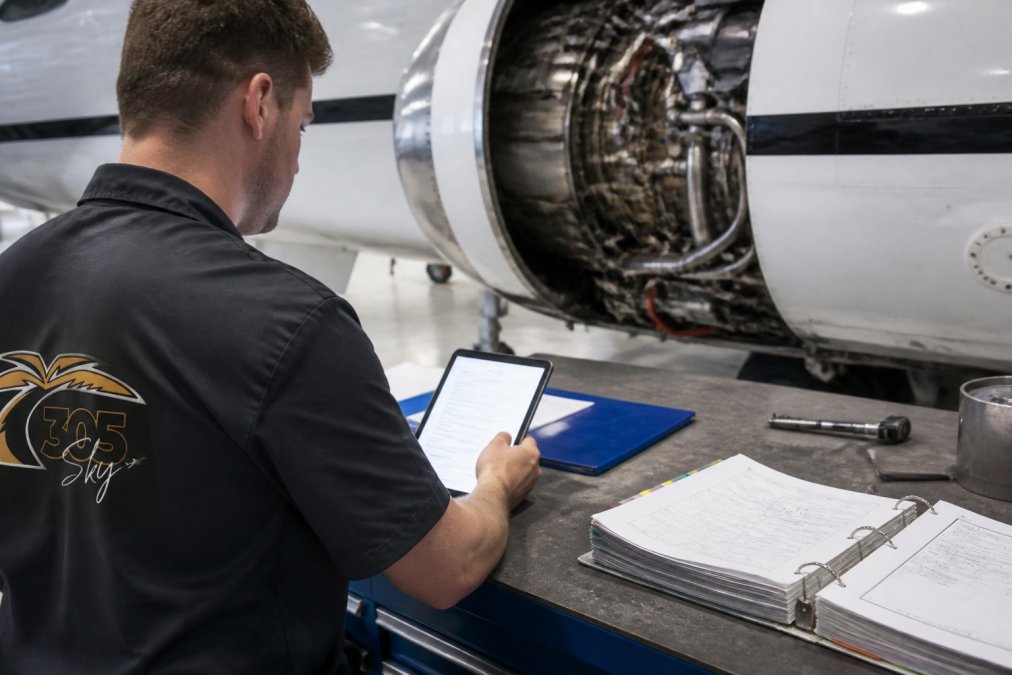
The best systems integrate with your aircraft's avionics and automatically pull flight data. Some platforms connect directly to your maintenance shop's work order system, so maintenance can be scheduled and tracked in one place. Others provide cloud-based access, allowing pilots, maintenance teams, and aircraft owners to view the same data from different locations.
When selecting digital maintenance software, prioritize systems that produce FAA-compliant reports. Your records must satisfy regulatory audits, so the software must generate documentation that meets official standards. Look for systems that allow multiple users with different permission levels, pilots logging flights, maintenance teams scheduling work, owners reviewing compliance status.
The cost of digital maintenance software varies, but many systems offer free tiers for single-aircraft owners and subscription models for larger operations. The investment typically pays for itself through reduced maintenance delays and improved aircraft use.
Manual Engine Time Tracking: The Logbook Method
Despite the rise of digital tools, many aircraft owners still rely on paper logbooks or simple spreadsheets to track engine time. This method works reliably when executed consistently, and it requires no software investment.
The logbook method starts before every flight. Record the date, aircraft tail number, pilot name, and the starting tach time and Hobbs time. Write these numbers clearly in the logbook. During the flight, note any issues or observations. After landing, record the ending tach time and Hobbs time, then calculate the flight hours by subtracting start from end.
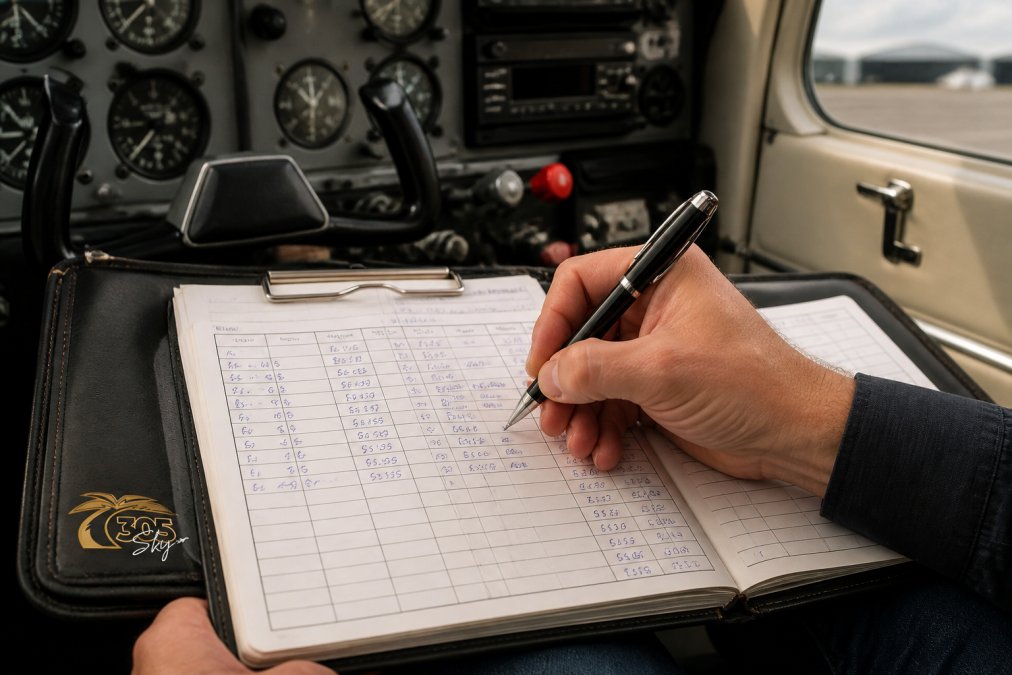
At the end of each month, total the flight hours and running engine time. Maintain a running total of cumulative engine time since the aircraft was new or since the last engine overhaul. This cumulative total is what you'll reference when determining if maintenance is due.
The logbook must be retained for the life of the aircraft. Store it safely in a secure location, ideally, keep the original in a fireproof safe and maintain a backup copy. If your aircraft is damaged or lost, the logbook becomes critical evidence for insurance claims and regulatory investigations.
Common mistakes in manual tracking include:
- Recording only Hobbs time and ignoring tach time, missing critical engine-hour-based maintenance intervals
- Inconsistent date formats or illegible handwriting that creates ambiguity during audits
- Forgetting to record start and end times, forcing estimates later
- Failing to note which pilot flew the aircraft, complicating accountability if issues arise
- Not maintaining a running total, requiring manual calculation during maintenance planning
The logbook method works best when one person is responsible for ensuring entries are complete and accurate. For single-aircraft owners, this is straightforward. For larger operations, digital systems reduce the risk of human error.
Common Mistakes in Engine Time Tracking
Inaccurate engine time tracking creates cascading problems. Missing a maintenance interval can ground your aircraft mid-season. Inconsistent records can derail an aircraft sale or complicate insurance claims. Here are the most common pitfalls and how to avoid them.
Mixing tach and Hobbs without clarity is the most frequent error. You record Hobbs time one month and tach time the next, creating confusion about which metric you're using. Solution: decide on your primary metric upfront and stick with it consistently. Record both if your maintenance manual requires it, but clearly label which is which.
Relying on memory instead of immediate documentation leads to lost data. You fly an aircraft and plan to log it later, then forget the exact times. Solution: log every flight immediately after landing, while numbers are fresh. Make it a non-negotiable part of your post-flight routine.
Failing to account for maintenance intervals beyond engine hours is another common gap. You track tach time meticulously but overlook calendar-based intervals or landing-cycle limits. Solution: maintain a maintenance tracking spreadsheet or use software that flags all interval types, hours, cycles, and calendar days.
Not maintaining cumulative totals makes it difficult to determine when major maintenance is due. Solution: keep a running total of engine time since new and since last overhaul. Update this total after every flight so it's always current.
Losing or damaging paper logbooks creates an incomplete maintenance history. Solution: digitize your logbook entries regularly or use digital tracking from the start. If you use paper, maintain a backup copy stored separately.
Inconsistent record-keeping across a fleet happens when multiple pilots or operators log flights differently. One pilot records tach time, another records Hobbs time. Solution: establish a standardized logbook format and train all users on it. Digital systems enforce consistency automatically.
For aircraft owners in Fort Lauderdale managing maintenance compliance, these mistakes can be costly. A pre-buy inspection that reveals gaps in engine time records can kill a sale or reduce the purchase price significantly. Working with experienced maintenance professionals like 305 Sky helps ensure your records meet regulatory standards and capture all necessary data.
Accurate engine time tracking isn't optional, it's the cornerstone of safe, compliant aircraft operations. Whether you're a private owner flying locally or managing a corporate fleet across South Florida, the process is the same: record tach time and Hobbs time consistently, maintain complete logbooks, and monitor maintenance intervals religiously. The investment in establishing a reliable tracking system now prevents costly problems later. At 305 Sky, our team helps aircraft owners and operators maintain FAA-compliant records and ensures no maintenance interval is missed. Get a quote today to learn how we can simplify your maintenance management and keep your aircraft in peak condition.
Frequently Asked Questions
What is the difference between tach time and hobbs time?
Tach time measures engine operating hours directly from the engine's tachometer and only records time when the engine is running. Hobbs time tracks total elapsed time from when the aircraft is in motion, including taxi time. Both are recorded in aircraft maintenance logs, and regulatory compliance often requires tracking both. Tach time is typically used for engine maintenance intervals, while Hobbs time reflects overall aircraft utilization.
How do I calculate total time in service for an aircraft engine?
Total time in service combines all recorded flight hours, ground running time, and any other engine operation time from the engine's start date. Review your aircraft logbooks and maintenance records to sum all entries. Most digital aircraft maintenance management software calculates this automatically by pulling data from each flight record. This total determines when your engine approaches its time between overhaul (TBO) limit and triggers major maintenance.
What FAA regulations govern aircraft engine maintenance record-keeping?
The FAA requires aircraft owners and operators to maintain detailed maintenance records under 14 CFR Part 91 and Part 135 (if operating commercially). Records must document all maintenance, repairs, and inspections, including engine time at each service. These records must be retained and made available for inspection. Accurate record-keeping is essential for proving airworthiness, supporting insurance claims, and ensuring regulatory compliance during audits or pre-buy inspections.
Why is accurate engine time tracking critical for TBO compliance?
Time between overhaul (TBO) is a manufacturer-set limit on how many hours an engine can safely operate before requiring complete overhaul. Failing to track engine time accurately can result in operating an engine beyond its TBO, creating serious safety risks and voiding warranties. Precise tracking ensures you schedule overhauls on time, maintain airworthiness, comply with FAA regulations, and avoid costly emergency failures. It also protects your aircraft's resale value and insurance coverage.
This article was written using GrandRanker