
Table of Contents
- How to Prepare for Aircraft Pre-Buy Inspection: A Complete Roadmap
- Step 1: Define Your Scope of Work and Inspection Goals
- Step 2: Select a Qualified Mechanic and Establish Make/Model Expertise
- Step 3: Gather Aircraft Logbooks and Maintenance Records
- Step 4: Create a Pre-Buy Inspection Checklist and Scope Document
- How Long Does an Aircraft Pre-Buy Inspection Take
- Understanding Aircraft Pre-Buy Inspection Cost and Budget Planning
- Step 5: Review Airworthiness Directives and Compliance Status
Last Updated: July 12, 2026
How to Prepare for Aircraft Pre-Buy Inspection: A Complete Roadmap
Purchasing a used aircraft is a significant investment. A thorough pre-buy inspection is essential due diligence that protects your investment and ensures airworthiness. Owners who arrive at inspection day with organized records, a clear scope of work, and a qualified mechanic consistently identify issues that casual buyers miss. This roadmap ensures your inspection uncovers what matters and positions you to negotiate from a position of strength.
Step 1: Define Your Scope of Work and Inspection Goals
Before contacting a mechanic, clarify exactly what you want inspected. A scope of work tells the mechanic what to prioritize and what boundaries exist around the examination. Without this clarity, inspections become unfocused and expensive.
Start by asking yourself: Are you looking for a basic airworthiness assessment or a deep dive into engine condition? Do you want avionics evaluated? Is this a pre-purchase inspection to decide whether to buy, or a post-purchase baseline for maintenance?
Document specific concerns before the inspection. If logbooks show unusual maintenance gaps, flag them. If you're buying a high-time airframe, request extra attention on corrosion and structural integrity. If the aircraft has been in storage, add fuel system and battery condition to your priority list. Write your scope as a numbered list: "1. Complete engine compression test. 2. Review all airworthiness directives for compliance. 3. Inspect airframe for corrosion and damage history. 4. Evaluate avionics functionality." This becomes your inspection checklist and reference point when reviewing findings.
Step 2: Select a Qualified Mechanic and Establish Make/Model Expertise
The mechanic you choose will determine the quality and credibility of your inspection. A mechanic experienced with Cessna 172s may lack the specific knowledge needed for a Piper Malibu or Beechcraft Baron. Make/model expertise matters because different aircraft have different failure modes, service bulletins, and maintenance histories.
When evaluating potential mechanics, prioritize those with direct experience on your aircraft type. Ask how many hours they've spent on that specific make and model and what common issues they've seen. A mechanic who can immediately discuss known problems is far more valuable than one who approaches every aircraft generically.
Why A&P and IA Credentials Matter
An A&P mechanic (Airframe and Powerplant) holds an FAA certificate authorizing them to perform maintenance and repairs on aircraft. An IA (Inspection Authorization) is a higher credential that allows the mechanic to perform annual inspections and sign off on airworthiness. For a pre-buy inspection, you want at least an A&P mechanic. Many buyers prefer an IA because they're authorized to make an independent judgment about airworthiness.
Verify credentials directly through the FAA. Ask for references from previous pre-buy inspections and whether the mechanic will provide a written report with photographs and specific findings. For a purchase decision, written documentation is non-negotiable. You need proof of what was found and what recommendations the mechanic made.
Location and availability also matter. A pre-buy inspection typically takes 8-16 hours depending on the aircraft and depth. Ask upfront about scheduling and turnaround time for the written report.
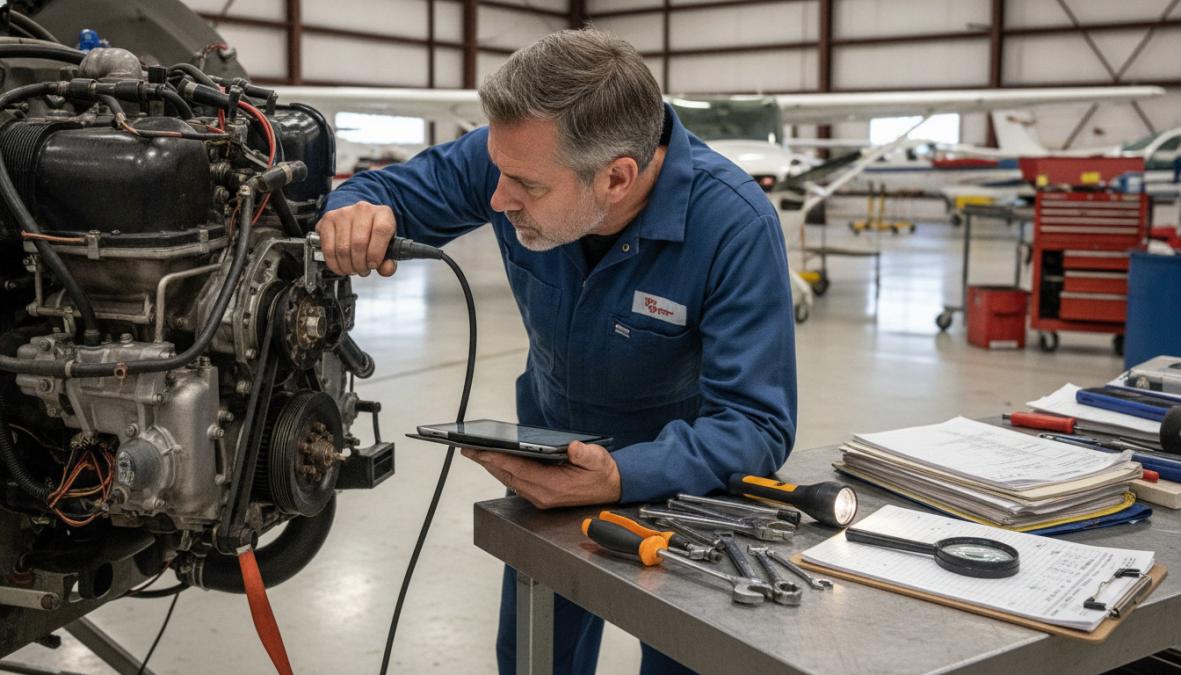
Step 3: Gather Aircraft Logbooks and Maintenance Records
Aircraft logbooks tell the story of how an aircraft has been maintained and operated. Before the inspection, request all available records from the seller: the airframe logbook, engine logbook, propeller logbook (if applicable), and any component overhaul records.
Review these records yourself before the inspection. Look for gaps in maintenance. If the logbook shows no entries for six months, that's a red flag. Look for recurring issues; if the same system has been repaired multiple times, the root cause may not have been addressed. Check for compliance with airworthiness directives and cross-reference major work with the dates in the logbook.
Many sellers provide incomplete records. Ask the seller directly: "Do you have any other maintenance records, service bulletins, or repair invoices?" Sometimes records are scattered across multiple shops or stored digitally. Be persistent. The more complete your record set, the clearer the aircraft's history becomes.
Organizing Digital Files for Inspection Day
Create a digital folder structure before inspection day. Organize records chronologically and include separate folders for: airframe logbook entries, engine logbook entries, propeller records, avionics upgrades, major repairs, and service bulletins. Print key pages and bring them to the inspection, marking them with questions or concerns.
Digital organization also helps after the inspection. When reviewing the mechanic's findings, you can quickly cross-reference them against the maintenance history.
Step 4: Create a Pre-Buy Inspection Checklist and Scope Document
A pre-buy inspection checklist ensures nothing gets overlooked and provides a reference point if you need to follow up on findings later. Start with a template specific to your aircraft. The Cessna Owners Organization, Piper Owner Society, and Beechcraft Heritage Foundation all provide detailed pre-buy checklists for their respective aircraft.
Your checklist should include sections for:
- Engine condition (compression, oil analysis, magneto performance)
- Airframe integrity (corrosion, cracks, structural damage)
- Flight controls (freedom of movement, rigging, cable condition)
- Landing gear (condition, operation, tire/brake wear)
- Fuel system (tank condition, contamination, pump operation)
- Electrical system (battery, alternator, avionics power)
- Avionics (functionality, certification status, age)
- Interior and exterior (upholstery, paint, windows)
- Propeller (condition, overhaul status, blade damage)
- All applicable airworthiness directives (compliance status)
For each item, create three columns: "Item," "Acceptable Condition," and "Mechanic Findings." Share your checklist with the mechanic before the inspection. This sets expectations about what will be examined and prevents misunderstandings.
How Long Does an Aircraft Pre-Buy Inspection Take
A typical pre-buy inspection requires 8 to 16 hours of mechanic time, depending on the aircraft size, complexity, and condition. A simple single-engine aircraft like a Cessna 172 might take 8-10 hours. A complex twin-engine aircraft could take 12-16 hours or more. If major issues are discovered, the inspection may extend beyond the initial estimate.
Plan for a multi-day process. The inspection itself might take one day, but the mechanic often needs 3-5 business days to compile findings, take photographs, and prepare a written report. A thorough report is worth the wait.
Understanding Aircraft Pre-Buy Inspection Cost and Budget Planning
Pre-buy inspection costs vary widely based on aircraft type, mechanic rates, and inspection depth. For a basic inspection of a single-engine aircraft, expect to pay $1,500 to $3,000. Complex aircraft, twin-engines, or pressurized airplanes typically cost $3,000 to $6,000 or more. Your inspection cost is an investment that protects a much larger purchase. If the inspection costs $3,000 and uncovers a $15,000 engine problem you didn't know about, the inspection paid for itself many times over.
Financial Planning and Escrow Considerations
When making an offer on an aircraft, include a contingency clause in your purchase agreement that allows you to conduct a pre-buy inspection at your expense. This contingency typically gives you 5-10 days to complete the inspection and decide whether to proceed with the purchase.
Some sellers require you to place earnest money in escrow before the inspection. This is standard practice and typically represents 5-10% of the purchase price. Discuss with the seller upfront who will pay for the inspection. Standard practice is that the buyer pays for the inspection regardless of the outcome. However, if the inspection reveals major defects, you can request that the seller either repair them or reduce the purchase price to offset the cost.
Budget for potential follow-up inspections. If the initial inspection raises questions about a specific system, you may need a specialist to evaluate it further. These additional evaluations can cost $500 to $2,000 but provide critical information for your purchase decision.
Step 5: Review Airworthiness Directives and Compliance Status
Airworthiness directives (ADs) are mandatory maintenance requirements issued by the FAA to address safety issues. Every aircraft must comply with all applicable ADs. Before your inspection, research which ADs apply to your aircraft and verify that the aircraft is in compliance.
Access the FAA's AD search tool online to find all directives issued for your aircraft make, model, and serial number. ADs can be one-time inspections, recurring inspections, or modifications. If an AD requires an engine modification and the seller hasn't completed it, you'll need to budget for that work. If an AD is overdue or incomplete, that's a compliance gap that needs explanation.
During your inspection, ask the mechanic to verify AD compliance. If an AD is overdue or incomplete, the mechanic will note it. This becomes a negotiation point: either the seller completes the AD before closing, or the purchase price is reduced to cover the cost.
Some ADs are time-sensitive. If an AD requires an inspection every 100 hours of operation and the aircraft has 87 hours since the last inspection, that AD will be due soon after you take ownership. Plan for this in your budget.
A pre-buy inspection is your best defense against purchasing an aircraft with hidden problems. The preparation phase, defining your scope, selecting the right mechanic, organizing records, and understanding what to expect, directly determines how thorough and effective that inspection will be. When you're ready to move forward with confidence, 305 Sky can guide you through the inspection process and help you understand the findings. Our team brings 55+ years of combined aviation experience to aircraft evaluations, ensuring you make an informed decision. Get a quote from 305 Sky and let our A&P mechanics provide the expert assessment your purchase deserves.
Frequently Asked Questions
What is included in an aircraft pre-buy inspection?
A comprehensive pre-buy inspection covers engine condition, airframe integrity, avionics systems, and compliance with airworthiness directives. The inspection includes a detailed review of maintenance records, flight test evaluation, and a thorough physical examination of critical components. A qualified A&P mechanic or IA will document all findings in a discrepancy list, which becomes the basis for negotiation and purchase agreement terms.
How do I create an effective aircraft pre-buy inspection checklist?
Start by reviewing your aircraft's make and model specifications, then customize a checklist that addresses your specific concerns. Include sections for engine overhaul history, corrosion assessment, avionics functionality, and compliance status. Organize the checklist by system (engine, airframe, avionics) and prioritize items based on the aircraft's age and condition. Share this with your selected mechanic before the inspection begins.
What are common red flags during aircraft logbook research?
Watch for incomplete maintenance records, gaps in annual inspection history, recurring discrepancies that weren't resolved, evidence of damage history not properly documented, and deferred maintenance items. Significant engine overhaul costs, repeated AD compliance issues, and corrosion patterns in the logs warrant deeper investigation. Request digital files of all maintenance records and cross-reference them with the aircraft's total flight hours and service bulletins.
How long does a typical aircraft pre-buy inspection take?
Most pre-buy inspections require 2-5 business days, depending on aircraft size, complexity, and condition. A thorough inspection includes logbook review, physical examination of the airframe and engine, avionics testing, and a flight test. The timeline also depends on mechanic availability and whether remote inspection logistics are involved. Plan for additional time if discrepancies require follow-up investigation or if parts need removal for detailed assessment.
This article was written using GrandRanker