Table of Contents
- Why Aircraft Maintenance Schedules Change Constantly
- FAA Maintenance Compliance Requirements and Regulatory Updates
- Scheduled Maintenance vs. Unscheduled Maintenance: Why Both Require Updates
- Impact of Salt Air on Aircraft Maintenance in Coastal Operations
- Managing Aircraft Maintenance Records Digitally for Schedule Accuracy
- Flight Hours, Landing Cycles, and Calendar-Based Intervals
- How to Keep Your Maintenance Schedule Current and Compliant
- Conclusion
- Frequently Asked Questions
Last Updated: August 31, 2026
Why Aircraft Maintenance Schedules Change Constantly
Your aircraft maintenance schedule isn't static. It evolves. And if you're not tracking those changes, you're flying blind.
The reason is straightforward: aircraft don't age the same way everywhere, and regulations don't stay frozen. A plane operating in coastal Florida faces different stressors than one based inland. Flight hours accumulate differently depending on mission profile. Manufacturers issue service bulletins. The FAA updates guidance. Your aircraft maintenance schedule needs frequent updates because the conditions that determine airworthiness are constantly shifting.
At 305 Sky, we've seen operators struggle with outdated schedules that miss critical inspections or trigger unnecessary downtime. The difference between a current schedule and an outdated one often comes down to whether your aircraft stays reliable or becomes a money pit. Understanding why updates matter, and acting on them, separates operators who maintain airworthiness from those who chase problems after they surface.
Below, we'll walk through the regulatory landscape, the practical factors that drive schedule changes, and how to keep your maintenance records current without guessing.
FAA Maintenance Compliance Requirements and Regulatory Updates
Regulatory compliance isn't a one-time checkbox. The FAA issues new guidance, revises existing standards, and updates service bulletins regularly. Your aircraft maintenance schedule must reflect the current regulatory environment, not what was required five years ago.
The FAA's Part 91 rules set baseline maintenance requirements for general aviation (faa.gov). But those rules themselves change. Airworthiness directives (ADs) can mandate new inspections or modifications (faa.gov). Service bulletins from manufacturers recommend actions based on fleet experience and engineering analysis. A bulletin issued last year might apply directly to your airframe, engine, or avionics, and if your schedule doesn't account for it, you're operating outside current best practices.
Compliance isn't just about legal exposure. It's about airworthiness. When the FAA or a manufacturer identifies a potential failure mode, they issue guidance to prevent accidents. Ignoring updated guidance means flying with known risks that engineering has already flagged.
For operators in South Florida, coastal environmental factors add another layer. Salt air accelerates corrosion on unpainted aluminum and fasteners. The FAA's guidance on corrosion inspection intervals reflects this reality. A schedule that doesn't account for your operating environment, salt spray, humidity, UV exposure, will miss degradation that affects structural integrity.
Scheduled Maintenance vs. Unscheduled Maintenance: Why Both Require Updates
Scheduled maintenance follows a plan. Unscheduled maintenance responds to problems. Both demand regular schedule reviews.
Scheduled maintenance is predictable. You know the 100-hour inspection is coming, the annual inspection is due, the oil change interval is set. But the intervals themselves change when manufacturers release service bulletins, when the FAA updates guidance, or when your operational profile shifts. If you're flying more hours per year than you used to, your schedule compresses. If you switch from short-haul to long-haul operations, component wear patterns change, and inspection intervals may shift.
Unscheduled maintenance reveals what scheduled maintenance didn't catch. When a technician finds corrosion during an inspection, or when an engine parameter drifts out of limits, that discovery often triggers new schedule entries. You might discover that a component needs more frequent checks than the original schedule specified. That finding feeds back into your maintenance plan.
The interaction between scheduled and unscheduled work means your schedule is never truly static. Each time unscheduled maintenance surfaces a problem, you update the schedule to prevent recurrence. Scheduled maintenance intervals themselves evolve based on fleet experience, both your aircraft's history and the broader fleet's history reported to manufacturers and the FAA.
Operators who treat their schedule as fixed often face surprises. A component fails between planned inspections because the interval was set too long. A hidden issue emerges because the schedule didn't account for the aircraft's actual operating environment. Frequent schedule reviews, at least annually, catch these gaps before they become failures.
Impact of Salt Air on Aircraft Maintenance in Coastal Operations
Coastal operations impose a unique maintenance burden. Salt air corrodes aluminum, fasteners, and electronics at accelerated rates. Your aircraft maintenance schedule must account for this reality, and that means more frequent updates than inland operators face.
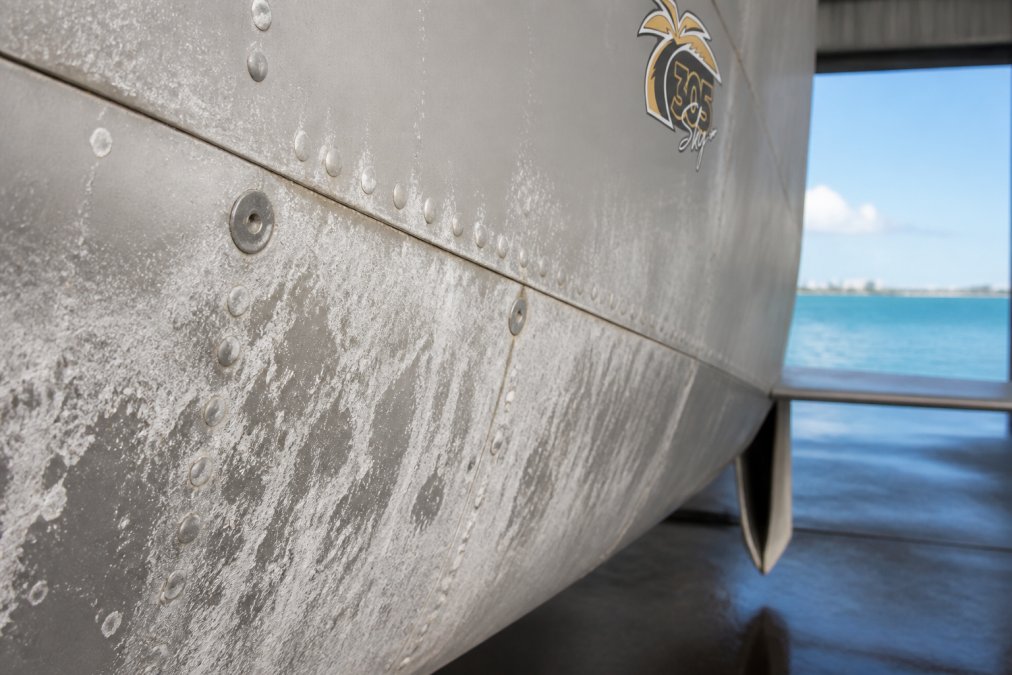
Salt spray doesn't just rust visible surfaces. It penetrates gaps, corrodes fasteners from the inside, attacks wiring insulation, and degrades avionics connectors. An aircraft based in Fort Lauderdale or West Palm Beach will show corrosion patterns that an inland aircraft won't develop for years. That difference means your inspection intervals need to be more aggressive.
The FAA recognizes this. Guidance for aircraft operating in salt-air environments specifies more frequent corrosion inspections. Fastener replacement intervals shorten. Protective coatings require more frequent renewal. Your schedule should reflect these tighter intervals, not the generic intervals in the maintenance manual, which assume average environmental conditions.
Many operators miss this nuance. They follow the aircraft's standard schedule without adjusting for their coastal location. Within a few years, they discover corrosion damage that accelerated beyond the inspection intervals. By then, the damage is extensive and expensive.
If your aircraft is based in South Florida, your maintenance schedule should include:
- Increased corrosion inspections (quarterly or semi-annual, not annual)
- More frequent fastener and rivet inspections
- Regular protective coating reapplication
- Avionics connector cleaning and inspection at shorter intervals
- Undercarriage and gear-well inspections for salt accumulation
These aren't optional refinements. They're necessary adaptations to your operating environment. A schedule that ignores the salt-air factor will require constant reactive maintenance, and will put your aircraft at risk.
Managing Aircraft Maintenance Records Digitally for Schedule Accuracy
Paper logbooks work until they don't. Digital maintenance tracking systems give you visibility into schedule compliance, alert you to upcoming intervals, and create an audit trail that regulators and potential buyers expect.

A digital system does several things a paper logbook can't. It flags overdue inspections. It tracks recurring issues and alerts you when a pattern emerges. It cross-references service bulletins with your aircraft's serial number and configuration. It generates compliance reports for the FAA or insurance audits. Most importantly, it forces discipline: every maintenance action gets logged immediately, with no opportunity for gaps or lost records.
Many operators still rely on paper. It's familiar. But paper creates blind spots. An inspection gets performed, but the technician's notes don't clearly indicate whether the next interval is 100 hours or 12 months. A service bulletin gets filed but never integrated into the schedule. A recurring issue gets noted but never analyzed for patterns. Over time, the schedule drifts out of sync with reality.
Digital systems solve this. A good maintenance tracking platform integrates your aircraft's specifications, the applicable service bulletins, regulatory requirements, and your flight history. The system calculates the next due date for each inspection or service. It alerts you when an interval is approaching. It prevents you from flying beyond an inspection deadline. It creates a searchable record of every maintenance action, every finding, and every follow-up.
For operators managing multiple aircraft or coordinating with maintenance shops, digital tracking is essential. It ensures consistency across your fleet. It gives you visibility into maintenance costs and trends. It makes pre-buy inspections and aircraft valuations straightforward because the records are complete and organized.
The schedule accuracy you get from digital tracking translates directly to airworthiness. You don't miss intervals because the system won't let you. You catch patterns and recurring issues because the data is organized and searchable. You prove compliance because every action is timestamped and documented.
Flight Hours, Landing Cycles, and Calendar-Based Intervals
Your aircraft maintenance schedule operates on three timelines simultaneously: flight hours, landing cycles, and calendar time. All three drive different inspection intervals, and all three require constant monitoring.
Flight hours measure engine and airframe fatigue. Some inspections are due every 100 hours, others every 500 hours. Engine overhauls are typically due at 1,800 to 2,000 hours, depending on the engine type (peer-reviewed research). As your aircraft accumulates flight time, these intervals approach and become due. The schedule must track flight hours precisely.
Landing cycles stress the landing gear, airframe, and brakes. Each takeoff and landing is a cycle. Some components have service limits based on cycles, not hours. An aircraft that flies long routes with few landings ages differently than one making short hops with frequent landings. A schedule that doesn't account for your landing pattern will either over-maintain or under-maintain critical components.
Calendar intervals apply regardless of flight activity. Annual inspections are due 12 months after the last one, whether you flew 500 hours or 50. Avionics certifications expire on fixed dates. Airworthiness certificates require periodic renewal. If your aircraft sits on the ground for months, calendar-based intervals still approach.
The complexity here is that all three timelines can require different actions. You might have a 100-hour inspection due based on flight hours, an annual inspection due on the calendar, and a landing-gear inspection due based on landing cycles. All three might be due in the same month. Your schedule must track all three separately and flag when any interval is approaching.
Many operators focus on flight hours and miss calendar-based intervals. An aircraft that flies infrequently can fall behind on annual inspections or avionics certifications simply because the calendar keeps advancing. Conversely, an aircraft that flies heavily can hit landing-cycle limits faster than the schedule anticipated.
A current maintenance schedule integrates all three timelines. It calculates the next due date for each inspection based on whichever trigger (hours, cycles, or calendar) comes first. It updates as you log flight time and calendar days. It prevents you from flying beyond any interval.
How to Keep Your Maintenance Schedule Current and Compliant
Keeping your schedule current requires a systematic approach. Here's how operators maintain compliance without constant guesswork.
1. Establish a baseline schedule. Start with the manufacturer's maintenance manual for your specific aircraft type and serial number. This is your foundation. Don't use a generic schedule or someone else's schedule; use the one designed for your airframe.
2. Integrate service bulletins and airworthiness directives. Cross-reference the FAA's database and the manufacturer's service bulletin library. Identify every bulletin that applies to your aircraft. Add those actions to your schedule at the intervals specified.
3. Account for your operating environment. If you operate in salt air, coastal areas, or high-altitude regions, adjust inspection intervals accordingly. If you operate in extreme temperatures or humid climates, add environmental-specific inspections. Your schedule should reflect where and how you actually fly, not generic conditions.
4. Document everything digitally. Migrate to a digital maintenance tracking system. Log every flight, every inspection, every service action. Use the system to calculate upcoming due dates and generate compliance reports.
5. Conduct an annual schedule review. Once per year, sit down with your maintenance team and review the entire schedule. Have they discovered recurring issues? Have new service bulletins been released? Has your operating profile changed? Update the schedule based on what you've learned.
6. Communicate with your maintenance provider. If you use a shop like 305 Sky for routine maintenance and inspections, establish a partnership where they flag schedule updates as they discover them. A good maintenance provider will alert you to service bulletins, regulatory changes, and environmental factors that affect your schedule.
7. Plan for major inspections. Events like overhauls, major inspections, and avionics upgrades require advance scheduling. Don't let these sneak up on you. Work backward from the due date and book the work well in advance.
The goal isn't perfection. It's consistency. A schedule that's updated regularly and tracked digitally will catch the vast majority of compliance issues and prevent most failures. Operators who skip this discipline face surprises, and surprises in aviation are expensive.
Conclusion
Your aircraft maintenance schedule isn't a document you file and forget. It's a living plan that evolves with regulatory changes, environmental factors, manufacturer guidance, and your aircraft's operational history. Frequent updates aren't bureaucratic overhead, they're the difference between reliable airworthiness and reactive maintenance that drains your budget and grounds your aircraft at the worst times.
If you're operating in South Florida, the coastal environment makes this even more critical. Salt air, humidity, and UV exposure accelerate component degradation. A schedule that works for inland operators will leave your aircraft vulnerable. At 305 Sky, we help operators across Fort Lauderdale, West Palm Beach, and Boca Raton maintain current, compliant schedules tailored to their aircraft and environment. Our team tracks regulatory updates, flags service bulletins, and ensures your maintenance records are accurate and complete. Get a quote today and let us handle the complexity of keeping your aircraft airworthy.
Frequently Asked Questions
Q: What is the difference between scheduled and unscheduled aircraft maintenance?
A: Scheduled maintenance follows a predetermined aircraft maintenance schedule based on flight hours, landing cycles, and calendar intervals. Unscheduled maintenance addresses unexpected issues discovered during inspections or reported by pilots. Both require frequent updates because regulatory compliance, environmental factors, and component degradation can trigger new requirements. Your maintenance manual and FAA directives drive these intervals, but real-world conditions often necessitate adjustments to keep your aircraft airworthy.
Q: How do FAA airworthiness directives impact my maintenance schedule?
A: FAA airworthiness directives are mandatory technical directives that can require immediate or recurring maintenance actions on specific aircraft models or components. When the FAA issues a new directive, your maintenance schedule must be updated to include the inspection, repair, or replacement requirement. These directives address safety risks discovered in service and override existing intervals. Staying current with FAA compliance requirements ensures your aircraft meets airworthiness standards and prevents grounding.
Q: Why does the environment in South Florida affect my aircraft maintenance intervals?
A: Coastal operations expose aircraft to salt air, which accelerates corrosion on the airframe, fasteners, and hydraulic systems. Salt spray penetrates protective coatings and causes component degradation faster than inland operations. This environmental factor requires more frequent inspections and corrosion control measures than standard maintenance manuals specify. Aircraft operating in salt air environments need updated maintenance schedules that account for this accelerated wear, protecting structural integrity and operational reliability.
Q: What role does digital record-keeping play in maintenance schedule updates?
A: Digital maintenance tracking systems automatically flag due inspections, track flight hours and landing cycles in real time, and alert you when regulatory updates or service bulletins affect your aircraft. Proper record-keeping ensures nothing is missed and provides auditable proof of compliance for FAA inspections. Managing aircraft maintenance records digitally reduces human error, prevents costly oversight, and makes it easy to adjust schedules when new requirements emerge. This technology is essential for fleet management and maintaining continuous airworthiness.
This article was written using GrandRanker