Table of Contents
- What Is an Aircraft Escrow Service?
- Why Aircraft Escrow Matters in Private Jet Transactions
- Understanding Aircraft Title Search Requirements
- How to Evaluate Aircraft Escrow Fee Structure
- Aircraft Purchase Agreement Escrow Clauses You Need to Know
- Key Criteria for Selecting an Aircraft Escrow Provider
- Red Flags and Vetting Checklist
- Frequently Asked Questions
Last Updated: September 3, 2026
What Is an Aircraft Escrow Service?
An aircraft escrow service is a neutral third-party intermediary that holds funds and manages documentation during the sale of an aircraft, protecting both buyer and seller until all transaction conditions are met. The escrow agent doesn't represent either party, instead, it ensures that money doesn't change hands until the aircraft title transfers cleanly, all liens are cleared, and regulatory compliance is verified with the FAA.
The buyer deposits funds with the escrow agent rather than sending money directly to the seller. The seller doesn't release the aircraft or logbooks until the escrow agent confirms clear title, completed due diligence, and financing approval (if applicable). Only when both parties satisfy their obligations does the escrow agent release funds and coordinate the final paperwork transfer with the FAA Aircraft Registry.
Aircraft transactions involve significant capital, complex regulatory requirements, and title complications that don't exist in most other asset sales. An escrow service ensures neither party gets burned by fraud, undisclosed liens, or incomplete documentation.
Why Aircraft Escrow Matters in Private Jet Transactions
In aircraft transactions, escrow isn't optional, it's a necessity that saves both parties from catastrophic losses.
Without escrow: A buyer wires funds directly to a seller who disappears or fails to transfer title cleanly. The buyer discovers undisclosed liens, loses their money, and the aircraft becomes tied up in legal proceedings. Recovery is expensive and slow.
Escrow eliminates that risk. The escrow agent performs an FAA title search, verifies no liens exist, confirms the seller's legal right to transfer ownership, and coordinates FAA registration paperwork before releasing funds.
For aircraft brokers and management companies, escrow protects your reputation by making responsibility clear and resolving disputes through established procedures rather than litigation.
An escrow agent familiar with FAA requirements ensures compliance, preventing registration delays or rejections that could ground an aircraft.
Understanding Aircraft Title Search Requirements
Before closing, a comprehensive aircraft title search must be completed, a detailed investigation into ownership history, outstanding liens, and regulatory status.
The FAA Aircraft Registry maintains files on every U.S. civil aircraft, containing current owner, liens, claims, and airworthiness status (faa.gov). An escrow agent requests a full title search, which typically includes:
- Current registered owner verification
- Lien and encumbrance search
- Previous ownership history (usually back 5-10 years)
- Any outstanding claims or judgments against the aircraft
- Conditional sales contracts or other security interests
This search reveals hidden problems: unreleased liens, litigation claims, or sellers attempting to sell aircraft they don't fully own. Without it, the buyer could inherit these problems.
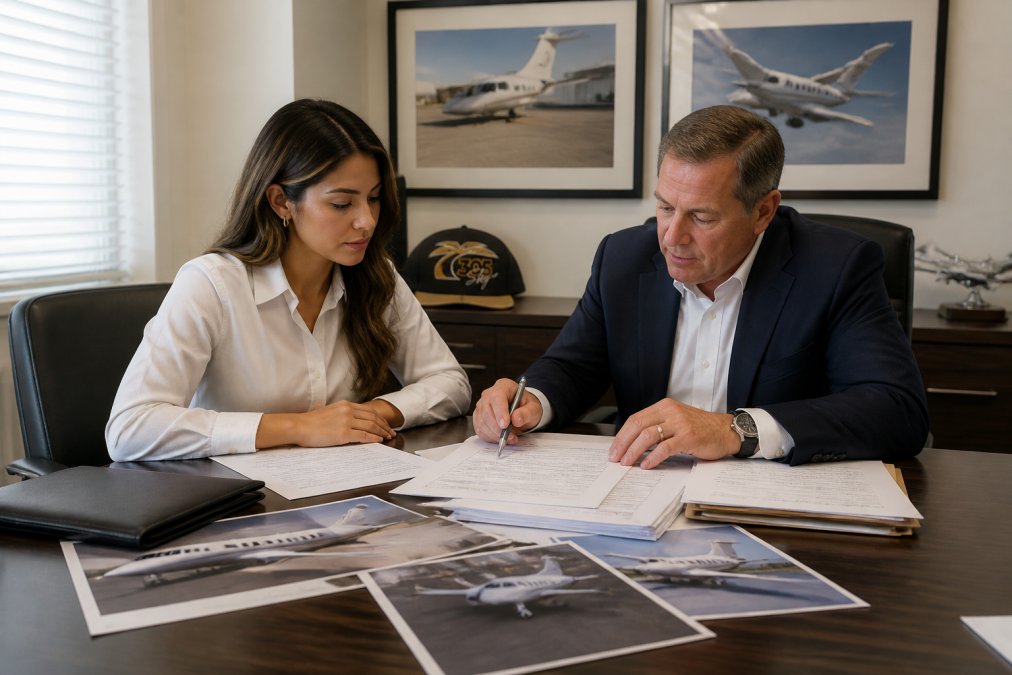
A quality escrow service will not proceed until the title search is clear. If liens or claims are discovered, the escrow agent requires the seller to satisfy them before closing. Many buyers also coordinate pre-buy inspections during this phase to verify the aircraft's condition and maintenance history before funds are released.
Title searches typically take 5-7 business days; complex cases may take 2-3 weeks (faa.gov). The escrow agent should provide a timeline upfront and communicate delays immediately.
How to Evaluate Aircraft Escrow Fee Structure
Escrow fees vary widely. Understanding the fee structure is critical to avoiding surprises at closing.
Common fee structures include:
- Flat-fee model: A fixed fee regardless of aircraft value
- Tiered model: Fees increase based on aircraft purchase price
- Percentage-based model: A percentage of the transaction value
- À la carte model: Separate fees for title search, document filing, wire transfer coordination, and other services
Flat-fee models are most transparent. Tiered models scale with complexity. Percentage-based pricing can become expensive on high-value aircraft. À la carte pricing can hide costs.
When evaluating a provider, ask what's included: FAA title search, document filing, wire transfer coordination, timeline extensions, and cancellation fees.
Some escrow agents charge cancellation fees; others refund most fees if the deal dies early. Clarify this upfront.
Escrow fees are a small percentage of transaction value and worth every dollar for the protection provided.
Aircraft Purchase Agreement Escrow Clauses You Need to Know
The aircraft purchase agreement must clearly define the escrow agent's role, conditions for fund release, and what happens if the deal breaks down.
A well-drafted escrow clause should include: escrow agent identification, deposit amount, conditions for release (clear title, inspection approval, financing), closing timeline, dispute resolution, and refund policy.
The most critical clause is conditions for fund release. If the purchase agreement says funds release "upon clear title verification" but the pre-buy inspection finds major issues, can the buyer back out? The answer depends on whether the agreement made inspection contingent on fund release.
A buyer-protective agreement makes fund release contingent on clear title, inspection approval, financing approval, and regulatory compliance.
A seller-protective agreement might release funds once title is clear, regardless of inspection results. Getting the agreement right before deposit is essential.
Vague escrow clauses cause the agent to hold funds until both parties agree in writing, delaying closing by days or weeks.
Key Criteria for Selecting an Aircraft Escrow Provider
Choosing the right escrow agent requires more than just comparing fees. You need an agent with aviation expertise, a solid reputation, and clear communication.
Verify credentials and experience. An aviation escrow agent should understand FAA regulations, aircraft title procedures, and documentation requirements. Ask how many aircraft transactions they've closed and whether they have experience with your aircraft type (Challenger, Citation, King Air, Learjet, Falcon, Hawker, Gulfstream, Beechjet, or Pilatus).
Check for professional affiliations. Reputable escrow agents often maintain membership with industry organizations like the Aircraft Owners and Pilots Association (AOPA), which vets members and maintains standards. Some escrow providers are AOPA Strategic Partners, indicating they meet specific criteria for reliability and expertise.
Ask for references from actual buyers and sellers, not just company references. Call them and ask: Did the agent communicate clearly? Were there surprises? Did the transaction close on time?
Evaluate communication practices. Does the agent respond to emails within 24 hours? Do they provide a timeline upfront? Are they proactive about identifying problems?
Look for transparency. A good escrow agent provides a written agreement outlining responsibilities, fund release conditions, fees, and timeline. If vague or unwilling to document procedures, that's a red flag.
Consider technology infrastructure. Modern escrow agents use secure portals, encrypted email, and digital signatures. Ask about industry-standard software and security measures.
Assess their willingness to work with your team, broker, attorney, financing company, and maintenance providers. A good agent proactively communicates with your entire transaction team, including those handling aircraft inspections and aircraft management responsibilities.
Red Flags and Vetting Checklist
Before committing to an escrow agent, watch for these warning signs that suggest you should look elsewhere.
Unwillingness to provide references. Red flag, reputable providers share past client contacts.
Vague fee structures. You'll face surprise charges. Legitimate providers quote fees upfront in writing.
No aviation experience. General escrow services miss critical FAA procedures. Stick with aviation specialists.
Poor communication. Slow responses predict closing problems.
Pressure to move quickly. Legitimate agents understand aircraft transactions take time.
No written agreements. Walk away if they won't document terms.
Lack of insurance or bonding. Verify errors and omissions insurance and bonding.
Reluctance to work with your team. A sign they're not committed to a smooth transaction.
Use this vetting checklist before selecting an escrow provider:
- Verify aviation industry experience and ask for the number of aircraft transactions closed
- Request references from at least 3 recent transactions and call them
- Confirm professional affiliations (AOPA membership, Strategic Partner status, etc.)
- Request a written fee quote with itemized charges
- Ask about cancellation policies and refund conditions
- Review their escrow agreement and ensure it addresses all transaction conditions
- Confirm they carry errors and omissions insurance and bonding
- Test their responsiveness by sending an email and noting how quickly they reply
- Ask how they handle disputes between buyer and seller about fund release
- Verify their FAA title search procedures and timeline expectations
- Confirm they can coordinate with your attorney, broker, and financing company
Choosing an aircraft escrow service is one of the most important decisions you'll make in an aircraft transaction. The right agent protects your investment, ensures regulatory compliance, and gets your deal to the closing table on time. At 305 Sky, we can recommend trusted escrow providers and guide you through the entire transaction process. Get a quote from 305 Sky today to learn how we support aircraft owners from pre-purchase inspection through final delivery.
Frequently Asked Questions
How does an aircraft escrow service protect both buyers and sellers?
An aircraft escrow service holds funds and documents in a neutral account until all transaction conditions are met. The escrow agent verifies FAA title status, confirms lien clearance, and releases funds only when the buyer receives clear title and all regulatory documentation. This protects the buyer from losing their deposit if title issues arise and protects the seller from non-payment. Both parties gain security through a third-party intermediary who ensures compliance with the aircraft purchase agreement before any money changes hands.
What should I look for in an escrow provider's track record?
Verify AOPA Strategic Partner status, ask for references from recent transactions, and confirm FAA regulatory compliance experience. Check whether the provider conducts thorough aircraft title searches and lien verification independently rather than relying solely on the broker. Ask how they handle wire transfer security and fraud prevention. Request proof of professional liability insurance and bonding. A reputable provider will openly discuss their process, provide transparent fee structures, and offer clear escrow instructions before you commit.
What is a typical escrow agent fee for aircraft transactions?
Escrow fees vary based on aircraft purchase price and transaction complexity. Some providers use tiered flat-fee structures that increase with aircraft value, while others charge percentage-based fees or quote-based pricing. Fees typically cover FAA title searches, lien verification, document management, and funds disbursement. Always request a detailed fee breakdown in writing before signing escrow instructions. Compare multiple providers to understand the range, but prioritize transparency and credentials over the lowest price alone.
Can I choose my own escrow company, or does the seller decide?
Buyers and sellers can mutually agree on an escrow agent, though either party may propose a provider they trust. The aircraft purchase agreement should specify the escrow service and terms. If you're the buyer, propose a reputable, independent escrow provider early in negotiations. If the seller suggests one, verify their credentials, insurance, and fee structure before agreeing. Never accept an escrow arrangement controlled solely by one party; the escrow agent must be truly neutral and independent to protect both sides.
This article was written using GrandRanker