Table of Contents
- How We Selected the Top Cabin Design Trends for 2026
- 1. Quiet Luxury: Refined Materials and Bespoke Finishes
- 2. Smart Cabin Technology Integration for Seamless Travel
- 3. Biophilic Design: Bringing the Outdoors Into the Cabin
- 4. Multi-Functional Living Spaces and Flexible Layouts
- 5. Sustainable Materials and Lightweight Engineering
- 6. Advanced Lighting and Wellness-Focused Cabin Environments
- 7. Understanding Private Jet Cabin Refurbishment Cost Factors
- Frequently Asked Questions
Last Updated: September 7, 2026
The private jet cabin is no longer just a way to pass the time between takeoff and landing. For owners of Challenger, Citation, King Air, Learjet, Falcon, Hawker, Gulfstream, Beechjet, and Pilatus aircraft, the cabin has become a statement of personal taste, a productivity hub, and a sanctuary for long-haul comfort. The most significant shifts in luxury aircraft cabin design trends for 2026 center on wellness, intelligent technology, and a move away from ostentatious displays toward quiet, functional luxury. At 305 Sky, our team works with owners across Fort Lauderdale and all of South Florida on bespoke cabin transformations.
Below, we break down the seven cabin design trends defining the year. These aren't just aesthetic fads; they represent a fundamental change in how private aviation owners use their time in the air, translating into tangible choices from material selection to the engineering that makes them possible.
How We Selected the Top Cabin Design Trends for 2026
To identify the trends that truly matter, we looked beyond a single source. Our selection process combined analysis of industry showcases like the Crystal Cabin Award innovations, which highlight verified advancements in hardware and passenger experience, with practical feedback from the owners and flight departments we serve in the Miami to Port St. Lucie corridor. We focused on trends that offer a measurable return, whether that means improved passenger wellness, reduced operating weight, or increased resale value.
A trend only made this list if it could be practically applied to the aircraft types we service daily, not concepts that exist only in concept jets. The focus is on elements that can be implemented during a scheduled interior refurbishment or avionics upgrade, respecting the weight and balance constraints of each airframe. We prioritized innovations that solve real problems, like noise attenuation for better sleep or sustainable materials that cut weight without sacrificing durability.
1. Quiet Luxury: Refined Materials and Bespoke Finishes
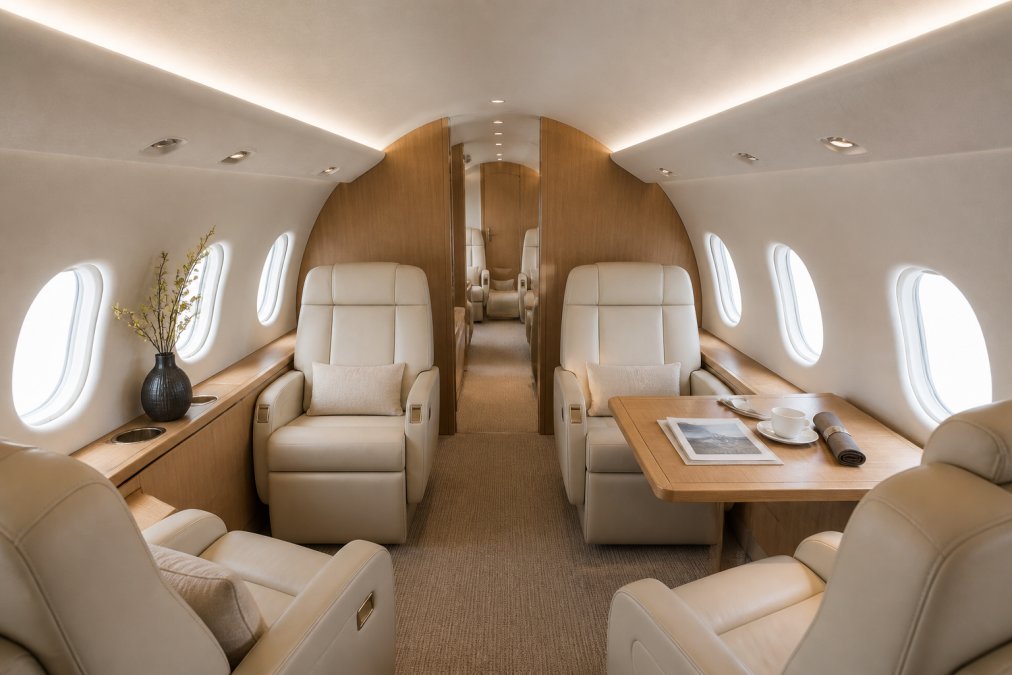
The dominant aesthetic for 2026 is quiet luxury, defined by understated elegance and exceptional quality rather than visible branding or flashy gimmicks. In aircraft interior design, this translates to bespoke finishes using natural materials like light oak, stone veneers, and hand-stitched leather in muted, earthy tones, creating a calm, residential atmosphere where the craftsmanship speaks for itself.
This marks a clear departure from the high-gloss, highly lacquered cabins of the past. Owners are gravitating toward matte finishes and textured surfaces that look sophisticated while reducing glare and fingerprints. Custom upholstery with deep, tactile fabrics and ergonomic seating designed for long-haul comfort are the hallmarks of this trend.
2. Smart Cabin Technology Integration for Seamless Travel
Smart cabin technology has moved from a novelty to an expectation for the premium passenger experience. This integration is less about individual gadgets and more about a unified, digital cabin interface that puts control at the passenger's fingertips, managing everything from lighting scenes and temperature to window shading and entertainment.
The real driver behind this trend is the demand for seamless, high-speed satellite internet. Owners expect to land having conducted business as efficiently as they would in a boardroom, which requires connectivity infrastructure designed into the cabin from the start, not bolted on as an afterthought.
The Technical Backbone: Connectivity and CMS
The shift toward a fully connected cabin is underpinned by advances in satellite communication. For aircraft flying long-haul routes, systems like Gogo's AVANCE L5 or Hughes Network Systems' Jupiter are common upgrades, but the real sophistication lies in how they integrate with the aircraft's avionics and cabin management. A robust CMS acts as the central nervous system, translating passenger commands into actions across lighting, temperature, window shading, and entertainment. The key is ensuring the system is certified for your specific airframe and does not interfere with critical avionics.
Practical Integration for Your Aircraft
For a Citation or King Air owner, the integration path is different than for a large-cabin Gulfstream. A light jet might benefit from a simpler, tablet-based CMS, while a heavy jet requires a fully wired, redundant system. The engineering challenge is managing weight, power draw, and heat dissipation, as a poorly planned installation can lead to systems failures or excessive downtime. Work with a team that understands the specific electrical load and structural limitations of your aircraft type, whether it's a Learjet, Hawker, or Pilatus.
| Trend Element | Primary Benefit | Typical Application | Key Technical Consideration |
|---|---|---|---|
| Cabin Management System | Centralized control of cabin environment | Lighting, temperature, AV via one interface | System certification and integration with avionics |
| High-Speed Satellite Internet | Uninterrupted connectivity for work and streaming | Global business travel, video conferencing | Antenna placement, power draw, and data plan management |
| Wireless Charging & Connectivity | Reduced clutter, device readiness | Seating areas, conference tables | Inductive charging pad certification and heat management |
The South Florida Connectivity Advantage
For owners based in the Fort Lauderdale area, connectivity is about staying connected to the vibrant business and social networks of South Florida. Whether flying to New York for a board meeting or to the Caribbean for a weekend, a well-integrated smart cabin ensures you are never out of touch, allowing you to manage your affairs with the same efficiency as on the ground. This is a critical factor for aircraft brokers and charter operators who need to maximize the utility of their assets.
3. Biophilic Design: Bringing the Outdoors Into the Cabin
One of the most compelling design trends gaining momentum is biophilic design, which seeks to connect passengers with nature to improve their sense of well-being. This is a direct response to the sterile, artificial environments that air travel has often produced, incorporating natural textures, organic shapes, and even live plant installations where feasible.
Beyond adding a few plants, biophilic design is about the psychology of the space. Indirect lighting that mimics natural daylight patterns, cabin air quality systems that maintain higher humidity, and noise attenuation that creates a quieter environment all contribute to passenger wellness, meaning you arrive at your destination feeling refreshed, not depleted.
4. Multi-Functional Living Spaces and Flexible Layouts
The days of fixed, rigid cabin configurations are fading. In their place, 2026 is seeing a surge in multi-functional living spaces that can adapt to the mission of the flight, whether a transcontinental business trip or a weekend getaway. This is leading to innovations in modular furniture that can be rearranged or reconfigured to suit different needs.
A dining table for six might convert into a conference table for a working flight, or a three-seat divan might fold down to create a fully flat bed for overnight travel. This cabin layout optimization requires lightweight yet durable mechanisms that can withstand the rigors of flight, increasing the aircraft's utility and value for owners who demand versatility.
5. Sustainable Materials and Lightweight Engineering
Sustainability is no longer a secondary consideration; it is a primary driver in material selection and engineering for new cabin design trends. Owners are increasingly conscious of their carbon footprint and are asking for sustainable materials that do not compromise on luxury or durability, including recycled aluminum, bio-based fabrics, and responsibly sourced leathers and woods.
The push for sustainability also aligns perfectly with performance goals through lightweight engineering. Every pound saved on interior weight translates directly to fuel savings, increased range, or a higher useful payload. Aerospace engineering firms are developing new composite structures and manufacturing techniques that reduce weight while maintaining structural integrity, making sustainability one of the most intelligent investments an owner can make.
6. Advanced Lighting and Wellness-Focused Cabin Environments
Lighting has evolved from a simple utility to one of the most powerful tools for shaping the passenger experience and supporting wellness. Advanced LED systems now offer millions of colors and the ability to create dynamic lighting scenes that mimic the natural progression of the sun (peer-reviewed research). This is critical for combating jet lag and regulating circadian rhythms on long-haul flights.
A wellness-focused cabin environment goes beyond lighting, encompassing precise temperature and humidity control, advanced air purification, and acoustic management to minimize noise attenuation. These systems work together to reduce stress and fatigue, making the cabin an active contributor to passenger health.
7. Understanding Private Jet Cabin Refurbishment Cost Factors
Planning a cabin transformation requires a clear understanding of the private jet cabin refurbishment cost factors that will influence your project. There is no single price for a refurbishment, as the final figure depends heavily on the scope of work, the materials selected, and the complexity of the engineering involved.
Key cost drivers include the extent of the structural work, the grade of materials used, and the integration of new technology like satellite connectivity or advanced CMS. Because these projects are highly bespoke, the best approach is a detailed consultation to define your goals and receive a project-based quote. A transparent partner will help you prioritize your wish list against your budget, ensuring you get the most impact for your investment.
The Real Cost Drivers: A Deeper Dive
Beyond the obvious factors, several less-discussed elements significantly impact the final invoice and project timeline. One of the most critical is the certification pathway. A minor change, like reupholstering seats with an FAA-approved material, is relatively straightforward (faa.gov). However, a major layout change, such as moving a galley or installing a new divan, may require a Supplemental Type Certificate (STC), which can add significant time and cost. Owners of Beechjet or Hawker aircraft, where aftermarket STCs may be less common, should be prepared for this possibility.
Another hidden cost is downtime. While a shop's hourly rate is a clear factor, the real cost is often the lost revenue or personal use of the aircraft while it is out of service. A project that takes eight weeks instead of six not only ties up your asset longer but can also disrupt your travel plans. A team based in Fort Lauderdale can offer more flexible scheduling and direct oversight, reducing the risk of delays caused by miscommunication or shipping issues.
The Fort Lauderdale Advantage: A Local Perspective on Refurbishment
For owners and operators in the Fort Lauderdale area, the choice of a refurbishment partner is often about logistics and accountability. Working with a local team means you can visit the facility, inspect the work in progress, and maintain a direct line of communication with the project manager. In the South Florida market, where weather is a major factor in travel plans, a local partner can also help you schedule your refurbishment during the off-peak season to minimize disruption.
Frequently Asked Questions
What is quiet luxury in aircraft interior design?
Quiet luxury in aircraft interior design focuses on understated elegance over flashy logos or bold patterns. It prioritizes exceptional material quality, such as hand-stitched leather, natural stone veneers, and bespoke cabinetry with flawless finishes. The aesthetic is calm and minimalist, creating a serene environment that emphasizes comfort and function. This approach to cabin design trends values timelessness over fleeting styles, ensuring the interior remains sophisticated and relevant for years.
How are sustainable materials changing private jet cabin interiors?
Sustainable materials are shifting private jet cabin interiors toward lighter, eco-conscious choices without sacrificing luxury. Designers are using recycled aluminum, bio-based fabrics, and responsibly sourced woods to reduce the carbon footprint of the build. These materials also contribute to weight reduction, which improves fuel efficiency. Advances in aerospace engineering now allow these sustainable options to meet strict safety and durability standards, making them a practical choice for owners planning a refurbishment.
What role does smart cabin technology integration play in modern aircraft design?
Smart cabin technology integration is central to modern luxury cabin design trends. It moves beyond individual controls to unified cabin management systems accessible via personal devices. Passengers can adjust lighting, temperature, window shades, and entertainment from a tablet. High-speed satellite internet ensures seamless connectivity for work or streaming. This integration creates a digital cabin interface that anticipates needs, simplifies the passenger experience, and adds significant value to the aircraft.
What are the most popular cabin layout configurations for 2026?
Lower-density cabin layouts are a defining 2026 trend, prioritizing space and privacy over maximum seat count. Owners are choosing configurations with dedicated lounge areas, executive workstations, and private suites. The focus is on multi-functional living spaces where a seating area converts into a dining table or a bed. This cabin layout optimization supports long-haul comfort and creates a more versatile, personalized environment tailored to the owner's specific travel needs.
How can I start planning a cabin refurbishment for my private jet?
Start by defining your primary goals: is it long-haul comfort, increased productivity, or a complete aesthetic refresh? Next, consider the private jet cabin refurbishment cost factors involved, such as material selection, scope of work, and aircraft downtime, to establish a realistic budget. Finally, partner with an experienced team that handles design, engineering, and FAA-compliant installation. A single provider, like 305 Sky in Fort Lauderdale, can manage the entire project from concept to completion.