Table of Contents
- What You'll Need Before Starting Your Avionics Upgrades
- Step 1: Assess Your Current Avionics Suite and Define Goals
- Step 2: Understand the FAA Avionics Certification Process
- Step 3: Plan for Avionics Upgrade Downtime Estimation
- Step 4: Select the Right Avionics Suite for Your Aircraft
- Step 5: Installation, Integration, and Post-Installation Training
- Common Mistakes to Avoid During Avionics Upgrades
- Conclusion
- Frequently Asked Questions
Last Updated: September 15, 2026
What You'll Need Before Starting Your Avionics Upgrades
A step by step guide to avionics upgrades starts long before anyone touches your panel. It starts with paperwork, a clear goal, and the right shop. At 305 Sky, we've watched too many owners skip this phase and pay for it later in grounded aircraft and surprise invoices.
Avionics upgrades are changes to an aircraft's electronic systems, including navigation, communication, flight instruments, and autopilot components. The work is as much regulatory as it is technical.
Before scheduling anything, gather two things: your records and your shop.
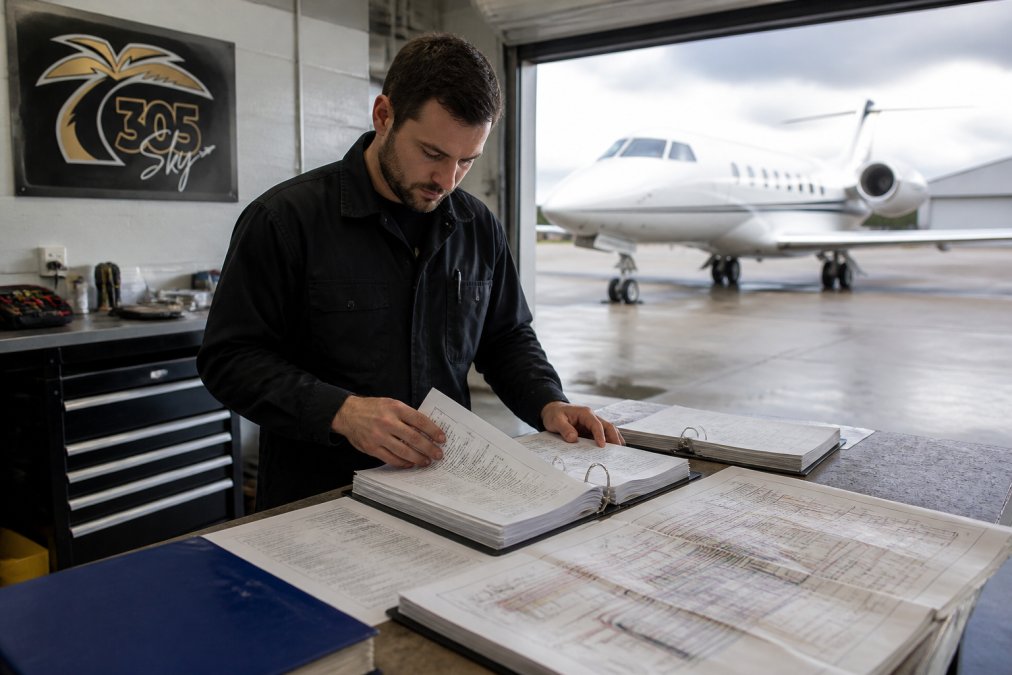
Aircraft Records and Logbooks
Your logbooks tell the installer what has already been done, and what was done poorly. Missing 337 forms, undocumented repairs, or an old STC that was never properly recorded can stall an upgrade before it begins. Pull the airframe and avionics logs, the weight and balance sheet, and any prior equipment lists. If your records live in a filing cabinet, digitize them. Shops that maintain secure digital record keeping can flag discrepancies early instead of mid-installation.
Choosing a Certified Avionics Shop
Look for a repair station with experience on your specific airframe. A shop that works on King Air and Citation panels daily will spot compatibility problems a general maintenance facility misses. Ask three questions: Who signs off the return to service? What does your quote include and exclude? How do you handle parts delays? The answers separate a real avionics shop from a parts swap.
Step 1: Assess Your Current Avionics Suite and Define Goals
Start with an honest inventory. List every unit in the panel, its age, its condition, and whether it still meets your mission. A turboprop flying single-pilot IFR has different needs than a jet flying international routes.
Define what you actually want the upgrade to accomplish. Faster routing? ADS-B compliance? Better situational awareness in weather? Write it down. Vague goals produce vague quotes.
Prioritizing System Upgrades: GPS/NAV/COM
Not every system needs replacing at once. A common approach is to sequence upgrades by regulatory urgency and operational payoff:
- ADS-B Out and transponder compliance first, since these affect where you can legally fly
- GPS navigator and WAAS capability next, because they unlock modern approaches
- NAV/COM and audio panel after that, improving workload and clarity
- Autopilot integration last, since it depends on the new navigation sources
This order keeps the aircraft flying while you spread the work across budget cycles.
Step 2: Understand the FAA Avionics Certification Process
The FAA avionics certification process determines how much paperwork, testing, and oversight your upgrade requires. Get this wrong and you can install perfectly good equipment illegally.
The FAA's guidance on aircraft alteration and repair draws the line between minor and major alterations. That line decides your entire approval path.
Minor vs. Major Alterations and STC Requirements
A minor alteration is a change that does not appreciably affect weight, balance, structural strength, performance, powerplant operation, flight characteristics, or other airworthiness qualities (faa.gov). Many simple replacements fall here, swapping a failed transponder for a like-for-like unit, for example.
A major alteration does affect those qualities, and it requires approved data. That usually means one of four paths:
- Supplemental Type Certificate (STC), the most common route for panel upgrades. An STC is issued to a specific equipment manufacturer and approved for installation on specific aircraft models. An AML-STC (Amended Model List) covers multiple airframes under one approval, which is why so many GPS navigator and ADS-B installations ride on the same STC paperwork.
- Field approval, a one-off approval from your local FAA Flight Standards District Office (FSDO). Useful when no STC exists for your airframe, but slower and dependent on inspector workload.
- Manufacturer's service document, a service bulletin or installation kit from the OEM that carries its own approved data.
- Parts Manufacturer Approval (PMA), for replacement parts that meet approved design and production standards.
The 337 Form and What It Actually Does
Any major alteration must be documented on FAA Form 337, "Major Repair and Alteration." The form records the alteration, the approved data used, and the return-to-service signature. A 337 that references the wrong STC number, or that is missing entirely, is the single most common paperwork defect found during a pre-buy inspection. If your aircraft has an avionics upgrade with no matching 337, expect a buyer's inspector to flag it.
Instructions for Continued Airworthiness (ICA)
Every STC installation comes with Instructions for Continued Airworthiness, the maintenance and inspection requirements the STC holder publishes for that installation. These ICAs must be added to your aircraft's maintenance program. Skipping this step means your next annual inspection may not cover the new equipment correctly, and your IA may not sign off the aircraft.
What to Verify Before Sign-Off
Before the shop returns your aircraft to service, confirm three things in writing: the 337 is completed and references the correct approved data, the ICAs have been added to your maintenance tracking, and the weight and balance revision reflects the new equipment. On a typical business jet panel upgrade, the net weight change is often small, but the arm and moment shift still has to be recalculated and recorded.
Step 3: Plan for Avionics Upgrade Downtime Estimation
Avionics upgrade downtime estimation is where most schedules fall apart. Owners plan for the install and forget the approval, parts, and testing time around it.
A realistic estimate accounts for four phases: parts procurement, panel fabrication, installation and wiring, and ground and flight testing. Wiring harness work and panel modification often take longer than the equipment swap itself.
Build in buffer. A shop that quotes a tight window with no slack is either very experienced on your airframe or setting you up for a delay.
| Phase | Typical Duration | What Drives It |
|---|---|---|
| Parts procurement | 1-4 weeks | Lead times, backorders |
| Panel fabrication | 3-7 days | Custom cutouts, labeling |
| Installation and wiring | 1-3 weeks | Harness complexity, access |
| Ground and flight testing | 2-5 days | Approval path, weather |
Step 4: Select the Right Avionics Suite for Your Aircraft
Match the suite to the airframe and the mission, not to the brochure. A glass cockpit retrofit that overwhelms a light single makes no sense; a minimal panel in a long-range jet wastes the aircraft's capability.
Modern avionics suites combine an EFIS (Electronic Flight Instrument System), a flight management system, and integrated primary flight display and multifunction displays. The value is integration: shared data, fewer boxes, and less cockpit clutter.
Best Avionics Upgrades for Cessna 172
For jets such as Citation, Challenger, Gulfstream, and Falcon, the calculus shifts. Integrated suites with advanced autopilot integration and data logging pay off because the aircraft flies complex, high-altitude routes where situational awareness matters most.
Step 5: Installation, Integration, and Post-Installation Training
Installation is the visible part. Integration is where the real work lives. New equipment must talk to the autopilot, the transponder, the audio panel, and the displays through the aircraft's system architecture. A clean wiring harness and correct software configuration decide whether the panel works as a system or as a pile of parts.
Integration Points That Cause Rework
The most common integration failures on business aircraft panels are predictable:
- Autopilot interface, a new GPS navigator that cannot feed the existing autopilot means either a new autopilot or a workaround.
Post-Installation Training: The Step Most Owners Skip
Documentation You Should Leave With
Common Mistakes to Avoid During Avionics Upgrades
Conclusion
Frequently Asked Questions
What are the FAA requirements for avionics upgrades in 2025?
The FAA requires that all avionics upgrades meet airworthiness standards under 14 CFR Part 43 and Part 91. For major alterations, you'll need either a Supplemental Type Certificate (STC) or a Form 337 field approval. ADS-B Out is mandatory in most U.S. airspace, and IFR certification requires that GPS navigators meet WAAS standards. Always work with a certified avionics shop to ensure full regulatory compliance and proper documentation.
How long does a typical avionics upgrade take for a private jet?
Downtime varies widely based on the scope. A simple transponder or audio panel swap can be completed in 1-2 days, while a full glass cockpit retrofit with autopilot integration may take 2-4 weeks. Factors include parts availability, wiring harness complexity, and shop workload. At 305 Sky, we provide a detailed downtime estimate upfront and offer mobile AOG support to minimize schedule impact.
Do I need a supplemental type certificate (STC) for my avionics upgrade?
Not always. Minor alterations that don't significantly change the aircraft's type design may only need a logbook entry. However, major alterations such as installing a new GPS navigator, EFIS, or autopilot typically require an STC or field approval. Your avionics technician will determine the correct path during the planning phase to keep your aircraft compliant and airworthy.
How do avionics upgrades affect the resale value of my aircraft?
Modern avionics can significantly boost resale value, especially for older jets like Challenger, Citation, or King Air models. Upgrades to ADS-B Out, WAAS GPS, and glass cockpit displays make your aircraft more attractive to buyers and can reduce their training and compliance costs. A well-documented panel upgrade with STCs often recoups a substantial portion of its cost at sale.