Table of Contents
- Why Buying a Used Aircraft Remotely Changes the Process
- Build Your Remote Buying Team Before You Start Looking
- Step 1: Verify the Aircraft's Paper Trail with a Maintenance Logbook Audit
- Step 2: Coordinate a Professional On-Site Pre-Buy Inspection
- Step 3: Run a Title Search and Check FAA Records
- Step 4: Manage the Remote Test Flight and Ferry Logistics
- Step 5: Secure the Sale with Escrow and a Watertight Purchase Agreement
- Using AOG Support for Pre-Purchase Inspections
- Frequently Asked Questions
Last Updated: September 4, 2026
Why Buying a Used Aircraft Remotely Changes the Process
Buying a used aircraft remotely is often the standard for buyers in South Florida and across the United States. When the right Gulfstream or Citation is listed by a broker in another state, you cannot simply drive over for a look. A remote purchase demands a disciplined, documentation-first approach where verification replaces physical presence. At 305 Sky, our team in Fort Lauderdale has guided buyers through dozens of these transactions, and the process hinges on one principle: trust the paper trail more than your instincts.
Build Your Remote Buying Team Before You Start Looking
Assembling the right team is the single most important step for anyone buying a used aircraft remotely. You need a licensed aircraft broker or buyer's agent, an aviation attorney familiar with FAA regulations, an escrow service, and an independent A&P mechanic at the aircraft's current location.
Your buyer's agent handles negotiation and logistics, the attorney reviews the purchase agreement for liability traps, the escrow service protects your deposit, and the local mechanic performs the physical inspection you cannot do yourself. Without them, you are negotiating against a seller who has full visibility of the asset while you work from photographs and logbook scans.
Step 1: Verify the Aircraft's Paper Trail with a Maintenance Logbook Audit
A maintenance logbook audit is the foundation of any remote aircraft purchase. The logbooks tell the complete story of the airframe, engines, and components, revealing damage history, compliance gaps, and upcoming maintenance events. Request digital scans of all logbooks before you commit to travel or pay for an inspection.
Work through the records with a simple system: check that every airworthiness directive (AD) has a corresponding logbook entry showing compliance; verify total time in service and time since major overhaul for each engine against the airframe logs; look for any mention of a propeller strike, hard landing, or corrosion findings; and confirm the annual inspection is current and signed off by an appropriately rated mechanic. A common mistake is accepting a seller's summary of compliance instead of reviewing the actual entries. If a logbook entry is missing or illegible, ask for a photo of the original page before moving forward.
Step 2: Coordinate a Professional On-Site Pre-Buy Inspection
An on-site pre-buy inspection performed by an independent mechanic is non-negotiable when buying a used aircraft remotely. This inspection is your only physical verification that the aircraft matches its documentation. The mechanic should be someone with no financial interest in the sale, ideally with type-specific experience on the model you are purchasing.
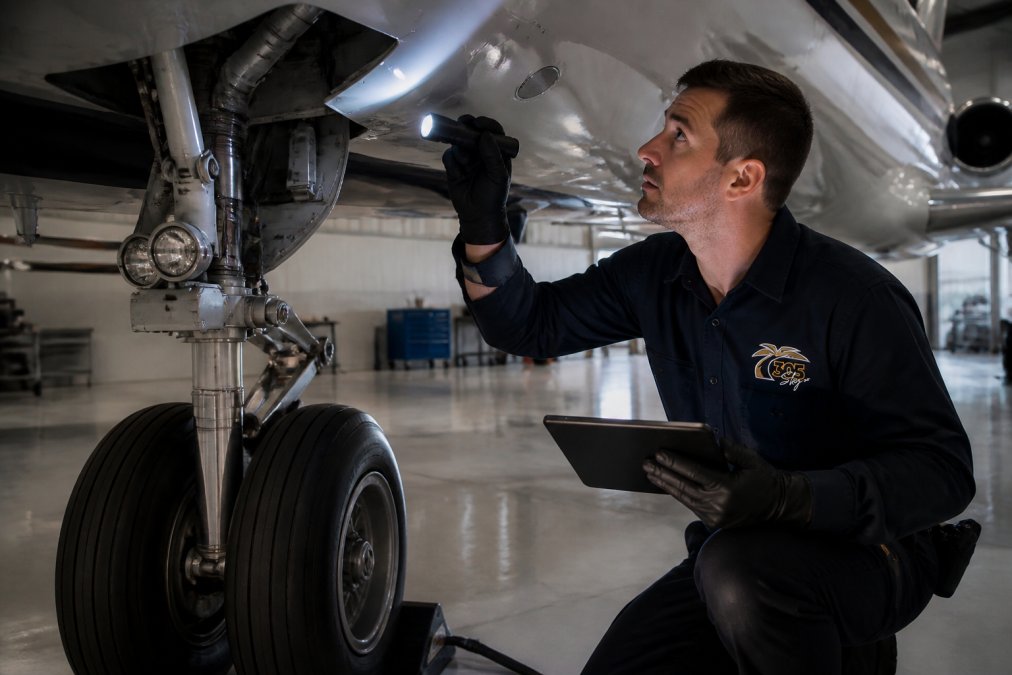
The pre-buy is not the same as an annual inspection. It is a focused evaluation of the aircraft's condition relative to the seller's claims and the purchase price. Budget for the mechanic to spend a full day on the aircraft, and expect a written report with photographs of any discrepancies found.
Managing the Remote Inspection Workflow
Because you cannot be in the hangar, your process must be built around verification and clear communication.
1. Vet the Mechanic Thoroughly: Do not accept the seller's suggestion without scrutiny. Ask for the mechanic's A&P certificate number and verify it with the FAA. Request references from other aircraft owners and confirm they have liability insurance. Ask if they have worked on your specific aircraft model (e.g., a Challenger 604 or a Citation Excel) in the last 12 months. A mechanic who primarily works on piston singles is not the right choice for a turbine pre-buy.
2. Use a Live Video Walk-Through: Before the mechanic arrives, schedule a live video call with the seller or the aircraft's current manager. Ask them to slowly pan the camera across every exterior surface, the entire interior, and into the baggage compartment and avionics bay. This is not a substitute for the mechanic's inspection, but it gives you a real-time, unedited view of the aircraft's condition. Request close-ups of any areas that look worn, stained, or recently repaired.
3. Require a Photo-Documented Report: Instruct the mechanic that your final report must include timestamped, high-resolution photographs of every discrepancy they find. A written note saying "corrosion found on flap track" is not sufficient. For critical findings, ask the mechanic to send a short video explaining what they are seeing. This documentation becomes a negotiating tool if you need to request a price adjustment or require the seller to fix a discrepancy before closing.
4. Schedule a Debrief Call: After the mechanic has completed their inspection and sent you the report, schedule a phone or video call to walk through their findings. This is your opportunity to ask clarifying questions. For example, if the report notes a hydraulic fluid leak, ask the mechanic to describe the source, the likely cause, and the estimated repair time.
Key Items on an Aircraft Pre-Buy Inspection Checklist
A thorough aircraft pre-buy inspection checklist covers the airframe, engines, systems, and interior. The mechanic should check for corrosion in hidden areas like the wing spar attachments and belly skin, verify the avionics suite matches the equipment list, and review the emergency equipment and its expiration dates. Engine condition is judged by borescope inspection, oil analysis, and reviewing trend monitoring data.
Step 3: Run a Title Search and Check FAA Records
A title search protects you from purchasing an aircraft with undisclosed liens or ownership disputes. The FAA maintains the official civil aircraft registry, and a title search company can pull the complete chain of title, recorded liens, and any pending legal actions against the airframe. This step is often rushed, but a clean title is as important as a clean logbook.
The FAA Aircraft Registry provides public access to registration records, and the FAA Civil Aviation Registry documentation outlines how to request a title search. A professional search goes beyond the basic registration to check for unreleased security agreements and compare the airframe serial number against stolen aircraft databases. Do not rely on the seller's representation that the title is clear; verify it independently through the official channels.
Step 4: Manage the Remote Test Flight and Ferry Logistics
The test flight presents a unique challenge when you are not physically present. If you cannot travel to the aircraft, arrange for a trusted pilot or your buyer's agent to fly it on your behalf. The test flight should evaluate engine performance, avionics function, autopilot tracking, and pressurization systems at altitude.
Ferry logistics require planning for insurance coverage, flight crew, and any temporary registration documents. If the aircraft is being flown to Fort Lauderdale or another Florida destination for its post-purchase annual inspection, coordinate the timing with the maintenance facility in advance. A ferry flight is not the time to discover an unairworthy discrepancy that the pre-buy missed.
Step 5: Secure the Sale with Escrow and a Watertight Purchase Agreement
Escrow services protect both buyer and seller by holding funds until all conditions of the sale are met. For a remote transaction, escrow is essential because you cannot hand over a cashier's check in person. The purchase agreement should include contingencies for the pre-buy inspection results, the title search, and the test flight.
The agreement must also address what happens if discrepancies are found. Common terms include requiring the seller to fix specific items, adjusting the purchase price, or allowing the buyer to walk away with the deposit returned. Sales tax liability is a state-specific matter, and Florida buyers should understand their obligations before the closing. Work with your attorney to ensure the bill of sale and closing statement are executed correctly and that the FAA registration transfer is filed promptly after delivery.
The Remote Closing and Escrow Security Process
The mechanics of a remote closing present unique fraud and logistical risks that in-person transactions do not. Here is how to manage the process securely from afar.
1. Use a Reputable Escrow Agent: Your escrow agent is the financial linchpin of the deal. Do not use an agent recommended solely by the seller. Your attorney or buyer's agent should have established relationships with aviation-specific escrow companies. Verify the escrow company's credentials independently. Scammers often create fake escrow websites that look legitimate. Always initiate contact with the escrow company using a phone number you have independently verified, never a link or number provided in an email from the seller.
2. Secure Your Fund Transfer: The most vulnerable point in a remote transaction is the wire transfer. Criminals intercept legitimate wiring instructions and replace them with their own. Before sending any funds, confirm the escrow account details via a phone call to a known representative of the escrow company. Do not rely on email confirmation. If you receive a last-minute change to wiring instructions, assume it is fraud and stop all communication until you have verified the change through a secondary channel.
3. Understand Florida's Tax and Registration Nuances: For buyers bringing an aircraft into Florida, the transaction has specific state-level implications. Florida imposes a sales tax on the purchase of aircraft, but there are important nuances (floridarevenue.com). A common strategy is to use a Florida Limited Liability Company (LLC) to hold title, which can simplify tax compliance and provide liability protection. The taxability of the transaction can depend on where the aircraft is delivered and how it is used. Work with a Florida aviation attorney to structure the transaction correctly, including the applicability of the sales tax, the use of a resale certificate if the aircraft is being purchased for charter operations, and the proper registration with the Florida Department of Revenue.
4. Execute Documents with a Remote Notary: The bill of sale and other closing documents will require notarization. In a remote transaction, you can use a remote online notary (RON) service, which is legally recognized in Florida. This allows you to sign and notarize documents electronically from anywhere. Your attorney can coordinate this process, ensuring all signatures are witnessed and the documents are legally binding.
5. Plan for the FAA Registration Transfer: After closing, the bill of sale must be filed with the FAA Civil Aviation Registry in Oklahoma City to transfer the registration. This is a paper-based process. Your attorney or escrow agent will typically handle this filing. For a remote purchase, confirm who is responsible for this filing and the timeline for doing so. A delay in filing can affect your ability to operate the aircraft and secure insurance.
Using AOG Support for Pre-Purchase Inspections
AOG support can accelerate the pre-purchase inspection process when you are working against a tight closing timeline. AOG service, which stands for "aircraft on ground," provides priority response for aircraft that need immediate attention. Many buyers use it for pre-purchase inspections to get the aircraft back in service quickly after purchase.
If you are buying a Challenger or King Air that needs to enter service immediately after closing, having a maintenance provider on standby in your home region shortens the downtime. The inspection findings can be sent ahead to the maintenance team, allowing them to order parts and prepare for the work before the aircraft arrives. This coordination reduces the total time the aircraft spends on the ground.
Frequently Asked Questions
What are the most critical steps in a remote aircraft pre-buy inspection?
When buying a used aircraft remotely, the pre-buy inspection is non-negotiable. You need a qualified, independent mechanic to perform a physical inspection, but the process starts before they arrive. First, you must complete a thorough aircraft maintenance logbook audit to review AD compliance and major repairs. Second, confirm the mechanic is authorized to fly the aircraft for a test flight. Finally, have the inspector send you real-time photos and detailed reports so you can make an informed decision from afar.
How do I verify the maintenance history of an aircraft I cannot see in person?
Verifying maintenance history remotely means requesting digital copies of all logbooks before you commit. Look for consistent, complete logbook entries that show no gaps in annual inspections or required checks. Pay special attention to the engine logbooks for time since major overhaul and any signs of a propeller strike or sudden stoppage. Cross-reference the logbook entries with FAA records to ensure the airframe, engine, and propeller serial numbers match the registration documents.
What role does a local maintenance facility play in a remote aircraft purchase?
A local maintenance facility is your eyes and ears on the ground. They perform the critical pre-buy inspection and can check for corrosion, hidden damage, and system discrepancies that photos won't reveal. If you plan to fly the aircraft back to South Florida, having a facility like 305 Sky ready to handle the post-purchase annual inspection or any squawks found on the ferry flight ensures a smooth transition. They can also advise on local registration and sales tax implications.
How can I ensure FAA compliance when buying an aircraft remotely?
Ensuring FAA compliance starts with a title search through the FAA Civil Aviation Registry to confirm the seller is the legal owner and to identify any liens or claims against the aircraft. Verify that all airworthiness directives are complied with and properly documented in the logbooks. Before you wire any money, make sure the bill of sale and aircraft registration application are completed correctly. Using a licensed escrow service adds a layer of security to the transaction.
This article was written using GrandRanker