Table of Contents
- What You Can and Cannot Do: The FAA's Rules on Owner-Performed Preventive Maintenance
- 14 CFR Part 43 Appendix A Preventive Maintenance List: What Tasks Are Authorized
- How to Document Preventive Maintenance in Aircraft Records
- Liability, Insurance, and Safety Considerations
- Benefits of Professional Aircraft Maintenance Management
- When to Call a Certified Mechanic: Maintenance vs. Preventive Maintenance
- Frequently Asked Questions
Last Updated: September 1, 2026
What You Can and Cannot Do: The FAA's Rules on Owner-Performed Preventive Maintenance
The FAA permits private aircraft owners to conduct specific preventive maintenance tasks under 14 CFR Part 43 Appendix A, but only when strict regulatory conditions are met. Understanding these boundaries is essential, step outside them, and you risk airworthiness violations, insurance complications, and potential liability.
At 305 Sky, we work with aircraft owners across South Florida who want to maximize their involvement in maintenance decisions while staying fully compliant. The distinction between what you can legally perform and what requires a certified A&P mechanic reflects the FAA's assessment of safety risk and technical complexity.
Private Pilot Certificate Requirements
To perform preventive maintenance on your own aircraft, you must hold at least a private pilot certificate. Your certificate must be current and valid, an expired certificate doesn't qualify you, even with thousands of flight hours. Verify your certificate status through the FAA's Airmen Certification database before beginning any work.
Aircraft Ownership and Registration
You must be the registered owner of the aircraft listed on the Certificate of Aircraft Registration. If the aircraft is owned by a partnership, corporation, or trust, owner-performed maintenance may be prohibited depending on how the business operates the aircraft. The aircraft must also be maintained in accordance with its type certificate and any applicable airworthiness directives.
14 CFR Part 43 Appendix A Preventive Maintenance List: What Tasks Are Authorized
14 CFR Part 43 Appendix A defines exactly which tasks fall into the preventive maintenance category. Preventive maintenance is defined in 14 CFR Part 1 as "simple or minor preservation operations and the replacement of small standard parts not involving complex assembly operations." If a task isn't on the list or requires special tools, technical manuals beyond the manufacturer's maintenance manual, or judgment calls about airworthiness, you cannot legally perform it yourself.
Common Authorized Tasks You Can Perform
Replacing engine oil and oil filters is one of the most straightforward preventive maintenance tasks. Use the correct oil grade and capacity specified in your aircraft's maintenance manual and document the work in the aircraft logbook with the date, description, and your signature.
Replacing air filters, servicing landing gear components such as lubricating wheel bearings, cleaning and replacing spark plugs with identical types, and replacing hoses, belts, and fasteners (provided they're standard parts and replacement doesn't require system adjustment) are all authorized. Inspecting and servicing batteries, including adding distilled water to lead-acid batteries or replacing them with identical types, is also permitted.
Washing and waxing the exterior, including cleaning windows, is preventive maintenance under the "preservation operations" category.
Tasks That Require an A&P Mechanic
Any work involving engine teardown, overhaul, or internal inspection requires an A&P. Troubleshooting electrical, fuel, or hydraulic system problems is maintenance work, if you notice a fuel pump isn't functioning or an electrical system is intermittent, you must ground the aircraft and call an A&P. Preventive maintenance is replacement of known-good components; troubleshooting is maintenance.
Structural repairs, avionics installation or modification, any work requiring weight and balance recalculation, and propeller maintenance beyond simple cleaning and inspection all require an A&P mechanic.
How to Document Preventive Maintenance in Aircraft Records
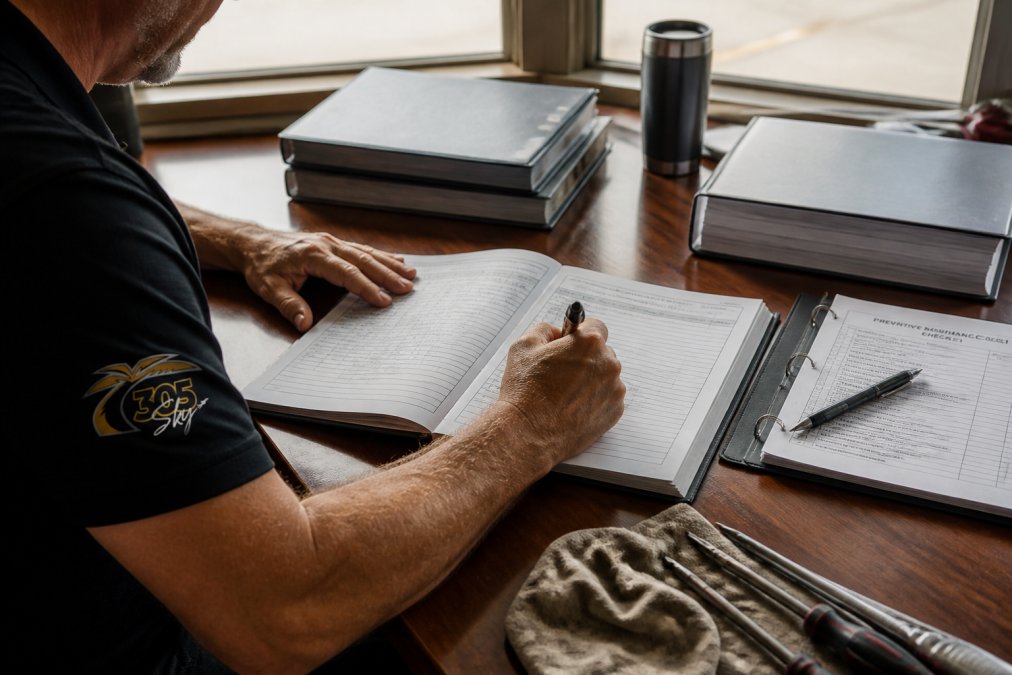
Documentation is a legal requirement under 14 CFR Part 43. Every preventive maintenance task must be recorded in the aircraft's logbook. Proper documentation protects you legally, maintains the aircraft's airworthiness record, and is essential during FAA inspections or when selling the aircraft.
Logbook Entry Requirements and Format
Each logbook entry must include the date in month-day-year format, the aircraft's total time in service (hours and minutes), a clear description of the work performed, your signature as pilot-in-command with printed name and certificate number, and a statement that the work was performed in accordance with 14 CFR Part 43.
A basic template might look like this:
Date: [MM/DD/YYYY]
Aircraft Total Time: [Hours:Minutes]
Description of Work: Replaced engine oil and oil filter with [grade/type]. Oil capacity: [amount]. Filter part number: [number]. Aircraft serviced in accordance with manufacturer's maintenance manual.
Pilot-in-Command Signature: ________________
Printed Name & Certificate #: ________________
Record-Keeping Best Practices
Keep receipts for all parts and materials purchased for maintenance work. Photograph the work before, during, and after completion. Maintain a separate maintenance log tracking all preventive maintenance performed and review the aircraft's manufacturer maintenance manual regularly to stay ahead of recommended maintenance intervals. Store all logbook entries, receipts, and maintenance records in a fireproof container or digital archive.
Liability, Insurance, and Safety Considerations
When you sign a logbook entry certifying that you performed preventive maintenance, you're making a legal statement that the work was done properly and in accordance with FAA regulations. If that work is later found to be deficient, you could be held liable for any resulting damage or injury.
Your aircraft insurance policy may have specific provisions regarding owner-performed maintenance. Some policies require that all maintenance be performed by certified technicians. Before performing any preventive maintenance, review your insurance policy or contact your insurance agent to confirm that owner-performed maintenance is covered.
Ensure you have the correct technical manual for your aircraft. If you're uncertain about any aspect of a preventive maintenance task, stop and contact an A&P mechanic. For aircraft owners in the Fort Lauderdale and South Florida area, 305 Sky is available 24/7 for emergency questions and can provide guidance on maintenance procedures or perform the work if you prefer professional handling.
Benefits of Professional Aircraft Maintenance Management
While owner-performed preventive maintenance is permitted, there are compelling reasons to consider professional management for all or most of your aircraft's maintenance needs. A certified A&P mechanic brings specialized training, diagnostic tools, and access to technical resources that exceed what most owners can provide. Professional maintenance creates a defensible record, if your aircraft is involved in an incident or accident, records maintained by certified technicians carry more weight than owner-performed maintenance in legal proceedings.
For aircraft owners in South Florida managing multiple aircraft or operating under corporate structures, professional maintenance becomes essential. 305 Sky provides comprehensive maintenance management for aircraft owners across South Florida, from routine inspections and oil changes to emergency AOG response. With 55 years of combined aviation experience and four strategically located facilities, we're equipped to manage your aircraft's maintenance needs with transparency and professionalism.
When to Call a Certified Mechanic: Maintenance vs. Preventive Maintenance
The distinction between preventive maintenance and maintenance is the boundary between what you can legally perform and what requires an A&P. Preventive maintenance is "simple or minor preservation operations and the replacement of small standard parts not involving complex assembly operations." Maintenance includes any work that goes beyond simple replacement, including troubleshooting, repair, modification, overhaul, or inspection of internal components.
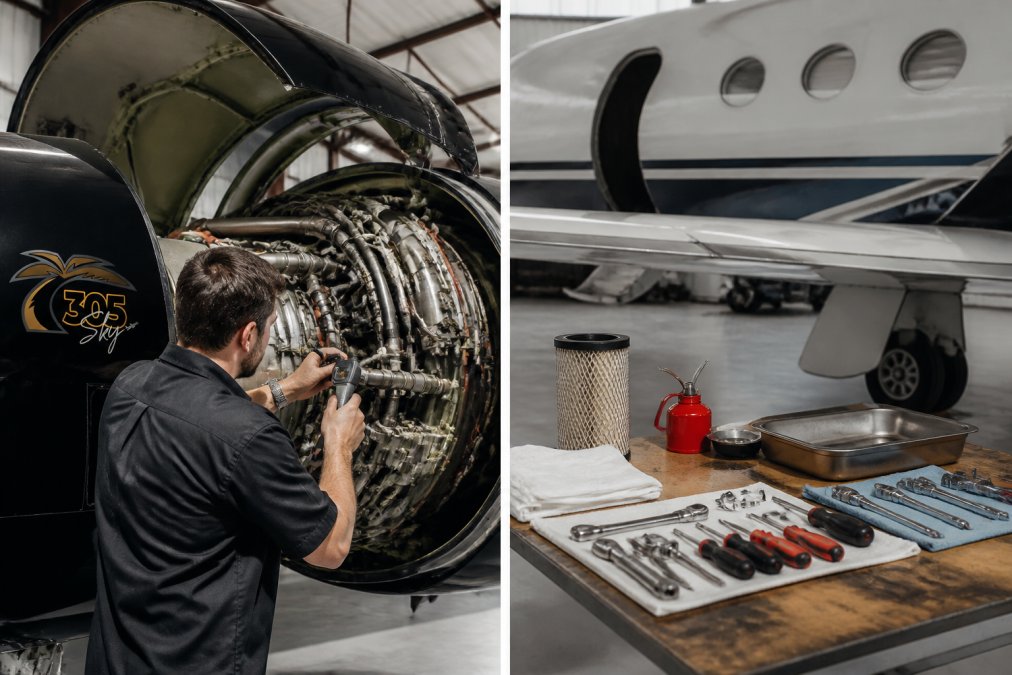
For example: replacing a magneto is maintenance because it's a complex component requiring specialized knowledge and tools; replacing a spark plug is preventive maintenance because it's a standard part with straightforward replacement. Servicing a brake assembly by lubricating components is preventive maintenance, while repairing a brake that's not functioning properly is maintenance.
You must contact an A&P mechanic if an aircraft system is not functioning as expected, you notice unusual sounds, vibrations, smells, or other abnormal conditions, the aircraft has failed an annual inspection, you're uncertain whether a task qualifies as preventive maintenance, the task requires special tools or technical manuals beyond the manufacturer's standard maintenance manual, or the work involves any aircraft system you don't fully understand.
For aircraft owners in the Fort Lauderdale area, 305 Sky provides 24/7 emergency AOG support with a mobile maintenance van. Our team of certified technicians has the expertise and equipment to handle everything from routine maintenance to complex system repairs.
The decision to perform preventive maintenance on your own aircraft must be made within the legal framework the FAA has established. You have the authority to perform specific, simple tasks listed in 14 CFR Part 43 Appendix A, and many aircraft owners find value in staying hands-on with their aircraft's care. However, respecting the boundaries between preventive maintenance and maintenance work is essential for safety, compliance, and liability protection.
If you're uncertain about any maintenance task or need professional guidance, 305 Sky is here to help. Our transparent, family-oriented approach means you'll always know exactly what work is being performed, why it's necessary, and how it affects your aircraft's airworthiness and compliance. Contact us for a consultation or to discuss your aircraft's maintenance needs. With 55 years of combined aviation experience and 24/7 emergency response, we're your trusted partner for comprehensive aircraft maintenance and management across South Florida.
| Preventive Maintenance Task | Pilot Certification Required | Documentation Required | A&P Mechanic Needed |
|---|---|---|---|
| Oil and filter replacement | Private pilot minimum | Logbook entry with date, total time, parts used, signature | No |
| Spark plug cleaning/replacement | Private pilot minimum | Logbook entry with date, total time, parts used, signature | No |
| Air filter replacement | Private pilot minimum | Logbook entry with date, total time, signature | No |
| Exterior washing and waxing | Private pilot minimum | Logbook entry recommended | No |
| Landing gear lubrication | Private pilot minimum | Logbook entry with date, total time, signature | No |
| Engine troubleshooting | Private pilot minimum | N/A, work must stop | Yes |
| Magneto repair or replacement | Private pilot minimum | N/A, work must stop | Yes |
| Structural repair | Private pilot minimum | N/A, work must stop | Yes |
| Avionics installation or modification | Private pilot minimum | N/A, work must stop | Yes |
| Propeller overhaul | Private pilot minimum | N/A, work must stop | Yes |
According to FAA regulations on aircraft maintenance, 14 CFR Part 43 Appendix A defines the specific tasks that qualify as owner-performed preventive maintenance. The FAA maintains this list to ensure that aircraft remain airworthy while allowing owners to participate in routine care.
Research from AOPA's guidance on owner-performed maintenance emphasizes that proper documentation is the foundation of compliance. Logbook entries must be detailed, accurate, and signed by the pilot-in-command.
The National Transportation Safety Board's accident investigation reports frequently cite maintenance-related factors in aircraft accidents. Many involve improper maintenance procedures or inadequate documentation. Staying within the scope of preventive maintenance and maintaining clear records prevents these tragic outcomes.
Frequently Asked Questions
Q: Who can legally perform preventive maintenance on an aircraft under FAA rules?
A: Only the aircraft owner or operator holding a private pilot certificate can perform preventive maintenance on their own aircraft under 14 CFR Part 43. The aircraft must be non-commercial (Part 91). You cannot delegate this work to someone else unless they meet the same requirements. A&P mechanics are always authorized, but owner-performed maintenance is limited to the specific tasks listed in 14 CFR Part 43 Appendix A.
Q: What are the specific preventive maintenance tasks listed in 14 CFR Part 43 Appendix A?
A: Appendix A authorizes owner-operators to perform tasks like replacing spark plugs, air filters, and oil filters; cleaning fuel strainers; replacing light bulbs; inspecting brakes and tires; checking fluid levels; and applying preservatives. Each task has strict limitations, for example, you can replace certain hoses but only with identical replacements. Always reference the current FAA regulation to confirm which tasks apply to your aircraft model.
Q: Do I need to make a logbook entry if I perform preventive maintenance myself?
A: Yes. Federal Aviation Regulations require you to document all preventive maintenance in the aircraft's logbook. Your entry must include the date, description of work performed, your signature, and your pilot certificate number. The logbook becomes part of the aircraft's permanent airworthiness record and is required for resale, insurance claims, and regulatory inspections. Poor documentation can jeopardize your aircraft's airworthiness certificate and create liability issues if a problem arises later.
Q: What are the main risks of performing my own preventive maintenance instead of hiring a professional?
A: Owner-performed maintenance carries liability exposure if something goes wrong, improper installation or missed issues can damage the aircraft or cause accidents. You lose the benefit of a certified mechanic's broader expertise and diagnostic tools. Insurance may not cover damage from improperly executed maintenance. Additionally, resale value can suffer if buyers see inconsistent maintenance records. Professional aircraft maintenance management ensures compliance, catches hidden problems, and protects your investment and liability exposure.
This article was written using GrandRanker