Table of Contents
- What Is an FAA Conformity Inspection and Why It Matters
- Step 1: Gather and Organize Your Aircraft Maintenance Records
- Understanding FAA Form 8100-1 Requirements for Your Inspection
- Step 2: Review Airworthiness Directives and Supplemental Type Certificates
- Digital vs. Paper: Aircraft Maintenance Records Digital Management
- Aircraft Conformity Inspection Timeline: What to Expect
- Step 3: Conduct a Pre-Inspection Checklist and Schedule Your Conformity Inspection
- Common Pitfalls to Avoid During FAA Conformity Inspection
Last Updated: August 25, 2026
What Is an FAA Conformity Inspection and Why It Matters
An FAA conformity inspection is a comprehensive regulatory examination that verifies an aircraft meets all applicable airworthiness standards before it can be legally operated (faa.gov). This inspection confirms that your aircraft complies with its Type Certificate Data Sheet (TCDS), all Airworthiness Directives (ADs), and any Supplemental Type Certificates (STCs) that have been installed.
Without a successful conformity inspection, you cannot legally fly. Whether you're purchasing a used aircraft, restoring one, or operating after significant modifications, this inspection stands between you and regulatory compliance. The inspection typically involves a Designated Airworthiness Representative (DAR) or FAA inspector reviewing your maintenance records, examining the aircraft physically, and verifying that every component, system, and modification meets federal requirements. A conformity inspection catches problems before they become safety issues, a missing Airworthiness Directive, an improperly installed modification, or incomplete maintenance documentation creates both regulatory and operational risk.
Step 1: Gather and Organize Your Aircraft Maintenance Records
Your maintenance records are the foundation of a successful conformity inspection. The FAA examines these documents more closely than any other aspect of your aircraft. Every maintenance action, inspection, repair, and modification must be documented with dates, technician signatures, and part numbers where applicable.
Collect every piece of maintenance documentation: logbooks, work orders, invoices, receipts, and service bulletins. If you're purchasing an aircraft, request the complete maintenance history from the seller. For aircraft you already own, compile records from every maintenance provider you've used.
Organization matters significantly. Create a logical system organized by date, maintenance category, or inspection type. Use a table of contents if your records are substantial. Check for gaps, if there's a period where no maintenance was logged, you'll need to account for that. If maintenance was actually done but never documented, work with a maintenance facility to reconstruct that history with supporting evidence.
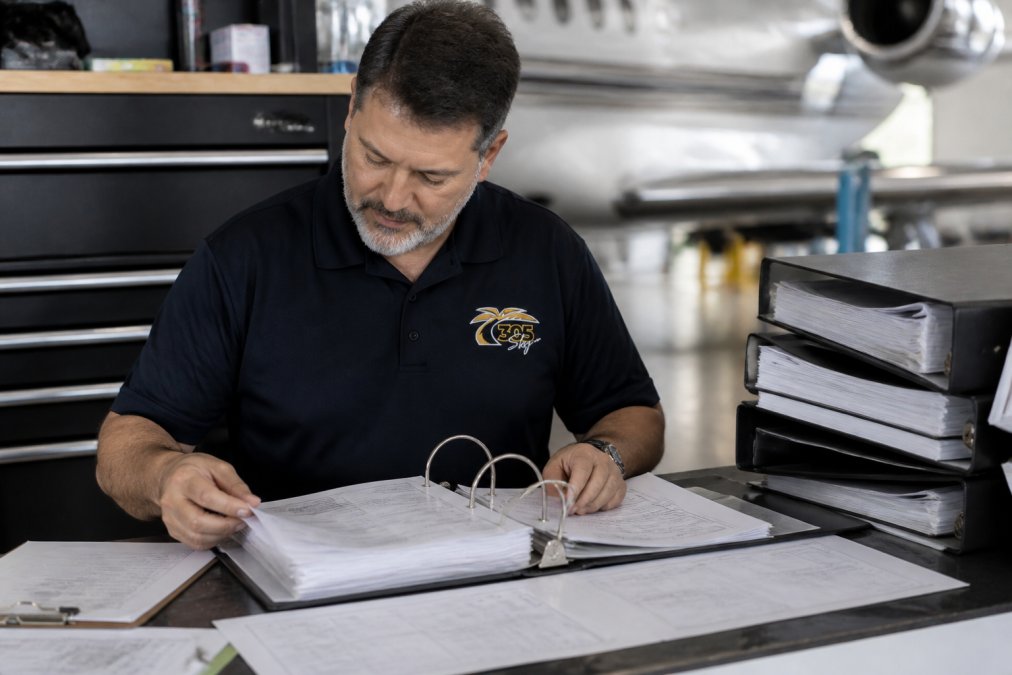
Pay special attention to compliance documentation. Every Airworthiness Directive that applies to your aircraft must have a corresponding maintenance entry showing when it was completed, by whom, and what the outcome was (faa.gov). If an AD hasn't been completed, you'll need to complete it and document it before your conformity inspection.
Understanding FAA Form 8100-1 Requirements for Your Inspection
FAA Form 8100-1 is the "Statement of Conformity" document that officially certifies your aircraft meets airworthiness requirements (faa.gov). The form requires the DAR or inspector to verify that your aircraft conforms to the type design, that all applicable ADs have been complied with, and that the aircraft is in a condition for safe operation.
You'll need to provide evidence for each of these elements. For type conformity, provide your original Type Certificate Data Sheet and documentation showing that your aircraft matches the specifications. Any deviations, modifications, upgrades, or substitutions must be documented through an STC or a Field Approval.
For AD compliance, compile a complete list of every AD that applies to your aircraft model from the FAA's AD database. Cross-reference this list against your maintenance records to confirm each one has been completed. A single missed AD can fail your conformity inspection.
The form also requires a statement that the aircraft is in condition for safe operation. If you have open maintenance issues or deferred maintenance items, those need to be resolved before the inspection.
Step 2: Review Airworthiness Directives and Supplemental Type Certificates
Airworthiness Directives are mandatory safety requirements issued by the FAA. Every AD that applies to your aircraft model must be completed and documented.
Identify which ADs apply to your aircraft using your aircraft's make, model, serial number, and engine type. The FAA's online AD database allows you to search by these parameters. Go through your maintenance records and verify that each AD has been completed, noting the AD number, completion date, and maintenance entry documenting the work.
If you find an AD that hasn't been completed, complete it before your conformity inspection. Deferrals are rare and typically require special justification.
Supplemental Type Certificates represent modifications or upgrades to your aircraft, avionics installations, interior modifications, engine upgrades, or structural changes. Each STC must be documented and included in your conformity inspection file. Organize STCs clearly with the STC number, installation date, and maintenance records showing proper installation. If an STC has associated recurring inspections or maintenance requirements, confirm those have been performed.
Digital vs. Paper: Aircraft Maintenance Records Digital Management
Paper records are traditional and familiar, but vulnerable to loss or damage. Digital records offer searchability, backup protection, and easier organization. You can scan existing paper records and store them in a cloud-based system, making them accessible and protected against loss.
The FAA accepts both formats, but digital copies of your records are invaluable during a conformity inspection. A DAR can search a digital database far faster than flipping through physical pages. The hybrid approach works well: maintain your original paper logbooks as the official record while creating digital scans organized in a searchable system.
For new maintenance going forward, consider using a digital maintenance tracking system that logs each action, attaches photos or notes, and creates automatic compliance reports.
Aircraft Conformity Inspection Timeline: What to Expect
Understanding the timeline helps you plan your inspection and avoid delays.
Pre-inspection coordination (1-2 weeks): Contact the DAR or your local Manufacturing Inspection District Office to schedule the inspection. Provide preliminary information about your aircraft and your current maintenance status.
Documentation review (3-5 days before inspection): Submit your maintenance records, Type Certificate Data Sheet, and any STCs or Field Approvals. The DAR will review these documents before the physical inspection to identify any missing items.
Physical inspection (1-3 days): The DAR examines the aircraft, verifies that modifications match their documentation, and confirms the aircraft's condition aligns with its maintenance history.
Post-inspection review (3-5 business days): The DAR completes their findings and issues either a Statement of Conformity or a list of items needing correction.
Plan for 2-4 weeks from initial scheduling to final approval. Beginning your preparation 6-8 weeks before you need the inspection complete gives you time to gather records, complete outstanding ADs, and address documentation gaps.
Step 3: Conduct a Pre-Inspection Checklist and Schedule Your Conformity Inspection
Before contacting the DAR, conduct your own pre-inspection checklist to identify and resolve issues independently.
Create a checklist covering these core areas:
Maintenance records completeness: Verify that every maintenance action has been documented. Check for gaps in the record timeline.
Airworthiness Directive compliance: Cross-reference your maintenance records against the complete FAA AD list for your aircraft. Confirm every applicable AD has been completed and documented.
Type Certificate conformity: Review your Type Certificate Data Sheet and verify your aircraft matches the specifications. Document any deviations and confirm they're covered by an STC or Field Approval.
Supplemental Type Certificate verification: List every STC installed on your aircraft. Confirm installation documentation exists and any recurring maintenance has been performed.
Outstanding maintenance items: Identify any deferred maintenance or unresolved issues and create a plan to complete them before your inspection.

Once you've resolved identified issues, contact your local Manufacturing Inspection District Office or a Designated Airworthiness Representative to schedule the inspection. Have your aircraft information ready: make, model, serial number, engine type, and total airframe hours. Provide preliminary information about the reason for your inspection and schedule during a time when your aircraft is available and your records are organized.
Common Pitfalls to Avoid During FAA Conformity Inspection
Incomplete Airworthiness Directive documentation is the most frequent issue. Verify every single AD in writing before your inspection.
Mismatched modifications occur when an STC was installed but the documentation doesn't clearly show it was installed according to STC specifications. Ensure your modification documentation is clear and complete.
Missing maintenance records are problematic, especially for older aircraft. Work with your maintenance provider to reconstruct history with supporting evidence before your inspection.
Unresolved maintenance deferrals can block conformity approval. Resolve all open maintenance items before your inspection.
Incorrect Type Certificate Data Sheet reference happens when owners use an outdated TCDS. Verify you're using the current TCDS for your specific aircraft model and serial number.
Poor record organization slows the process significantly. Organize your records logically before submission.
Scheduling too quickly without adequate preparation is a common mistake. Allow time for thorough preparation. A well-prepared inspection scheduled several weeks out is far more likely to succeed than a rushed inspection.
| Preparation Phase | Timeline | Key Actions |
|---|---|---|
| Initial Planning | 6-8 weeks before | Gather records, identify ADs, list modifications |
| Pre-Inspection Review | 3-4 weeks before | Complete outstanding ADs, organize documentation |
| DAR Coordination | 2-3 weeks before | Contact DAR, submit preliminary records |
| Final Verification | 1 week before | Conduct your own checklist, resolve final gaps |
| Inspection & Follow-up | Inspection week + 1 week | Physical inspection, address any findings |
Preparing for an FAA conformity inspection requires organization, documentation accuracy, and a clear understanding of regulatory requirements. Your maintenance records, Airworthiness Directive compliance, and modification documentation form the foundation of your inspection approval.
At 305 Sky, we can assist aircraft owners with their conformity inspection preparation. Whether you're preparing for a purchase inspection, a restoration conformity check, or compliance verification after modifications, we're here to help ensure your aircraft meets every regulatory requirement. Get a quote and let our experienced team help you prepare with confidence and transparency.
Frequently Asked Questions
What documents are required for an FAA conformity inspection?
Your aircraft must have current maintenance records, the Type Certificate Data Sheet (TCDS), evidence of all Airworthiness Directive (AD) compliance, records of any Supplemental Type Certificates (STC) or modifications, FAA Form 8100-1 (or equivalent Statement of Conformity), and a maintenance logbook showing routine service history. The Designated Airworthiness Representative will verify these during the inspection. Having everything organized digitally or in clear paper format speeds up the process significantly.
How long does an FAA conformity inspection typically take?
The aircraft conformity inspection timeline varies based on aircraft complexity and documentation completeness. A straightforward inspection may take 2-4 hours, while complex aircraft or those with incomplete records can require 1-2 days. Scheduling is often the longest part, expect 2-6 weeks to arrange an appointment with your local Flight Standards District Office or a Designated Airworthiness Representative. Having organized records ready can help reduce inspection time.
What's the difference between a conformity inspection and an annual inspection?
A conformity inspection verifies that your aircraft matches its Type Certificate specifications and complies with all applicable regulations, it's focused on regulatory compliance and configuration. An annual inspection is a detailed mechanical and airworthiness check performed by a certified mechanic to ensure the aircraft is safe to fly. Many owners complete both, but they serve different purposes. Conformity inspections are often required before aircraft purchase or registration changes.
Should I keep my aircraft maintenance records digital or on paper?
Aircraft maintenance records digital management offers significant advantages: faster retrieval, better organization, reduced loss risk, and easier sharing with inspectors. However, FAA regulations require original signatures on certain documents, so a hybrid approach works best. Keep digital copies of all records for backup and quick reference, but maintain original signed documents in secure storage. Many operators scan records while retaining originals, ensuring compliance and efficiency.
This article was written using GrandRanker