Table of Contents
- What Is an Aircraft Title Search?
- Why Perform a Lien Check Before Buying
- How to Check for Aircraft Liens
- The FAA Aircraft Registration Search Process
- Aircraft Title Search Cost and Service Options
- Understanding Ownership History and Encumbrances
- Protecting Yourself: Legal Due Diligence Steps
- Conclusion
Last Updated: August 26, 2026
What Is an Aircraft Title Search?
An aircraft title search is a comprehensive investigation into the ownership history, legal claims, and registration status of an aircraft. It reveals who legally owns the aircraft, what liens or encumbrances exist against it, and whether the seller has clear authority to transfer ownership to you.
Think of it as a background check for the aircraft itself. The search examines FAA records, UCC filings, tax lien databases, and other official documents to build a complete picture of the aircraft's legal status. At 305 Sky, we understand that buying a private jet is one of the largest investments an owner makes. A thorough aircraft title search isn't optional, it's the foundation of a safe transaction. Without it, you could purchase an aircraft only to discover months later that a creditor has a claim against it, or that the seller never actually owned it.
The search typically identifies the registered owner, any security interests recorded against the aircraft, outstanding liens from lenders or the IRS, mechanic's liens from service providers, and any other encumbrances that could affect your ownership rights. This information comes from multiple sources: the FAA Aircraft Registry, the Uniform Commercial Code (UCC) filing system maintained by state secretaries of state, tax authority records, and specialized aircraft title search services.
Why Perform a Lien Check Before Buying
A lien check identifies any financial claims against the aircraft that could transfer to you upon purchase. A lien is a legal right to keep or claim possession of property belonging to another person until a debt owed by that person is discharged. In aircraft transactions, liens are common and serious.
Consider this scenario: a seller owes a mechanic $50,000 for major maintenance work and the mechanic files an artisan lien against the aircraft. You purchase the jet without checking for liens, and suddenly the mechanic demands payment or initiates legal action to seize the aircraft. You're now responsible for a debt you didn't create.
Liens come in several forms. A chattel mortgage is a loan secured by the aircraft itself; the lender can repossess it if payments stop. A security agreement is a broader financial claim. A tax lien from the IRS or state tax authorities means the government has a claim against the aircraft to recover unpaid taxes. An artisan lien is filed by maintenance facilities or repair shops for unpaid service work. A UCC filing is a public notice that someone has a security interest in the aircraft.
The consequences of missing a lien are severe. You could lose the aircraft to foreclosure, face unexpected legal liability, or discover you don't actually own what you thought you bought. Lien checks also reveal the aircraft's financing history, how many times it's been financed, and whether the current owner is current on payments.
In Fort Lauderdale and throughout South Florida, where aircraft transactions are frequent and high-value, lien checks are especially critical. The region's active aviation market means multiple ownership transfers, complex financing arrangements, and occasionally disputes over aircraft ownership. A professional lien check catches these issues before they become your problem.
How to Check for Aircraft Liens
Checking for aircraft liens requires a systematic approach across multiple databases and filing systems. The process isn't centralized, you must search several sources to get a complete picture.
Step 1: Search the FAA Aircraft Registry
The Federal Aviation Administration maintains the Aircraft Registry, which records the registered owner of every aircraft in the United States. You can search this database online at the FAA's Aircraft Registry website. The registry shows the current owner of record but does NOT show financial liens or encumbrances, it only confirms who the FAA recognizes as the owner.
To search effectively, you'll need the aircraft's tail number (registration number, like N12345) or its serial number. The FAA database returns the owner's name and address, the aircraft type, and registration status.
Step 2: Search UCC Filings in Relevant States
The Uniform Commercial Code (UCC) filing system is where most aircraft security interests are recorded. Each state maintains its own UCC database, typically through the Secretary of State's office. You must search the state where the aircraft is registered and any states where the owner has had liens filed.
Most states allow free or low-cost online searches. You'll search for the aircraft owner's name and the aircraft's serial number. UCC filings show security agreements, chattel mortgages, and other financial claims.
Step 3: Check Federal Tax Lien Records
The IRS files tax liens against aircraft when owners owe federal income taxes. You can search federal tax lien records through the IRS's tax lien search tool. Similarly, state tax authorities maintain records of state tax liens. In Florida, you can search the Department of Revenue's lien records.
Step 4: Search Local Mechanic's Lien Records
Mechanic's liens for aircraft work are often filed at the county level or with specialized aviation lien registries. If the aircraft has been serviced in Fort Lauderdale or elsewhere in Florida, check the county records where the work was performed.
Step 5: Hire a Professional Aircraft Title Search Service
The most reliable approach is to hire a professional aircraft title search company. These firms have access to specialized databases, FAA records, UCC filing systems, and lien registries. They know which databases to search and can identify potential issues that a casual search might miss. A professional title search typically costs between a few hundred and a thousand dollars, depending on the aircraft's history (aopa.org).
The FAA Aircraft Registration Search Process
The FAA Aircraft Registry is the official record of aircraft ownership in the United States. Understanding how to search it effectively is fundamental to any aircraft title search.

The FAA maintains detailed records on every aircraft registered in the United States. You can access the Aircraft Registry through the FAA's website at no cost. To search, you need either the aircraft's tail number or its serial number.
When you search the FAA registry, you'll receive information about the registered owner, the aircraft's manufacturer and model, the year it was built, and its current registration status. However, the FAA registry has an important limitation: it does NOT show financial encumbrances or liens. It only confirms ownership. This is why the FAA registry search must be combined with UCC searches and other lien checks.
The FAA registration search also verifies the aircraft's maintenance history eligibility. An aircraft must be properly registered and current on all required inspections and certifications to be legally flown. When searching the FAA registry, document the exact information returned for your due diligence file.
Aircraft Title Search Cost and Service Options
The cost of an aircraft title search varies depending on whether you conduct it yourself or hire a professional service.
DIY Search Costs
If you search the FAA registry yourself, the cost is zero. UCC searches through state Secretary of State websites typically cost between $10 and $50 per state. Federal tax lien searches through the IRS are also free. A DIY approach might cost $100 to $300 total.
However, the DIY approach has significant limitations. You may not know which states to search, you might miss specialized lien registries, and you could misinterpret the documents you find. An incomplete search creates false confidence.
Professional Title Search Services
Professional aircraft title search companies typically charge between $300 and $1,200 for a comprehensive search, depending on the aircraft's history. A professional search includes FAA registry verification, UCC searches across all relevant states, federal and state tax lien checks, mechanic's lien searches, and sometimes international registry checks. The service also includes a written title report summarizing findings and identifying any issues.
The value of a professional search lies in comprehensiveness and expert interpretation. A title search company knows what to look for, understands what different filings mean, and can flag potential problems.
Timing Considerations
A title search typically takes 3 to 7 business days if you hire a professional. Budget time for it early in your transaction timeline.
Understanding Ownership History and Encumbrances
The chain of title, the complete record of who has owned the aircraft and when, tells the story of the aircraft's legal history. An aircraft with a clean chain of title has a straightforward ownership record with clear transfers and no gaps or disputes.
Encumbrances are claims against the aircraft that don't necessarily prevent the sale but do affect your ownership. A security agreement from a lender means the aircraft is financed; the lender has a claim that must be satisfied at closing. A tax lien means the owner owes taxes; the lien must be released before you can take clear title. An artisan lien from a maintenance facility means someone did work and wasn't paid; that claim must be resolved.
Some encumbrances are routine and expected. If the aircraft is financed, a security agreement is normal and will be paid off at closing from the sale proceeds. Other encumbrances are red flags. Multiple liens from different creditors suggest financial distress. A tax lien from the IRS suggests serious financial problems.
When you review the chain of title and encumbrances, look for how long each owner held the aircraft, whether transfers were routine or involved disputes, whether liens were satisfied promptly, whether the aircraft was ever repossessed, and whether there are gaps in the ownership record.
Protecting Yourself: Legal Due Diligence Steps
Purchasing a private jet involves substantial financial and legal risk. A comprehensive due diligence process protects you from hidden liabilities and ensures you're getting clear, marketable title to the aircraft.
Step 1: Hire an Aviation Attorney
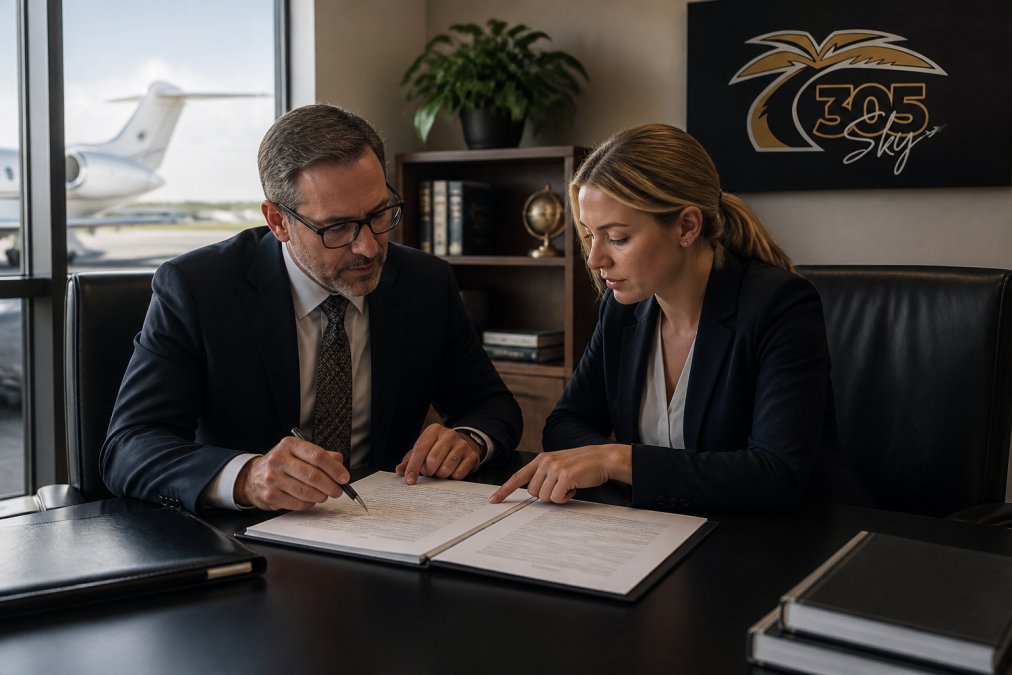
An aviation attorney understands aircraft transactions, FAA regulations, and title issues specific to aircraft. They can review contracts, interpret title reports, and advise on whether identified liens create problems. An aviation attorney typically charges between $2,000 and $5,000 for a full transaction review.
Your attorney should review the aircraft purchase agreement, the bill of sale, any financing documents, and the title report. They should confirm that all liens identified in the title search will be satisfied at closing and that you'll receive clear title.
Step 2: Obtain a Comprehensive Title Report
Work with a professional title search company to obtain a complete title report. This report should include FAA registry verification, UCC search results from all relevant states, tax lien searches, mechanic's lien searches, and any other encumbrances. The report should clearly identify any issues and explain their significance.
Step 3: Verify the Bill of Sale
The bill of sale is the document that transfers ownership from the seller to you. Your attorney should review it to ensure it's properly executed, accurately describes the aircraft, and includes appropriate warranties from the seller. The bill of sale should state that the seller owns the aircraft free and clear of all liens unless liens are being paid off at closing.
Step 4: Confirm Lien Satisfaction at Closing
For any liens identified in the title search, confirm in writing that they will be satisfied at closing. This typically means the sale proceeds will be held in escrow and used to pay off liens before title transfers to you.
Step 5: Verify Airworthiness and Maintenance Records
Request the aircraft's maintenance logs, inspection records, and airworthiness directives. Have a qualified mechanic conduct a pre-purchase inspection to identify any mechanical issues. At 305 Sky, we provide comprehensive pre-buy inspections for aircraft in South Florida, including detailed review of maintenance records and thorough mechanical evaluation.
Step 6: Establish an Escrow Account
Use an escrow service to hold funds during the closing. The escrow agent ensures that funds are released only when all closing conditions are met, including lien satisfaction and clear title transfer.
Step 7: Obtain Title Insurance
Consider obtaining aircraft title insurance, which protects you against future claims of ownership or liens that weren't discovered during your title search. Title insurance provides valuable protection when available.
Conclusion
A private jet title search and lien check are non-negotiable steps in any aircraft purchase. The process requires searching the FAA Aircraft Registry, conducting UCC filings searches across relevant states, checking federal and state tax lien records, and reviewing the aircraft's complete ownership history. Professional title search services provide comprehensive results and expert interpretation that protect you from inheriting hidden liens, tax claims, or disputed ownership.
The investment in thorough due diligence, including a professional title search, aviation attorney review, and pre-purchase inspection, is minimal compared to the cost of the aircraft and the risk of purchasing an aircraft with clouded title. When you're ready to purchase, work with professionals who understand both the legal and mechanical aspects of aircraft transactions. 305 Sky offers comprehensive pre-buy inspections and can connect you with trusted aviation attorneys and title search specialists throughout South Florida. Get a quote today and ensure your next aircraft purchase is protected by expert guidance every step of the way.
Frequently Asked Questions
How do I search for liens on an aircraft?
Start with the FAA Aircraft Registration Search tool at faa.gov. Enter the tail number or aircraft serial number to retrieve the registered owner and any recorded security interests. For comprehensive lien verification, check UCC filings through your state's Secretary of State database, most aircraft liens are filed as chattel mortgages or security agreements. An aviation attorney or title search service can conduct a full lien check covering FAA records, state filings, and tax liens to ensure clear title before purchase.
What is the typical cost of an aircraft title search?
Aircraft title search cost varies depending on the depth of the search and whether you use a professional service or conduct it yourself. DIY searches through the FAA registry are free, but comprehensive title searches covering FAA records, UCC filings, and tax liens typically range based on complexity and urgency. Professional compliance services offer bundled searches that include ownership verification, lien checks, and documentation review. Contact a title search provider or aviation attorney for a specific quote based on your aircraft and transaction details.
Why is a title search critical before purchasing a pre-owned aircraft?
A title search reveals ownership history, security interests, and encumbrances that could complicate or block your purchase. Undisclosed liens can prevent proper registration transfer, tax liens can attach to the aircraft after your purchase, and clouded title can create liability disputes. A thorough search protects you from inheriting someone else's debt, ensures the seller has the legal right to transfer the aircraft, and confirms good title before you commit funds. It's essential due diligence that prevents costly legal disputes and registration delays.
What documents are required for an FAA aircraft title search?
To search the FAA registry, you need the aircraft's tail number (registration number) or serial number. The FAA registry search is public and free, no special documentation is required to access it. However, for a complete title search covering all liens and encumbrances, you'll also need to file UCC searches in relevant states, which typically require the aircraft's make, model, serial number, and registered owner name. An aviation attorney or title search service can guide you through all required documentation and coordinate searches across multiple databases.
This article was written using GrandRanker