Table of Contents
- What AOG Maintenance Really Means and Why Vetting Matters
- Understanding FAA Part 145 Repair Station Requirements
- AOG Maintenance Response Time Expectations and Verification
- Build Your Vetting Aviation Maintenance Vendors Checklist
- Key Questions to Ask Potential AOG Providers
- Evaluating Cost Transparency and Billing Structures
- Red Flags and Common Mistakes When Selecting AOG Support
- Conclusion
Last Updated: August 23, 2026
What AOG Maintenance Really Means and Why Vetting Matters
Aircraft on ground (AOG) maintenance is emergency repair work performed when an aircraft becomes unserviceable and cannot operate. Unlike scheduled maintenance, AOG situations demand immediate response, your aircraft is grounded, revenue is lost, and every hour counts. This is why vetting AOG maintenance providers in Fort Lauderdale and across South Florida isn't optional. It's the difference between a two-hour resolution and a two-day nightmare.
When your aircraft goes down unexpectedly, you need a provider who can mobilize within minutes, diagnose accurately, and execute repairs without cutting corners. Most operators discover too late that their "preferred" shop can't handle emergency response at 2 AM on a Sunday due to lack of diagnostic equipment, on-call technicians, or parts procurement networks.
305 Sky understands this pressure. With 24/7 AOG emergency response capabilities and strategically located South Florida facilities, we've built our operation around the reality that breakdowns don't follow business hours. This guide walks you through exactly how to evaluate potential AOG providers before you need them, covering FAA Part 145 requirements, response time verification, technical credentials, diagnostic capabilities, insurance protocols, and the hard questions that separate reliable partners from providers who will let you down when it matters most.
Understanding FAA Part 145 Repair Station Requirements
An FAA Part 145 repair station certification is the baseline credential for any AOG provider. It's federal law, if a shop isn't Part 145 certified, it cannot legally perform maintenance on aircraft operating under Part 91 or any commercial certificate (faa.gov). This certification means the FAA has audited the facility, verified technical competency, confirmed maintenance documentation systems, and verified that the operation meets strict safety and quality standards.
Part 145 requires the shop to maintain a quality assurance program, employ certified technicians, keep detailed maintenance records, use approved parts and materials, and allow FAA inspectors unannounced access (faa.gov). The certification applies to the repair station as an organization, not individual technicians.
When evaluating providers, ask to see their Part 145 certificate and most recent FAA audit report. Don't just confirm they have the certificate, review the audit findings. A shop with zero findings is rare; what matters is how they handled issues when found. Ask specifically about their last unannounced inspection and what came out of it. Transparency about audit results indicates serious regulatory compliance.
AOG Maintenance Response Time Expectations and Verification
Every shop claims 24/7 availability. True 24/7 AOG response requires technicians on call (not just "available"), a mobile service unit with diagnostic equipment ready to deploy, a parts procurement network functioning outside business hours, and a dispatch system mobilizing within 30-60 minutes. Many shops claim 24/7 coverage but only answer the phone at 2 AM; actual field service mobilization might take four hours or longer.
When calling a potential provider, ask directly: "If my aircraft goes down at 2 AM on a Sunday, what does your actual response look like?" Listen for specifics, time frame, who responds, diagnostic capability, and next steps. A credible answer includes estimated arrival time, technician credentials, and what happens if parts are needed.
Verify claims by requesting references from customers who've actually used their AOG service at odd hours. Call those references and ask what the real response time was, not what was promised. Also ask about parts inventory for common aircraft types. A shop with extensive parts on hand resolves many AOG situations in hours; one that orders parts keeps you grounded for days.
Build Your Vetting Aviation Maintenance Vendors Checklist
Creating a formal evaluation framework ensures consistent provider comparison and prevents missing critical details.
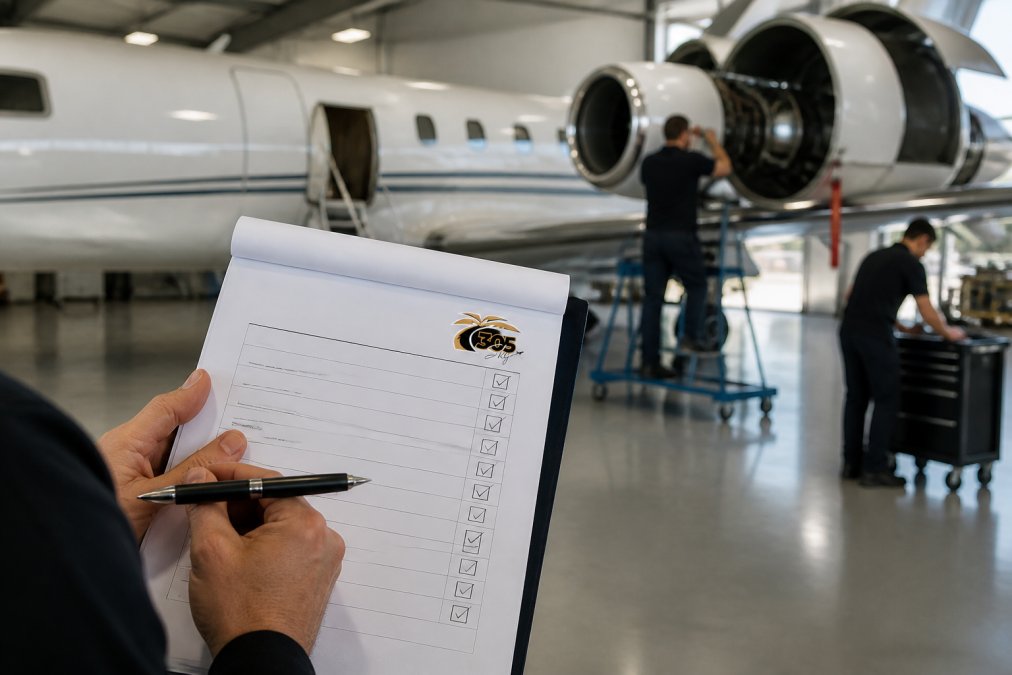
| Evaluation Category | What to Verify | How to Verify |
|---|---|---|
| FAA Certification | Part 145 repair station status | Request certificate, review latest audit report |
| Response Time | 24/7 AOG mobilization capability | Call with scenario, request customer references |
| Technician Credentials | Airframe & Powerplant (A&P) certifications | Ask for staff list, verify certifications with FAA |
| Diagnostic Equipment | Specialized tooling for your aircraft type | Tour facility, ask about equipment brand/capability |
| Insurance | General liability and errors & omissions coverage | Request certificate of insurance with limits |
| Parts Network | Availability of parts outside normal hours | Ask about inventory and supplier relationships |
| Documentation | Digital records, compliance tracking | Review sample maintenance records |
| References | Verified customer feedback | Contact 3-5 references, ask about AOG experiences |
Certifications and Technical Credentials to Verify
An A&P (Airframe & Powerplant) certification is the minimum credential for any technician performing maintenance (faa.gov). However, A&P alone doesn't guarantee expertise in your specific aircraft. A technician certified on Cessnas may not be qualified to troubleshoot avionics on a King Air or complex turbine systems on a jet.
Ask potential providers about type-specific experience. How many hours have their technicians logged on your aircraft model? Can they provide examples of recent maintenance work on similar aircraft? Beyond A&P, look for additional credentials like Inspection Authorization (IA) or manufacturer-specific training such as Garmin avionics or Rolls-Royce engine expertise.
Request a staff roster and verify credentials independently through the FAA database. Also ask about continuing education, a provider whose technicians stay current with training stays current with best practices.
Diagnostic Equipment and Specialized Tooling
Diagnostic equipment determines how quickly a technician can identify the root cause of a problem. Without proper tools, even experienced technicians work blind. Modern diagnostic equipment can pinpoint issues in minutes that would take hours to troubleshoot manually.
Ask what diagnostic equipment the shop owns. For avionics issues, do they have a working avionics test bench? For engine problems, borescope capability? For electrical systems, specialized diagnostic tools? For complex aircraft, manufacturer-specific diagnostic software? The quality of equipment matters as much as its presence, a 10-year-old diagnostic tool may not interface with newer aircraft systems.
Also ask about specialized tooling specific to your aircraft type. If your aircraft needs a specific tool for a potential repair, does the shop own it or have access to it?
Insurance, Liability, and Safety Management Systems
Every AOG provider should carry general liability insurance and errors & omissions (E&O) coverage. Request a certificate of insurance and verify coverage limits are adequate for your aircraft value. Confirm the certificate lists you as an additional insured.
Beyond insurance, ask about their safety management system. How do they prevent accidents during maintenance? Do they have written procedures for hazardous tasks? How do they handle tool accountability to prevent foreign object damage (FOD)? A provider with a documented safety culture takes risk seriously.
Also ask about their quality assurance program. How do they verify that maintenance work meets standards? Do they conduct inspections before signing off on work? A strong quality assurance program reduces the risk of incomplete or incorrect repairs.
Key Questions to Ask Potential AOG Providers
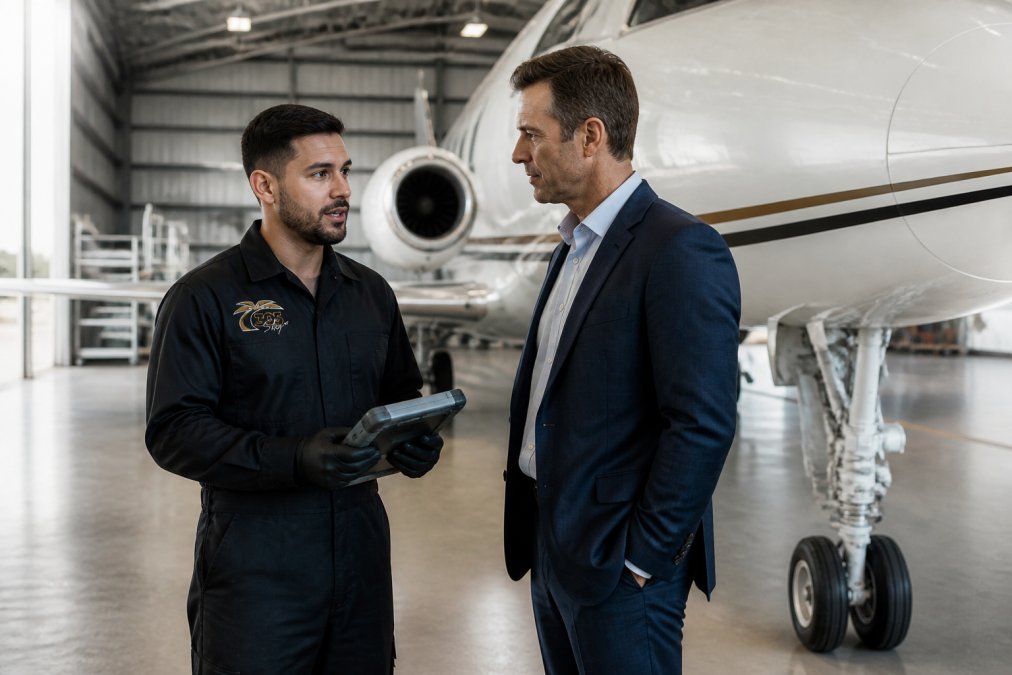
"Walk me through your 24/7 response process. If I call at 3 AM, who picks up the phone, and what happens in the first hour?" This forces them to describe their actual process. Listen for specifics: names of on-call technicians, locations of mobile units, estimated arrival times, initial diagnostic approach. Vague answers suggest they haven't built a genuine 24/7 operation.
"What percentage of AOG calls can you resolve on-site versus requiring parts or external support?" This reveals their parts inventory depth and diagnostic capability. A shop resolving AOG issues without parts orders is valuable.
"Show me examples of maintenance records from aircraft similar to mine." Well-organized records with clear findings, corrective actions, and sign-offs indicate professionalism. Sparse or unclear records suggest sloppy documentation.
"What's your relationship with parts suppliers, and how do you handle parts availability at odd hours?" A provider with established supplier relationships can expedite delivery. Ask if they're enrolled in emergency delivery programs.
"What happens if you discover a problem during AOG diagnosis that requires expertise outside your scope?" An honest answer is they have relationships with specialists. A red flag is claiming they can handle anything.
"Can you provide references from customers in my area who've used your AOG service?" Local references understand regional context and actual response times. Call them and ask specifically about AOG experiences.
Evaluating Cost Transparency and Billing Structures
AOG situations create pressure to accept whatever terms a provider offers. A provider with transparent billing practices won't exploit that pressure.
Before needing AOG service, establish clear billing expectations. Ask how the shop charges for emergency response. Do they charge a call-out fee? Hourly labor rates? Is there a minimum charge? How do they handle parts markup? Pricing depends on the specific service, parts required, and urgency.
Ask about parts pricing. You should know the markup structure upfront. A shop refusing to discuss parts pricing will surprise you with inflated bills after the fact.
Also ask about billing for situations where diagnosis reveals a different problem than suspected. Are you charged for the entire diagnostic process, or just actual repair work? Transparent providers bill for the entire diagnostic process because that work has value.
Request sample invoices from past AOG work (with customer names redacted). A detailed invoice breaking down labor by task and parts by line item is preferable to a lump-sum charge with minimal detail.
Red Flags and Common Mistakes When Selecting AOG Support
Certain warning signs indicate a provider isn't ready for AOG responsibility.
Vague response time claims. If a provider says "we're available 24/7" but can't give a specific response time for a 2 AM emergency, they're not actually ready.
No documented safety or quality procedures. A shop that can't articulate safety protocols or quality assurance operates on habit rather than system.
Technicians without type-specific experience. A general A&P is necessary but not sufficient for complex aircraft.
Unwillingness to provide references. If a provider resists giving customer references, especially for AOG work, they don't have satisfied customers willing to vouch for them.
Pressure to commit long-term before proving capability. Reputable AOG providers let their performance speak before asking for multi-year contracts.
No clear parts procurement strategy. A shop that doesn't explain how they source parts for AOG situations will keep you grounded while figuring it out.
Outdated diagnostic equipment. Equipment age matters in aviation. Old or incompatible tools signal they're not investing in current capability.
No documented audit history. If a provider is vague about audit results or won't share findings, they're hiding something.
A common mistake is selecting a provider based primarily on price. The cheapest provider is rarely the fastest. A provider resolving your issue efficiently is valuable. Evaluate total cost of downtime, not just labor rates.
Another mistake is assuming that because a shop handles routine maintenance well, they're equipped for AOG. Routine maintenance is scheduled and methodical. AOG is emergency response under pressure. These require different capabilities, staffing models, equipment investment, and parts strategies.
When your aircraft goes down, you need a partner with proven 24/7 AOG response, FAA Part 145 certification, and diagnostic equipment to resolve issues fast. At 305 Sky, we've built our operation around emergency response with mobile service units, certified technicians on call, and strategically located facilities across South Florida. Our transparent approach means no surprises when you need help most. Get a quote from 305 Sky and experience the difference between claiming to handle AOG and actually being ready for it.
Frequently Asked Questions
What FAA certifications should an AOG maintenance provider hold?
An AOG maintenance provider must hold FAA Part 145 repair station certification, which authorizes them to perform maintenance, preventive maintenance, alterations, and repairs on aircraft. Individual technicians should hold Airframe and Powerplant (A&P) certificates. Verify these credentials directly with the FAA's database and request copies of current certificates. Ask about additional qualifications specific to your aircraft type and avionics systems. A provider with multiple certifications across different aircraft categories demonstrates broader operational depth and capability to handle diverse maintenance scenarios.
How do I verify an AOG provider's response time in real situations?
Request specific response time guarantees in writing and ask for documentation of recent emergency calls. Find out whether they maintain a mobile van with common parts and tools for field dispatch. Ask for references from other operators who have used their 24/7 emergency service and contact those references directly. Understand their staffing model: do they have technicians on call around the clock, or do they contract with other shops? Confirm their actual facility locations and whether they can reach your typical parking locations within your required timeframe. Response time varies by aircraft type and issue complexity, so discuss realistic expectations for your specific situation.
What documents should I request when vetting an AOG maintenance team?
Request current FAA Part 145 repair station certificate and scope of work authorization. Ask for proof of general liability and errors & omissions insurance with minimum coverage limits. Request maintenance records from at least three current clients (with permission) and safety audit reports from the past two years. Ask for documentation of technician certifications, training records, and any regulatory compliance history. Request their quality assurance procedures and post-repair documentation standards. Ask about their parts procurement capabilities and whether they maintain relationships with OEM suppliers. These documents establish credibility, regulatory standing, and operational capability.
What are the risks of choosing an unvetted AOG maintenance provider?
An unvetted provider may lack FAA Part 145 certification, which means repairs don't meet regulatory standards and could affect your aircraft's airworthiness certificate. They may lack proper diagnostic equipment, leading to misdiagnosis and repeated failures. Unvetted providers often have inadequate insurance, leaving you liable if their work causes damage. They may not maintain proper maintenance records required by the FAA, creating compliance issues during audits. Response times may be unpredictable, extending your aircraft downtime. Poor quality assurance increases the risk of safety-critical errors that could endanger your crew and passengers. Always verify credentials before an emergency occurs.
This article was written using GrandRanker